
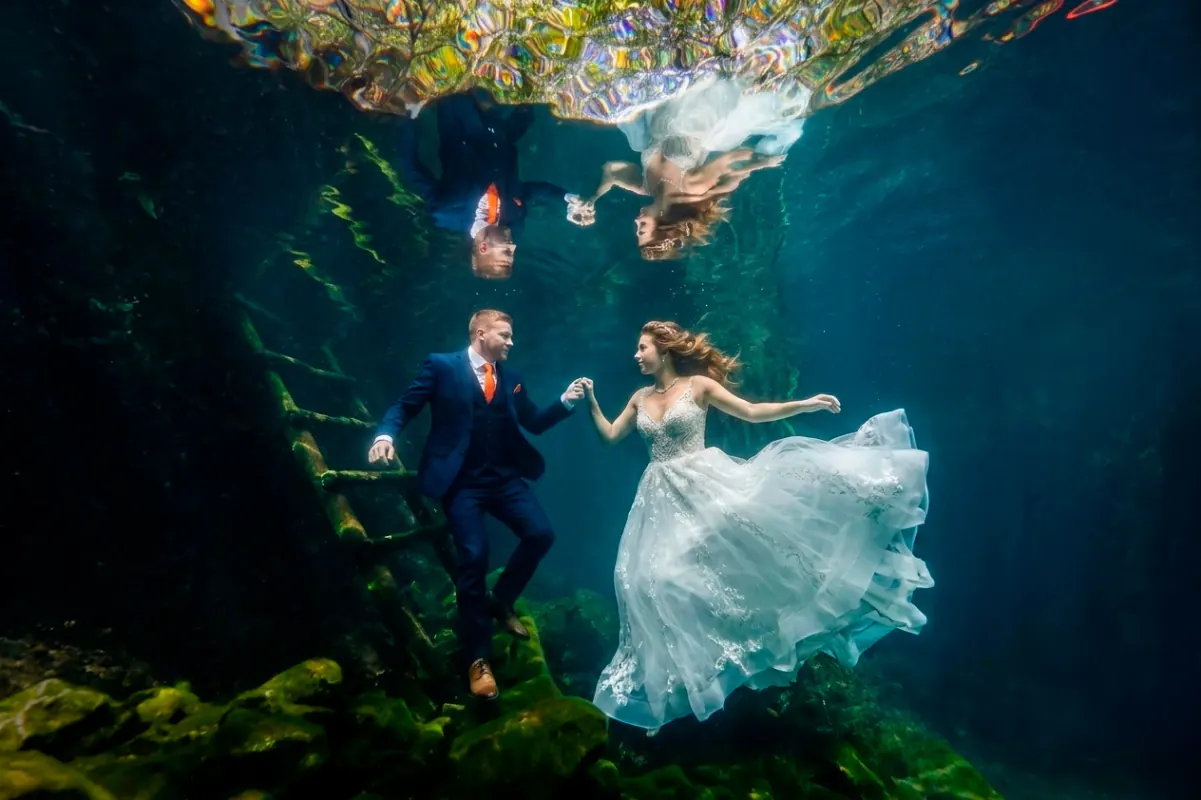
Two kinds of water, and only one of them is hard on fabric
The name says destruction and the reality rarely delivers it. A gown goes in, comes out heavy and sandy, and comes back from a specialist cleaner looking much as it did before. What the name hides is the actual reason to do this: on the wedding day the dress is a responsibility, and that responsibility shows in the photographs as posture. Every time she sits, every step on sand, every glass of red wine near her is a calculation. A trash the dress session is the hour when the calculation stops — and the posture stops with it.
What makes this coast different is that the water has options. Between Puerto Morelos and Akumal you are twenty minutes from cenotes: fresh water, no salt, no sand, limestone walls and light coming through a hole in the rock. Fresh water is measurably easier on a dress than the sea, and it is the half of the gallery nobody else has. The wedding day and the full range of collections live on our Riviera Maya wedding photographer page.
What this coast offers that the others do not
Fresh water, no salt, no sand
Salt crystallises in the fibres and sand embeds in the hem — between them they are most of the cleaner's bill. A cenote has neither. It is the version to choose when the dress matters to you.
Two textures in one morning
A cove and a cenote sit about twenty minutes apart. Turquoise and open sky, then black water and limestone. No other destination on this coast lets you have both before lunch.
Nowhere for an audience to stand
A wedding dress in the sea draws a crowd, and being watched puts the posture straight back. Semi-private coves and an early cenote booking remove the audience entirely.
The light comes out of the sea
The coast faces east, so the sun rises straight out of the Caribbean and that is the best light available here. There is no evening equivalent: the sun drops behind the jungle, not into the water.
Three settings between Puerto Morelos and Akumal
One in fresh water, one in the sea, one with a hairdryer ten steps away.
-
A cenote twenty minutes inland
Open cenotes give you sky and green water; cavern cenotes give you a beam of light through the rock, and midday is their best hour rather than their worst. Expect an entrance fee per person and a photography fee, and expect to shower and skip sunscreen — most of them require it, and it is why the water is clear.
-
A semi-private cove on the coast
Several properties between Puerto Morelos and Akumal have sheltered frontage that genuinely belongs to them, and the coves are calmer than the open beach — which matters when the skirt is soaked. No day-trippers walking through the frame and nobody filming from a sun lounger.
-
A villa pool in Playacar or Puerto Aventuras
The most controlled version of this session and an underrated one. Fresh water, warm, no waves, no seaweed, no strangers, and a shower, a towel and a hairdryer a few steps away. If the dress is delicate or the sea is not cooperating, this is the answer that still produces the photographs.
We will confirm access, fees and the exact hour for your date before you commit to anything.
The Portfolio
Real weddings we photographed in the Riviera Maya
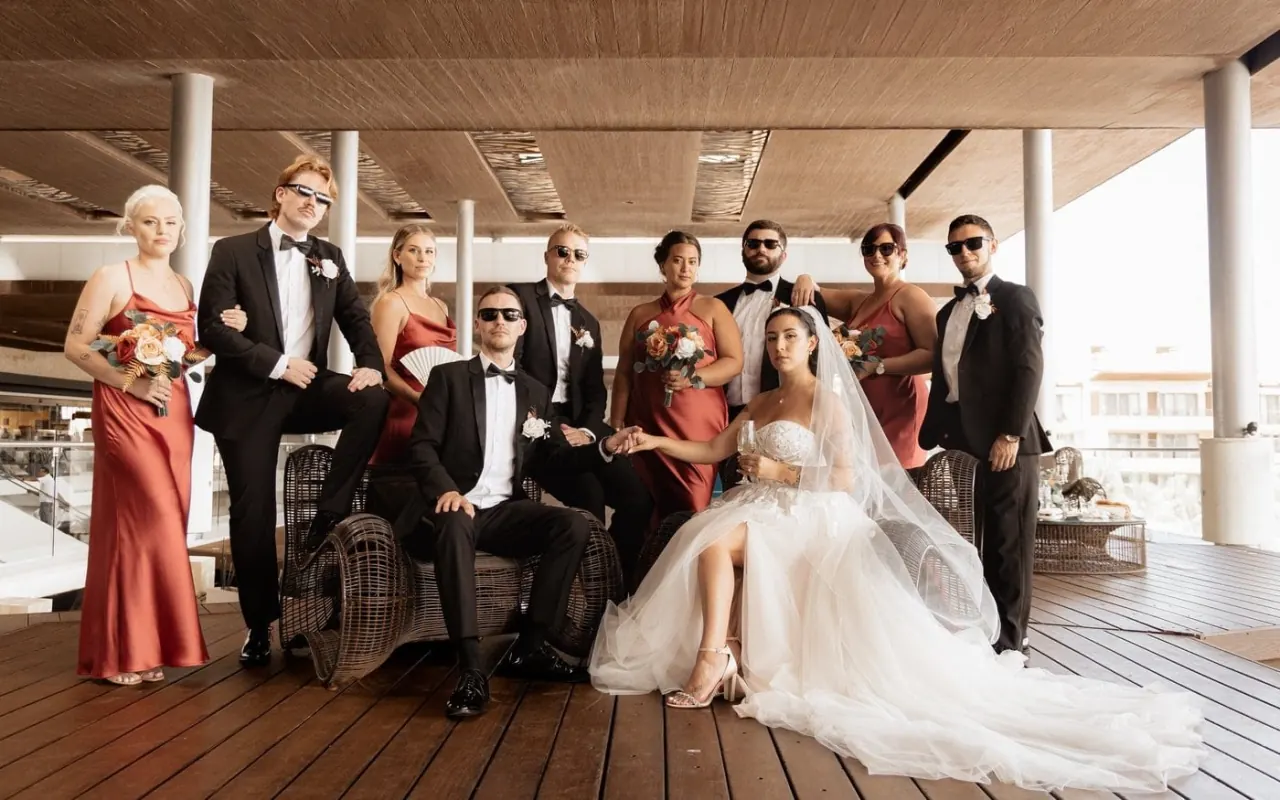
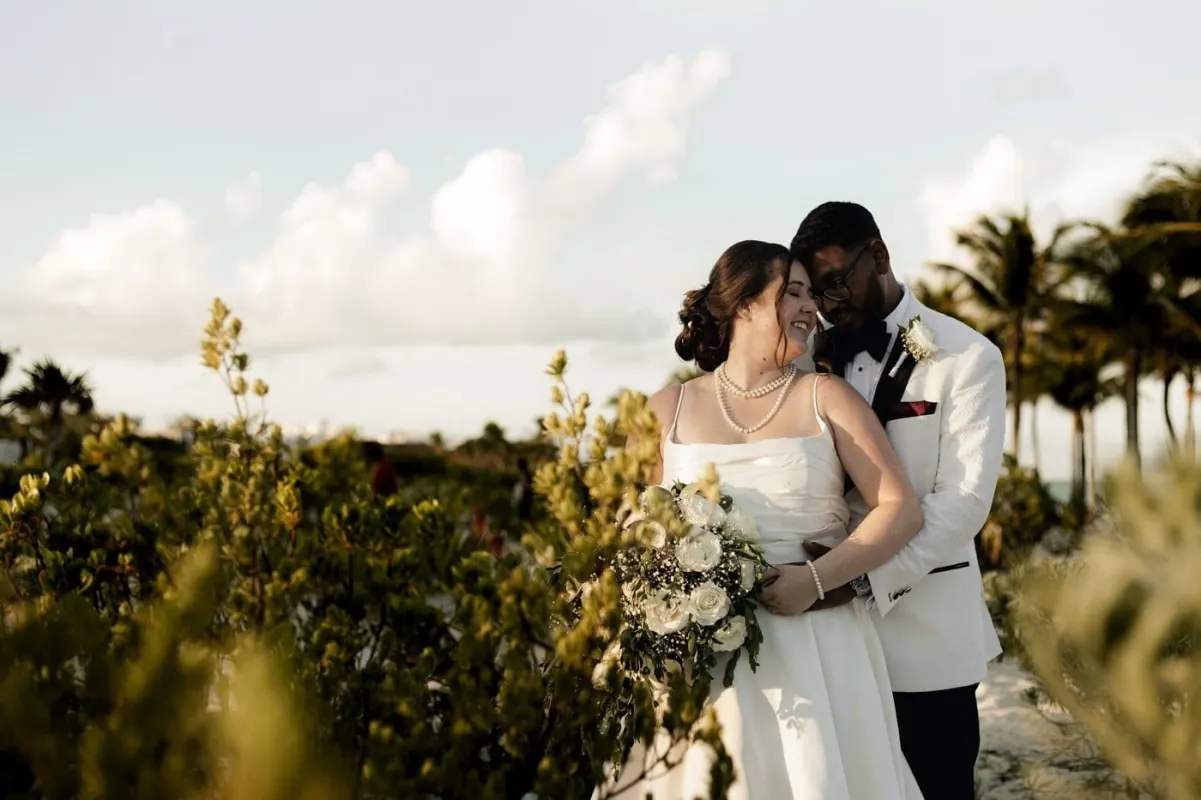
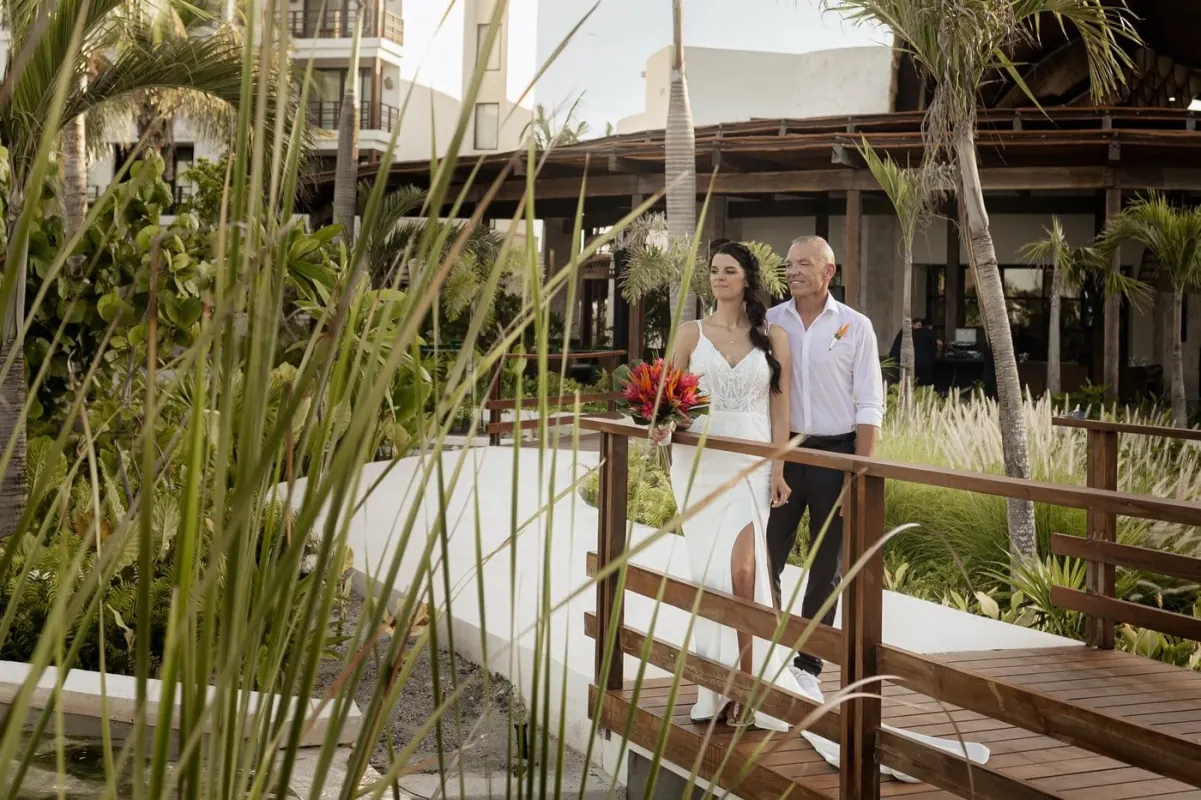
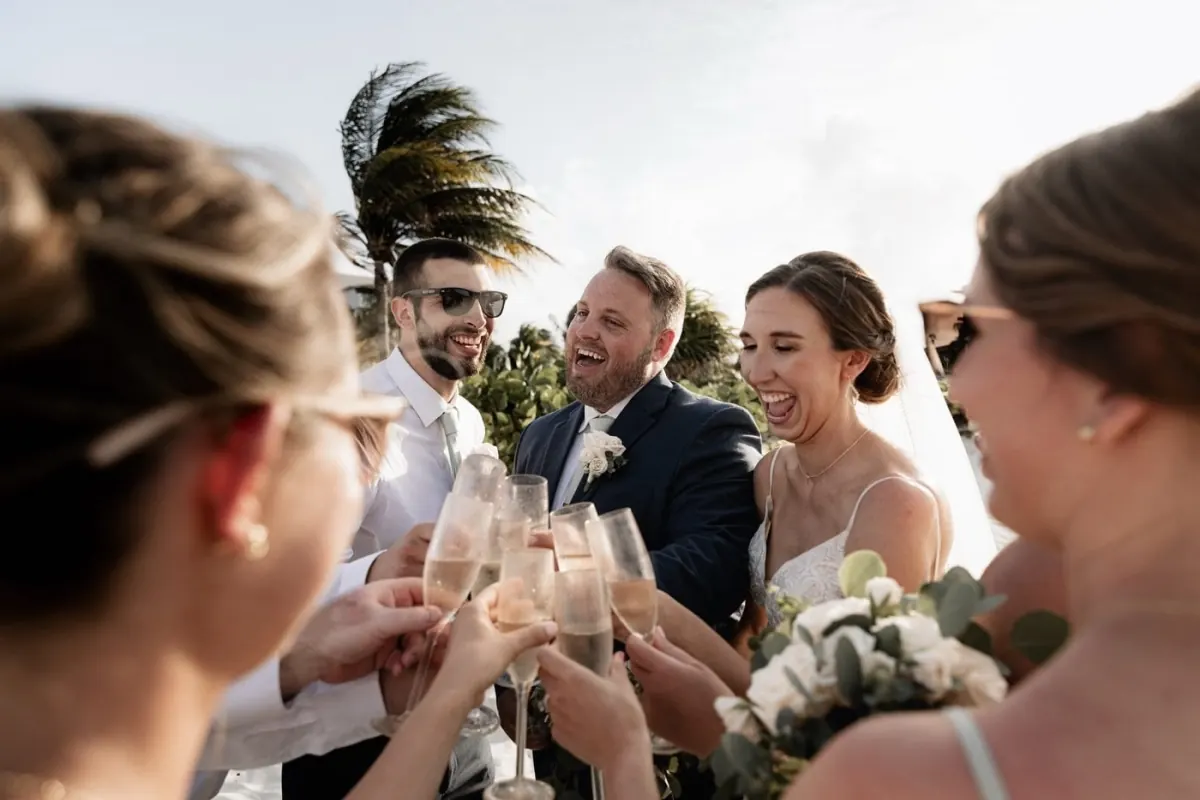
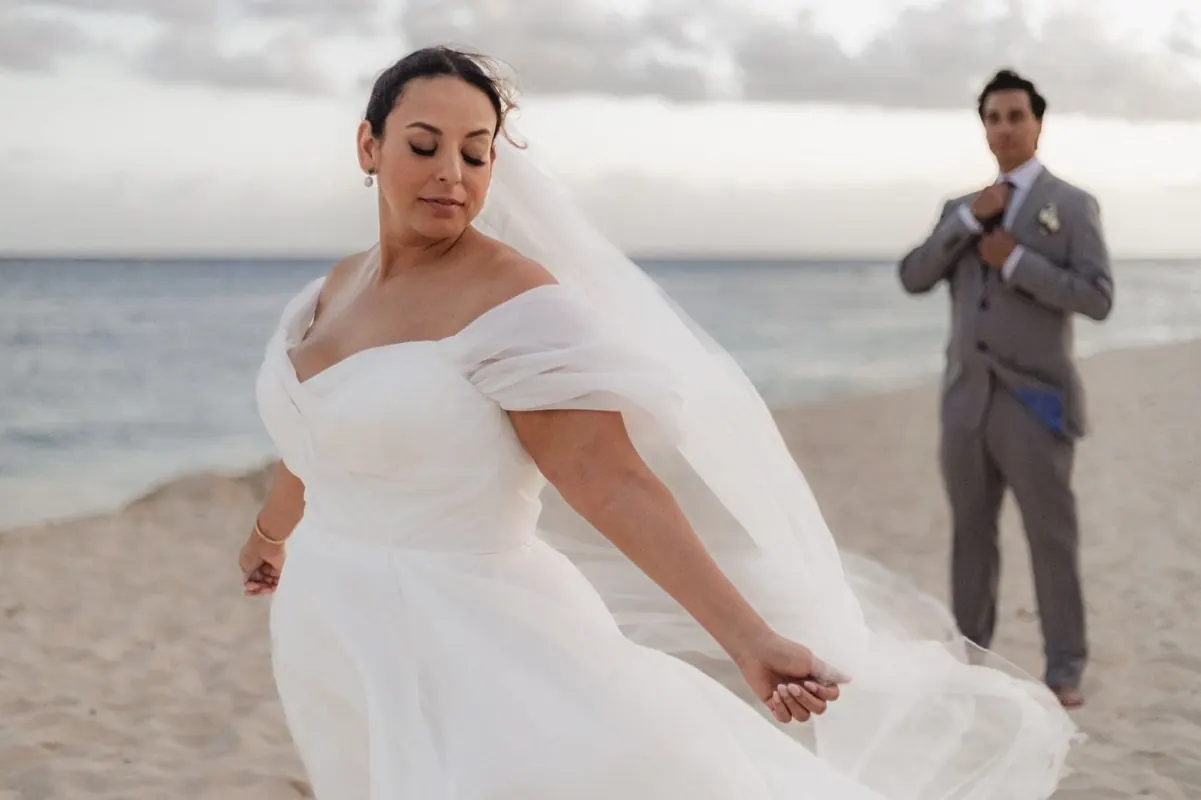
Couples who said yes with us along this coast. Not every frame is from a Trash the Dress — we would rather show you honest work from the same beaches, the same light and the same team.
Why fresh water is easier on the dress
The sea does two things to a gown. Salt crystallises inside the fibres as the fabric dries, which is what makes a dress go stiff and, on silk left in the sun, what starts the yellowing. Sand works its way into the hem, the lining and every seam, and it comes out grain by grain. A cenote has neither: it is rainwater filtered through limestone, and what it leaves behind is water. Cleaners charge for the salt and the sand far more than for the swim, which is why the cenote version is the one to choose if the dress is going back in a box for a daughter rather than to a resale site.
One thing to know before you commit to it: cenote water sits at roughly twenty-four or twenty-five degrees all year, four or five degrees cooler than the Caribbean in summer. It is not cold, but it is a shock in the first ten seconds and it stays with you for an hour in wet fabric. Bring a towel and something dry for the drive back. The light behaves backwards too — in a cavern cenote the sun has to be high to reach the water, so the good hour is the middle of the day, exactly the hour we refuse on a beach.
The morning session, and why there is no evening one
This coast faces east. The sun comes straight up out of the Caribbean between about 6:15 and 7:10, the sand is empty, and the sea is at its flattest before the breeze builds through the day — three separate reasons to set the alarm, and the flat water is not a small one when you are walking a heavy skirt into it. In the evening the sun goes down behind the jungle rather than into the water, so the last hour gives you a warm sky and soft light on the sand but nothing behind you. It is a perfectly good session; it is simply not the best one available here.
A cenote and a cove fit into the same morning if you want both: sunrise in the sea, dry off, twenty minutes inland, and into fresh water while the sun is high enough to reach it. That is roughly three hours door to door rather than ninety minutes, and it is the single most interesting version of this session on the coast. If you are chaining it to a wedding, the day after is the moment — and if the wedding itself is just the two of you, our Riviera Maya elopement page covers the format these sessions most often follow.
Sargassum, fees and the practical morning
Sargassum runs roughly April to August here and it is intensely local — one property can be clear while its neighbour is buried, and the picture changes week to week. For this session it matters more than for a wedding, because a wet hem dragged through decomposing seaweed stains brown and keeps the smell. The fix is easy at this size: we scout the morning of, and if the coast is not cooperating the whole session moves inland to fresh water, where seaweed, wind and rain are all irrelevant. The month-by-month guide is the honest version if you are still choosing a week.
On access, the shoreline below the high-tide line is federal, so a couple and a photographer on a public beach need no permit — Punta Esmeralda, Xcalacoco and the Akumal accesses are all free and open. A resort's own frontage is different: most charge an outside-vendor fee or a day pass for a photographer who is not on their list, which is covered on our page about resort vendor fees. Cenotes have their own economics: entrance per person, usually a separate fee for a professional camera, and rules about sunscreen and shoes that are worth reading before you arrive rather than at the gate.
Sixty to ninety minutes per location, every photograph
Cenote, sea, or both in one morning
One location is ninety minutes. Both is about three hours with the drive between them, and it is the version we would choose ourselves.
Direction built around wet fabric
A soaked gown can weigh five kilos and wraps around the legs. Getting in and out of a cenote in one is a technique, and it is on us to know it rather than on you.
Light planned per location
Sunrise in the sea, the middle of the day in a cavern cenote. The two best hours here are at opposite ends of the clock, which is exactly why doing both works.
Delivery in about 72 hours
A private gallery, fully edited, usually before you fly home. Entrance and camera fees are quoted openly rather than buried.
How It Works
From your first message to your date being held
Four steps, and none of them is a price list. We would rather understand your day first.
-
Step one
You tell us the basics
Date, or the month you are aiming at, and roughly what you are picturing. Two lines is enough to start.
-
Step two
A brief planning call
Fifteen or twenty minutes with the photographer who would actually shoot it — the hour, the location, the light, what matters to you.
-
Step three
A quote written for your day
Coverage, hours, whether video or drone is worth it, and any fees we already know about. No package you have to squeeze into.
-
Step four
20 % holds the date
A deposit reserves your date and your team. The balance is due before the day, and every edited photo is included.
Reserve Your Date
Tell us about your Trash the Dress
A few details and we will set up a short planning call, then send a written quote for exactly your day. Peak season (November to April) books early.
Request received!
Thank you — the next step is a brief planning call. We'll understand your day first, then prepare a custom quote.
Planning call — choose a time with us Continue on WhatsAppPrefer to chat? We usually reply within minutes. Message us on WhatsApp
Prefer to meet us before you decide? Book a free 15-minute video call — no commitment
Trash the Dress in the Riviera Maya — the questions couples actually ask
Is a cenote really better for the dress than the sea?
Yes, for the fabric. No salt to crystallise in the fibres and no sand in the hem, which is most of what a gown cleaner charges for. The trade-off is temperature — cenote water is around twenty-four or twenty-five degrees, several degrees cooler than the Caribbean — and an entrance fee plus a photography fee per person.
Will the dress be ruined?
Almost never. Salt and sand come out at a specialist cleaner and most dresses come back looking as they did. The real risks are hand-sewn beading, glue-set stones and very fine tulle. Call the cleaner before the session and ask whether they can recover it from salt water — five minutes turns a gamble into a decision. If the dress is rented or borrowed, do not do it.
When should we do it, relative to the wedding?
The day after is the classic and the best. The dress has already done its job, the nerves are gone, and nobody is protecting anything — which is the entire point. Before the wedding it risks the gown for no gain. If you married at home, any trip works: plenty of these are shot years later.
Can we do a cenote and the sea in the same session?
Yes, and it is the version worth planning for. Sunrise in the sea while the water is flat, dry off, twenty minutes inland, then fresh water once the sun is high enough to reach into the cenote. Budget about three hours door to door instead of ninety minutes.
Do we have to be married?
No. Some of these are anniversary sessions years after the wedding, some follow a courthouse ceremony that was never photographed, and some are simply a dress that has been in a box too long. The session is the same either way — there is no ceremony in it and nothing to prove.
How much does it cost?
We quote rather than publish a rate, because a cove session and a cenote morning with entrance and camera fees are different days. Tell us the date and which water you want, we set up a short planning call, and you get a written quote. A 20 % deposit holds the date.
Trash the Dress at the resorts of the Riviera Maya
Each of these has its own wedding page with the venue, the light and the vendor rules. Your Trash the Dress can happen at any of them.
- Allegro Playacar
- Bahia Principe Luxury Akumal
- Banyan Tree Mayakoba
- Barceló Maya Palace
- Dreams Riviera Cancun
- El Dorado Royale
- Fairmont Mayakoba
- The Fives Playa del Carmen
- Generations Riviera Maya
- Devossion by Live Aqua Playa del Carmen
- Grand Velas Riviera Maya
- Hyatt Centric Playa del Carmen
- Iberostar Playacar
- Mahekal Beach Resort
- Ocean Riviera Paradise
- Paradisus Playa del Carmen
- Playacar Palace
- The Reef Coco Beach
- The Reef Playacar
- Riu Playacar
- Rosewood Mayakoba
- Royal Hideaway Playacar
- Sandos Playacar
- Secrets Maroma Beach
- UNICO 20°87°
- Valentin Imperial Riviera Maya
- Hotel Xcaret Arte
- Hotel Xcaret Mexico
- Dreams Aventuras Riviera Maya
- Sensira Resort & Spa
- Royalton Riviera Cancún
- Waldorf Astoria Cancún
Read before you book
Planning something bigger, with guests and a reception? See all our wedding collections for the Riviera Maya