
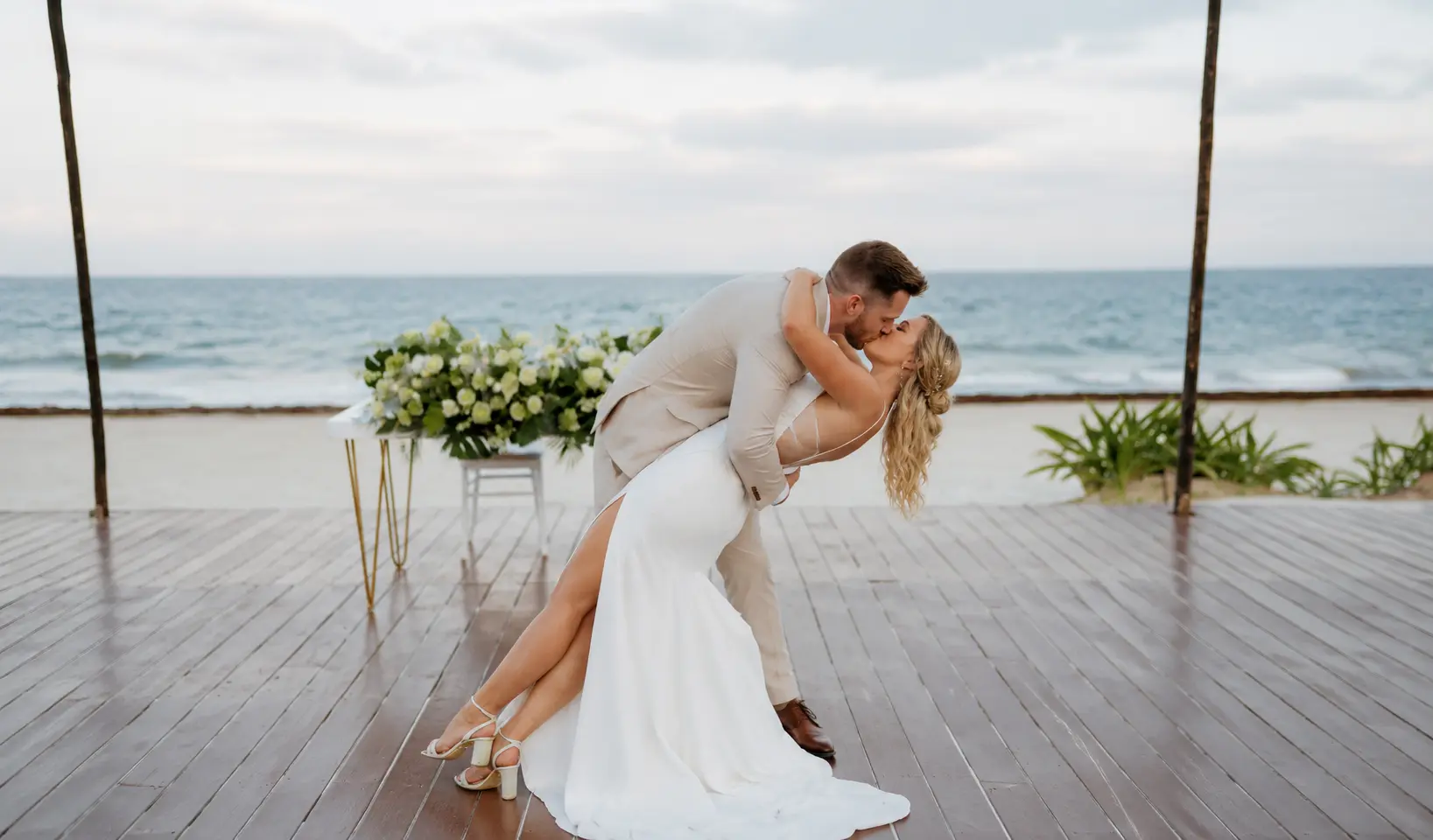
What opens up when nobody has to sign anything
A symbolic ceremony is the format nearly every international couple uses here, and it is usually sold as the easy option — the one without paperwork. That undersells it badly. The real consequence of having no registrar present is that no part of the ceremony has to satisfy an institution: not the hour, not the place, not the words, not who stands at the front and not what anyone is wearing. On this particular coast that turns into two concrete things a legal wedding simply cannot have.
The first is the hour. There is no sunset over the water in the Riviera Maya — the sun drops behind the jungle, and couples who booked expecting otherwise find out late. What this coast does have is a sunrise that comes straight out of the Caribbean, and it is the best light on the entire shoreline. A ceremony at 6:40 on an empty beach is an ordinary booking for us; a civil registrar at 6:40 is not a thing that exists. The second is the place: fresh water, limestone, a wooden walkway over a mangrove canal. Our legal versus symbolic guide compares the two routes honestly, and the full range of coverage lives on our Riviera Maya wedding photographer page.
Four things that only work without a registrar
Sunrise becomes available
Between roughly 6:20 and 7:10 the sun lifts out of the sea and the beach is genuinely empty. It is the strongest light this coast produces, and it is closed to anybody who needs a civil official standing there.
A cenote can be the venue
Fresh water and limestone twenty minutes inland. No registrar is going to conduct a civil marriage on a wet rock; a celebrant will, and the photographs look like nowhere else in Mexico.
Two families, two languages
With no legal formula that has to be recited exactly, a bilingual celebrant can truly alternate instead of translating afterwards. Nobody sits through twenty minutes they cannot follow.
The order is a decision, not a rule
No obligatory declarations, no required readings, nobody who must be asked anything. Who walks, who speaks, what is read and how long it runs are all yours to set.
Three settings a civil wedding cannot use
All three are routine bookings for a symbolic ceremony and awkward to impossible for a legal one.
-
A cenote between Playa del Carmen and Tulum
Fresh water inside limestone, best light around midday when the sun comes through the opening, and room for about twenty people who can walk in. Access is on foot and usually down steps, so tell guests to bring shoes they can manage. Seaweed, wind and an afternoon squall are all irrelevant down there, which makes it the most weather-proof ceremony on the coast.
-
A wooden walkway over the Mayakoba canals
Water on both sides, trees overhead, no sand and almost no wind. It is the one setting here where a candle ritual behaves, and the late-afternoon light filtering through the mangrove is softer than anything an open beach will give you. Capacity is small and access is single file, which suits a short ceremony.
-
A semi-private cove or villa garden at first light
Between Puerto Morelos and Akumal several properties have sheltered frontage that genuinely belongs to them. At 6:40 nobody is on it, the Caribbean is behind you lit from the front, and the whole ceremony is finished before breakfast service opens.
We will confirm access, fees and the exact hour for your date before you commit to anything.
The Portfolio
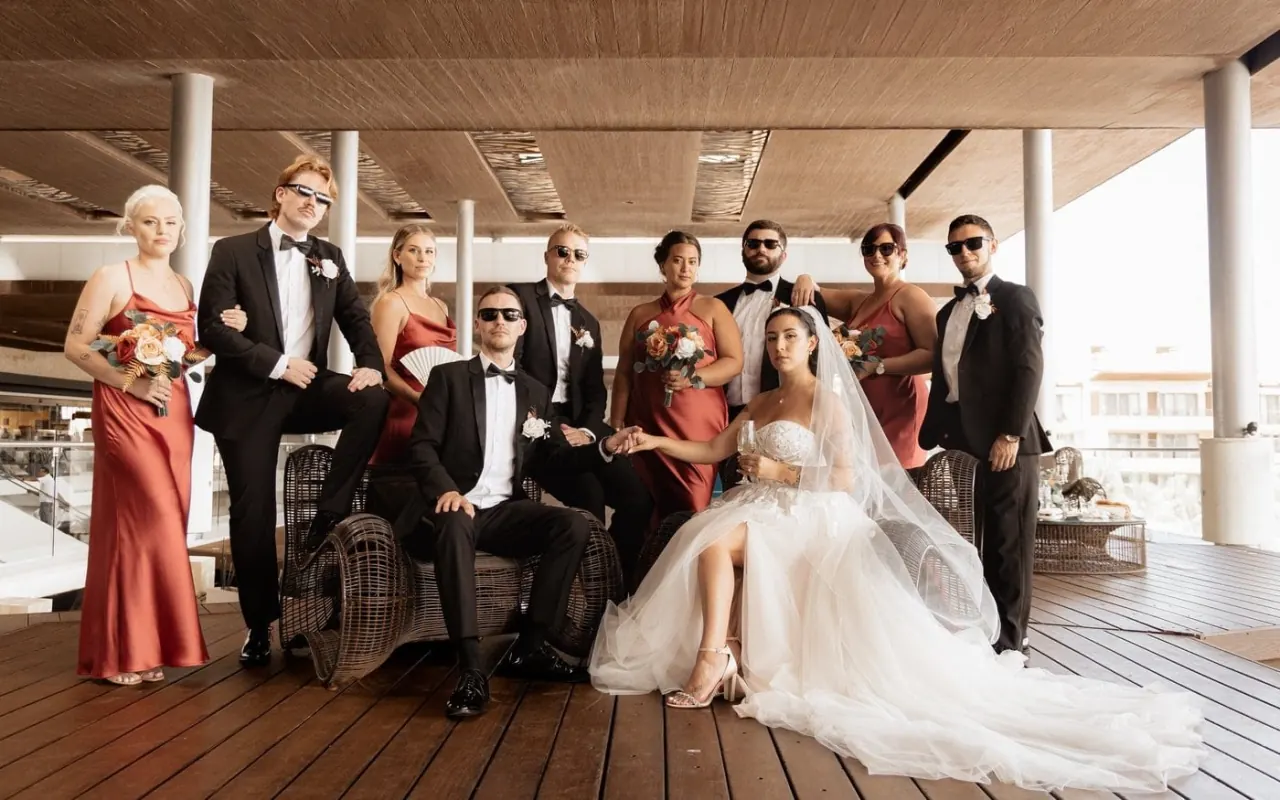
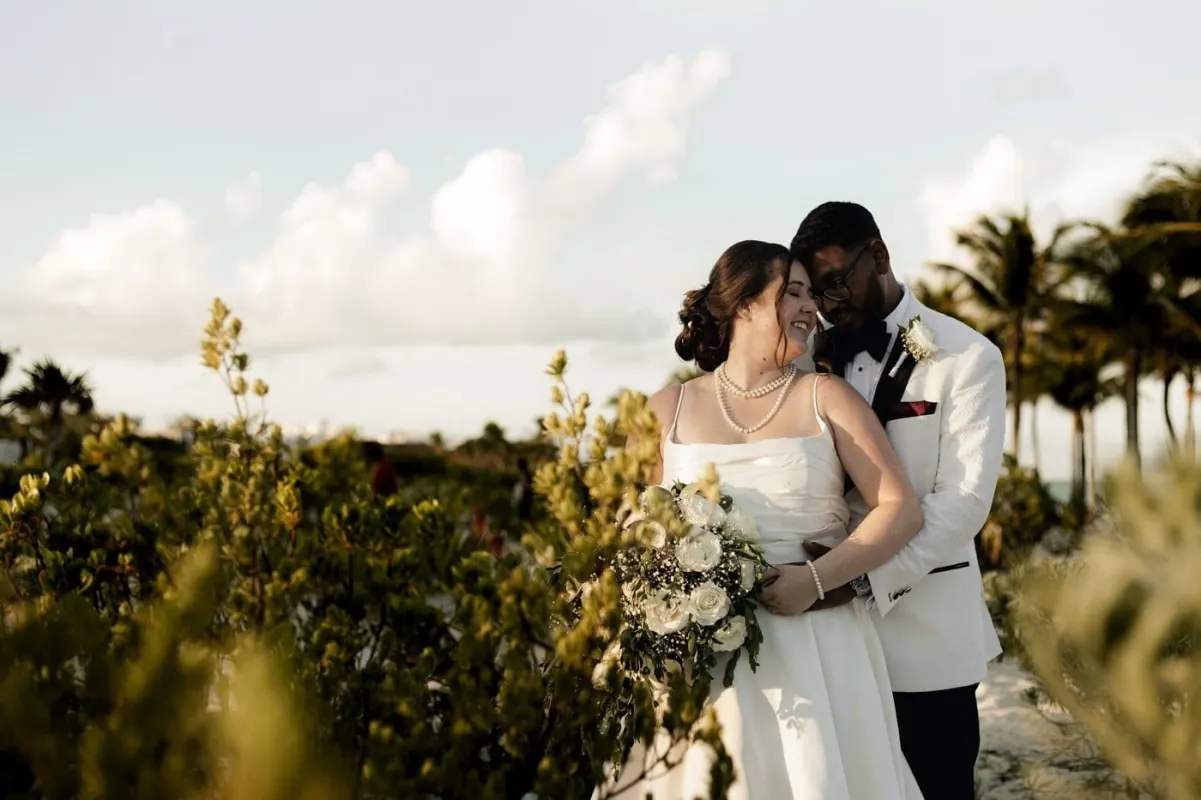
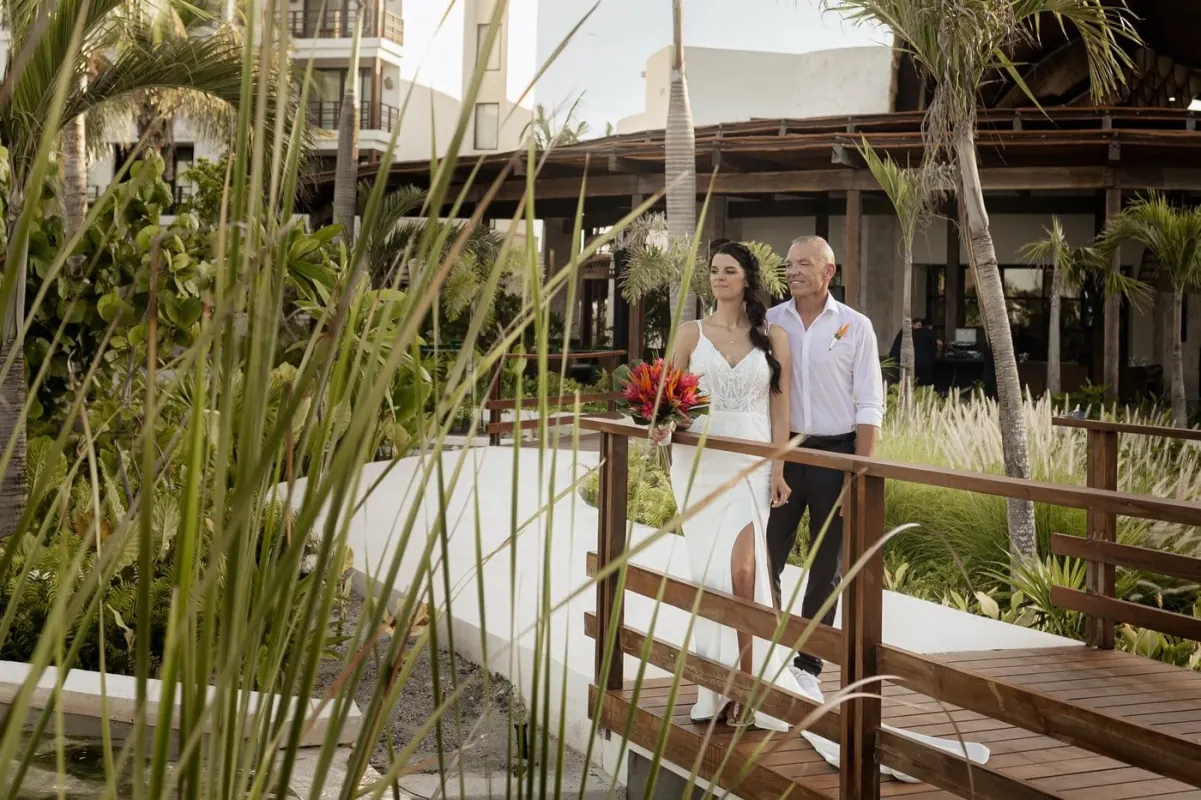
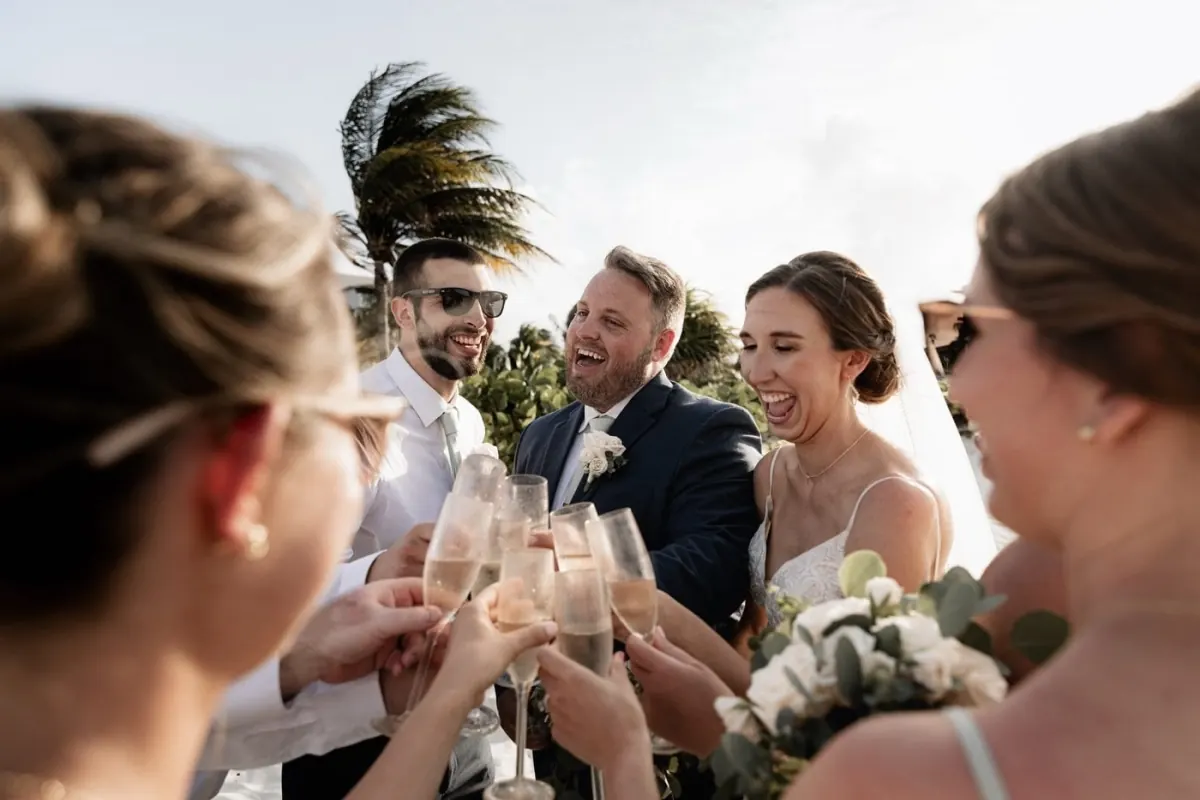
Real weddings we photographed in the Riviera Maya
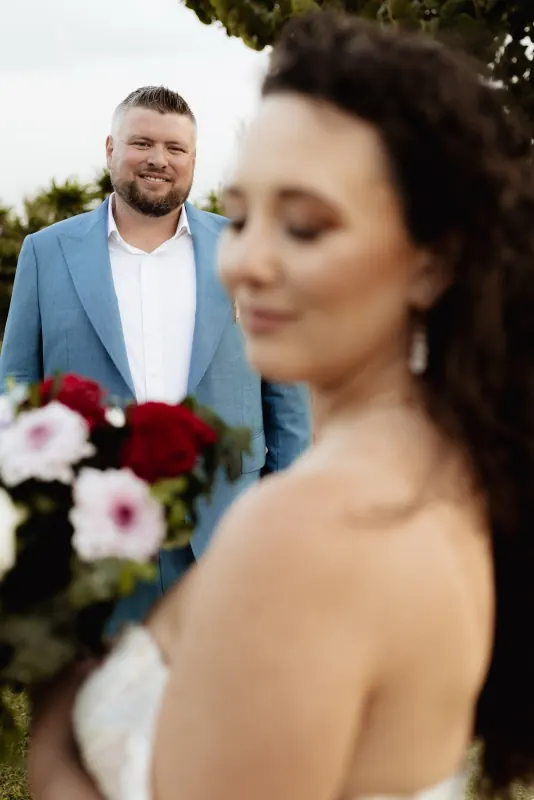
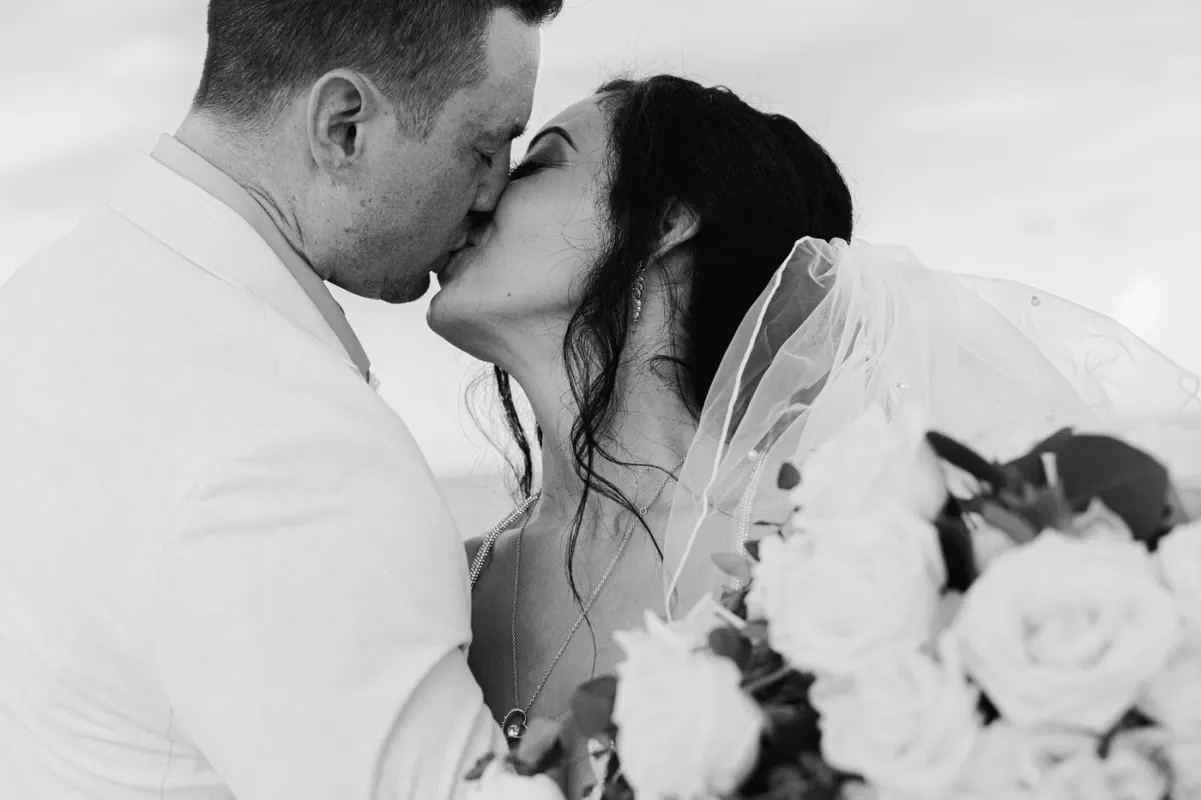
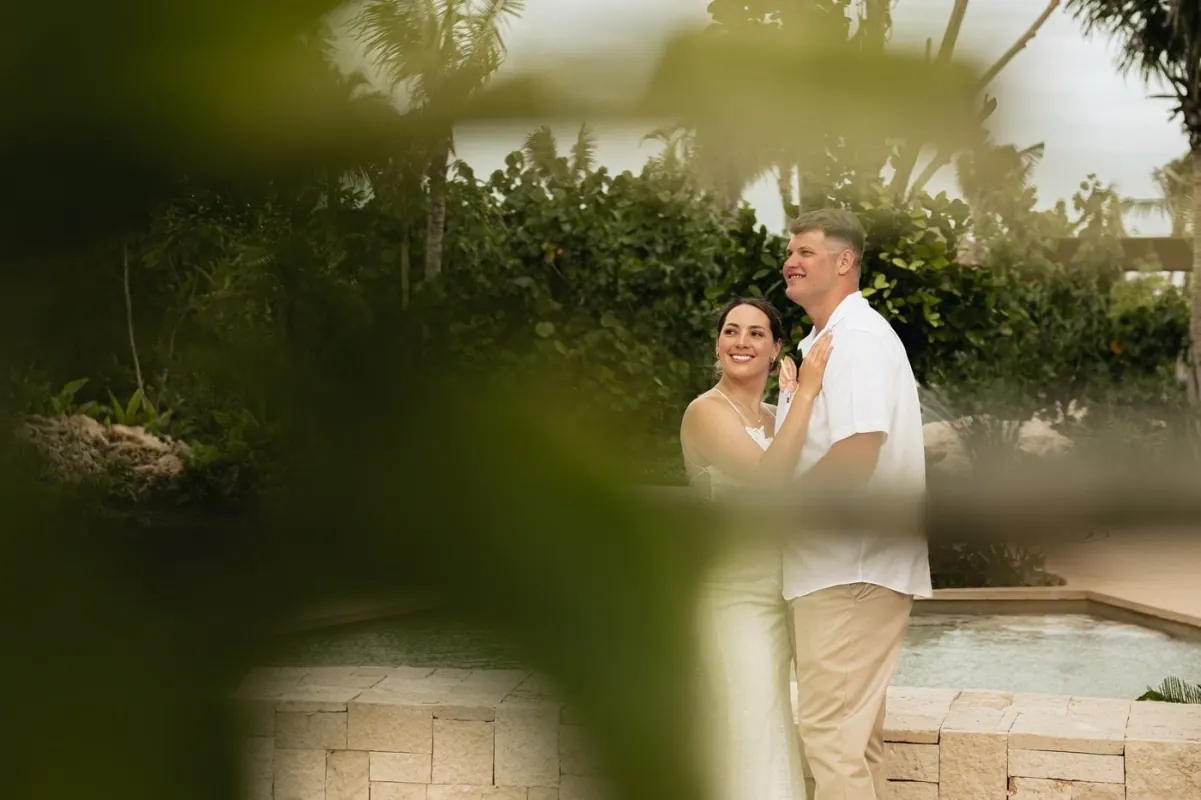
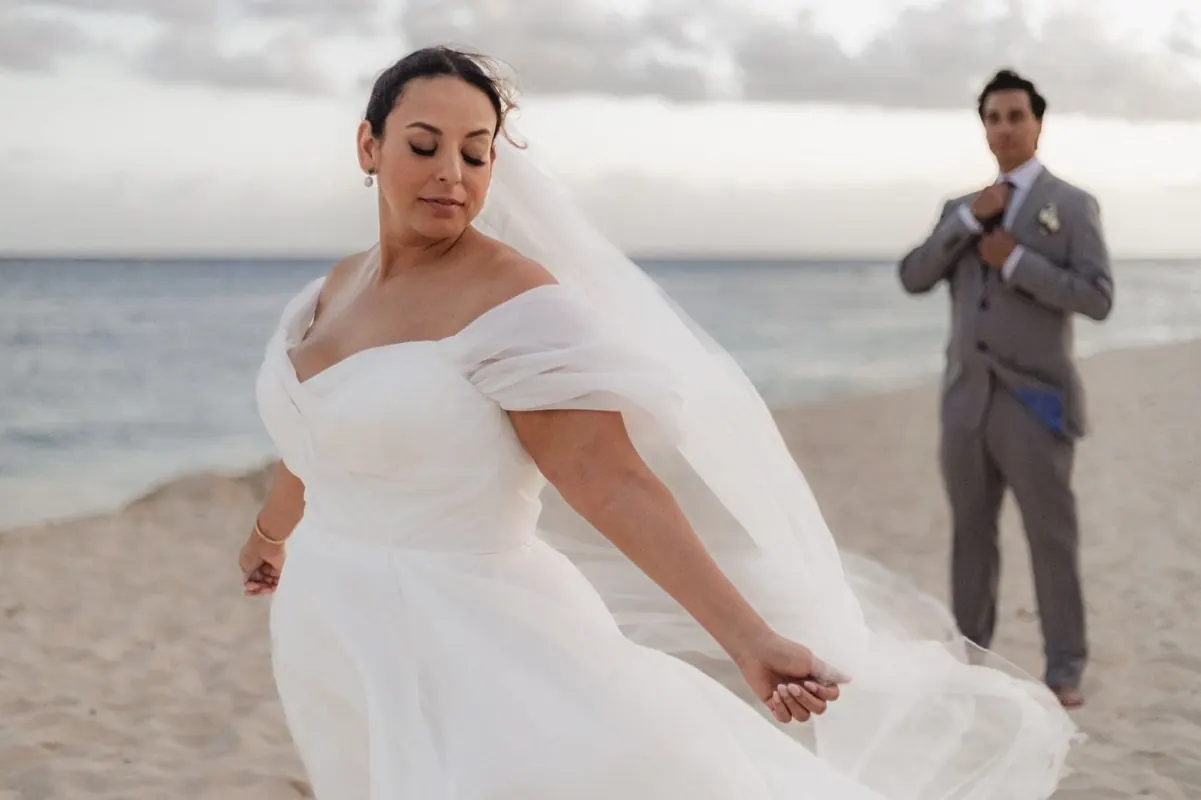
Couples who said yes with us along this coast. Not every frame is from a Symbolic Ceremony — we would rather show you honest work from the same beaches, the same light and the same team.
A Mayan ceremony, and what it actually involves
Ask for a Mayan ceremony on this coast and you will be offered several very different things, from a two-minute copal blessing bolted onto a resort package to a full ceremony run by a practising h-men. The recognisable elements are consistent: copal resin burning in a clay censer, a conch shell blown to each of the four directions, an offering laid out on the ground, and the couple addressed in Yucatec Maya with a translation for the room. Done properly it runs twenty-five to forty minutes, and it is a ceremony rather than a photo opportunity — which is worth knowing before you slot it into a timeline as a ten-minute item.
Two practical notes that nobody raises until the morning of. Copal smoke is the entire visual and it needs still air: in a cenote, in a jungle clearing or under the mangrove trees it hangs and photographs beautifully, while on open sand at five in the afternoon it is gone sideways in a second. And ask who is conducting it. There is a real difference between a local practitioner and somebody hired in a costume, and it registers on the guests’ faces in a way that cannot be edited out. We have photographed both and will tell you plainly which one you have been offered.
The legal part, done at home
Marrying legally in Mexico is not exotic bureaucracy, but it is real bureaucracy: sworn translations of your documents, apostilles issued in your own country, a blood test in some municipalities, four witnesses with official identification, and an hour assigned by the registrar rather than chosen from the light. Couples who do it successfully start months out with a local coordinator. Couples who leave it to the trip itself do not end up married — they end up stressed, and then they have the symbolic ceremony anyway.
So the overwhelming majority sign at home — twenty minutes, two witnesses, no ceremony to speak of — and put everything that matters here. Before or after both work, and nothing on this coast asks for proof either way; before is marginally more common because it removes any dependence on a document arriving in time. If you want the full list before deciding, our page on the documents a legal Mexican wedding requires has it. And since guest count shapes this day more than any other variable, and most of the settings above cap out around forty people, our intimate wedding guide is the natural companion read.
Timing, seaweed, and the plan that needs no plan B
If the ceremony is in the afternoon, hold it about ninety minutes before sunset. The coast faces east, so at that hour the light comes down the length of the sand warm and even, and the portraits afterwards fall in the same window. If it is at sunrise, everything is over by eight and the rest of the day belongs to you and your guests — several couples have used the free afternoon for the cenote session instead of a second location. Either way, the hour is yours to choose, and that is the single most photographically useful thing a symbolic ceremony gives you here.
Sargassum runs roughly April to August along this coast and it is extremely local: one property can be clear while its neighbour is buried, and the difference is four hundred metres of shoreline. Because a symbolic ceremony is not tied to a licensed venue, the fix is a message rather than a renegotiation — move to the garden, to another corner of the cove, or inland to a cenote where seaweed, wind and rain stop being variables at all. We check conditions in the weeks before your date and scout on the morning. Before you fix a week, read our month-by-month guide to weather and sargassum.
Coverage built around the ceremony
The ritual, shot from the right side
Copal and conch, sand, a lazo, or a reading by somebody who has never held a microphone. We ask for the running order beforehand so we are already standing where it happens.
Sunrise or golden hour, your call
Both get booked regularly. Sunrise means a 5:30 start for us and a small guest list; the afternoon means the ceremony sits ninety minutes before sunset, not at it.
Four to eight hours, quoted to the day
A ceremony with dinner afterwards is not a twelve-hour wedding. We quote the hours yours contains rather than a package built for a different event.
A cenote session, before or after
Twenty minutes inland: fresh water, limestone and a beam of light through the rock. It works as the ceremony itself or as a separate session the following morning.
How It Works
From your first message to your date being held
Four steps, and none of them is a price list. We would rather understand your day first.
-
Step one
You tell us the basics
Date, or the month you are aiming at, and roughly what you are picturing. Two lines is enough to start.
-
Step two
A brief planning call
Fifteen or twenty minutes with the photographer who would actually shoot it — the hour, the location, the light, what matters to you.
-
Step three
A quote written for your day
Coverage, hours, whether video or drone is worth it, and any fees we already know about. No package you have to squeeze into.
-
Step four
20 % holds the date
A deposit reserves your date and your team. The balance is due before the day, and every edited photo is included.
Reserve Your Date
Tell us about your Symbolic Ceremony
A few details and we will set up a short planning call, then send a written quote for exactly your day. Peak season (November to April) books early.
Coming from Devossion by Live Aqua Playa del Carmen — we have kept it, so you will not have to type it again.
Request received!
Thank you — the next step is a brief planning call. We'll understand your day first, then prepare a custom quote.
Planning call — choose a time with us Continue on WhatsAppPrefer to chat? We usually reply within minutes. Message us on WhatsApp
Prefer to meet us before you decide? Book a free 15-minute video call — no commitment
Symbolic Ceremony in the Riviera Maya — the questions couples actually ask
Is a symbolic ceremony legally valid in Mexico?
No, and that is the point rather than a drawback. It creates no marriage, so nothing has to be registered, translated, apostilled or witnessed. It is also why a cenote or a beach at dawn is bookable at all: nobody has to file anything afterwards, so nobody cares where you stood. Couples handle the legal side at home.
Do we sign at home before or after the trip?
Whichever suits you. Nothing here — not the hotel, not the cenote owner, not the celebrant — will ask to see a licence or a date. Most couples sign beforehand simply so that no piece of paper has to arrive on schedule while they are packing.
Who can officiate?
A professional bilingual celebrant, a friend, a relative, or an h-men if you want the Mayan ceremony. Nothing certifies any of them because nothing is being certified. What actually matters is whether they can be heard: on a beach at dawn the sea is louder than people expect, so confirm a microphone and a speaker even for fifteen guests.
Can we really hold the ceremony inside a cenote?
Yes, and it is the strongest argument on this page. Most cenotes used for ceremonies are privately held or run by a local ejido and charge an access fee for a private slot; capacity is usually around twenty people, access is on foot down steps, and some do not allow amplified sound. We book the slot in the light window rather than by the clock, which for a semi-open cenote is generally the middle of the day.
What language should the ceremony be in?
A bilingual celebrant alternating two languages roughly doubles the running time — plan for thirty-five minutes rather than twenty. Add a Mayan ceremony and you have three languages in the same hour, which needs to be timed on paper beforehand or it drifts. The clean alternative is one spoken language plus a printed programme with everything translated.
How much does it cost?
There is no list price, because a sunrise ceremony for twelve people and a cenote ceremony with an h-men and dinner afterwards are not the same booking. The sequence is a short planning video call first, a written quote after, and a 20 % deposit to hold the date. The ceremony itself — celebrant, cenote access, permits — is quoted by whoever provides it; we quote the photography.
Symbolic Ceremony at the resorts of the Riviera Maya
Each of these has its own wedding page with the venue, the light and the vendor rules. Your Symbolic Ceremony can happen at any of them.
- Allegro Playacar
- Bahia Principe Luxury Akumal
- Banyan Tree Mayakoba
- Barceló Maya Palace
- Dreams Riviera Cancun
- El Dorado Royale
- Fairmont Mayakoba
- The Fives Playa del Carmen
- Generations Riviera Maya
- Devossion by Live Aqua Playa del Carmen
- Grand Velas Riviera Maya
- Hyatt Centric Playa del Carmen
- Iberostar Playacar
- Mahekal Beach Resort
- Ocean Riviera Paradise
- Paradisus Playa del Carmen
- Playacar Palace
- The Reef Coco Beach
- The Reef Playacar
- Riu Playacar
- Rosewood Mayakoba
- Royal Hideaway Playacar
- Sandos Playacar
- Secrets Maroma Beach
- UNICO 20°87°
- Valentin Imperial Riviera Maya
- Hotel Xcaret Arte
- Hotel Xcaret Mexico
- Dreams Aventuras Riviera Maya
- Sensira Resort & Spa
- Royalton Riviera Cancún
- Waldorf Astoria Cancún
Read before you book
Planning something bigger, with guests and a reception? See all our wedding collections for the Riviera Maya