
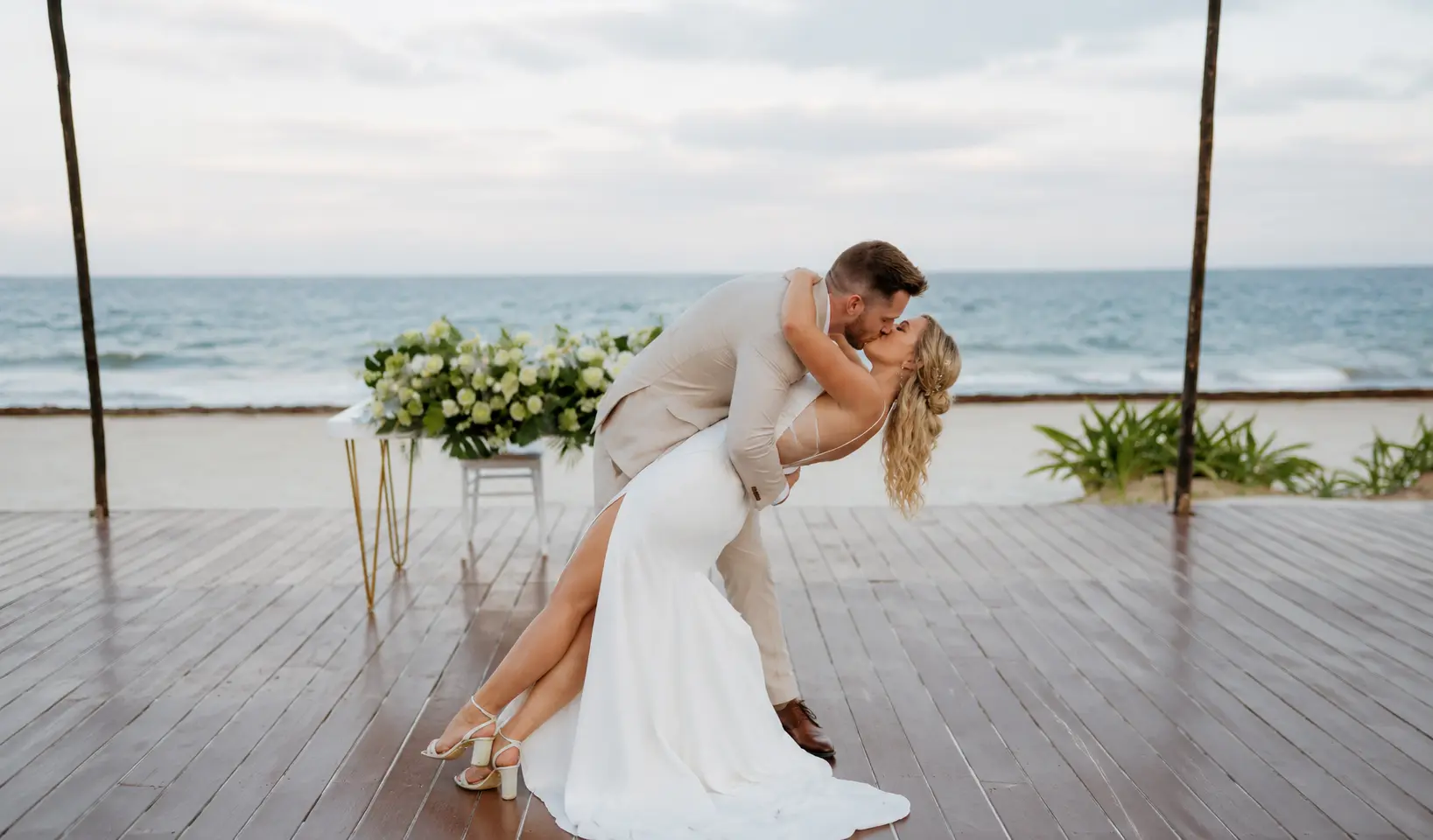
No registry means no rules about where
A legal wedding has to happen somewhere an official will go, with a table, a signature and witnesses. A vow renewal has none of that: nothing is recorded, so the ceremony can be held at the bottom of a limestone staircase in a cenote, under a thatched palapa, or on a strip of sand between two hotels, and it is exactly as valid as it would be in a ballroom. Tulum is the destination where that freedom pays the biggest dividend, because the interesting places here are precisely the ones no registrar would ever reach.
The other version we shoot a lot here is smaller still: two people, or two people and their grown children, on a twentieth or twenty-fifth anniversary trip. No guests to seat, no dinner to schedule, a celebrant for half an hour and then two hours of photographs. Tulum suits that particularly well — wood, thatch, vines and pale sand under low palms need no styling, and there is nothing to organise beyond showing up. The full range of formats and collections is on our Tulum wedding photographer page.
What Tulum adds, and what it asks
A cenote ceremony is genuinely possible
Fresh water, limestone walls and a shaft of light through the rock, five minutes up the jungle road. It holds about twenty people who can walk in, it needs no permit for a short ceremony, and it is completely unaffected by sargassum, wind or a grey afternoon.
Nothing to file, so nothing to coordinate
No documents, no witnesses, no registry appointment, no waiting period. On a coast where a wedding means months of paperwork, a renewal here can be decided six weeks out and still be the best day of the trip.
The road and the rooms ask something
The beach road is one lane each way with unpaved stretches, hotels are twenty to forty rooms with stairs and no lifts, and transfers do not move at sunset. If the group includes someone with limited mobility, Cancún is the kinder destination and we will say so.
The light goes earlier than you think
The beach faces east and the jungle behind it is tall, so the sun disappears behind the canopy well before the official sunset. Ceremonies here want to start about two hours before sunset, not ninety minutes. Knowing that is most of the job.
Three Tulum settings for a renewal
One inland, one on the beach road, one that costs nothing at all.
-
A cenote up the Cobá road
The strongest argument this destination has. Fresh water and limestone instead of sand, best light around the middle of the day when the beam comes through the opening, capacity for roughly twenty people who can manage a staircase. It is the one setting here that weather cannot take away from you, and it is available to a renewal precisely because nothing legal has to happen in it.
-
A boutique hotel on the beach road
Twenty to forty rooms, a palapa, a long table and an aesthetic that needs no decoration. Three questions before you book, in this order: what does the covered space hold if it rains, is the electricity grid or generator, and what is the walk from the road to the sand. Those answers matter more than the photographs on the website.
-
The public beach at Las Palmas
Federal shoreline, no permit needed for a short ceremony with no structures, and genuinely empty at first light. The sun comes up out of the sea between 6:20 and 7:10 and it is the best light in Tulum by a distance. For a renewal of six people it costs nothing and beats every paid option here.
We will confirm access, fees and the exact hour for your date before you commit to anything.
The Portfolio
Real weddings we photographed in Tulum
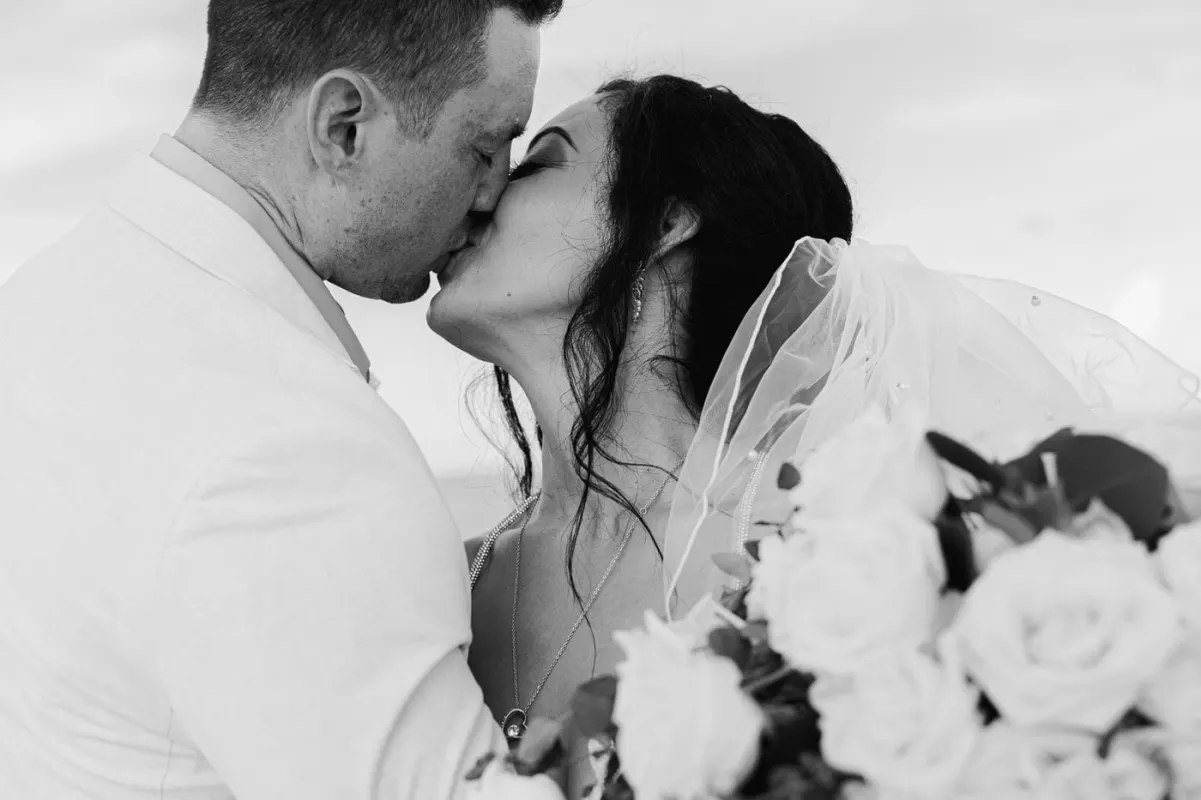
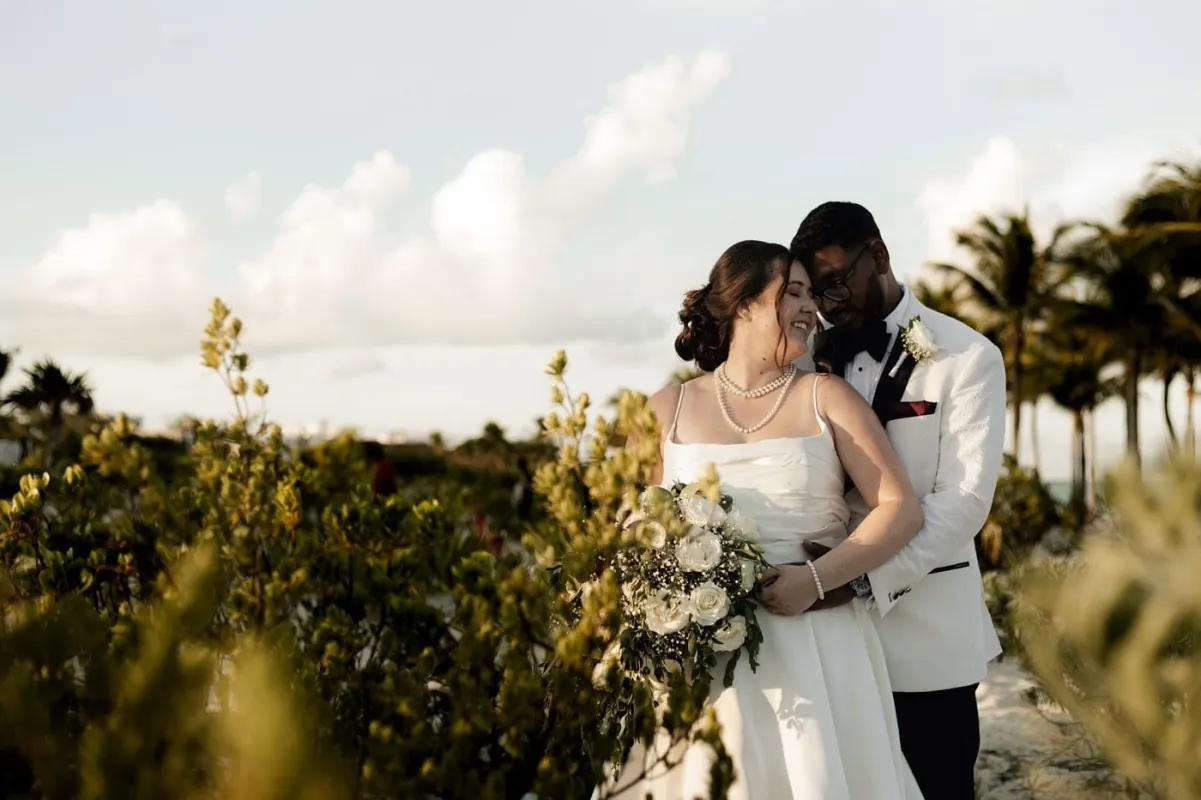
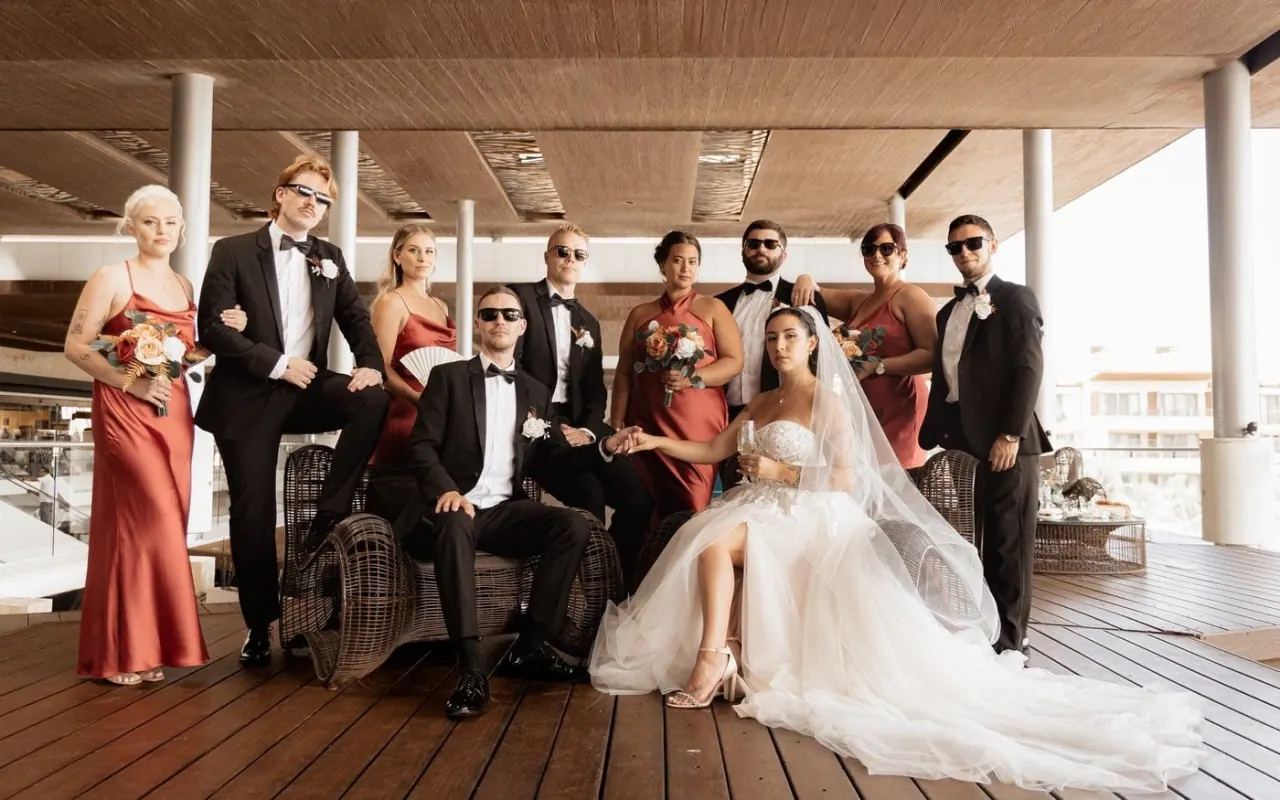
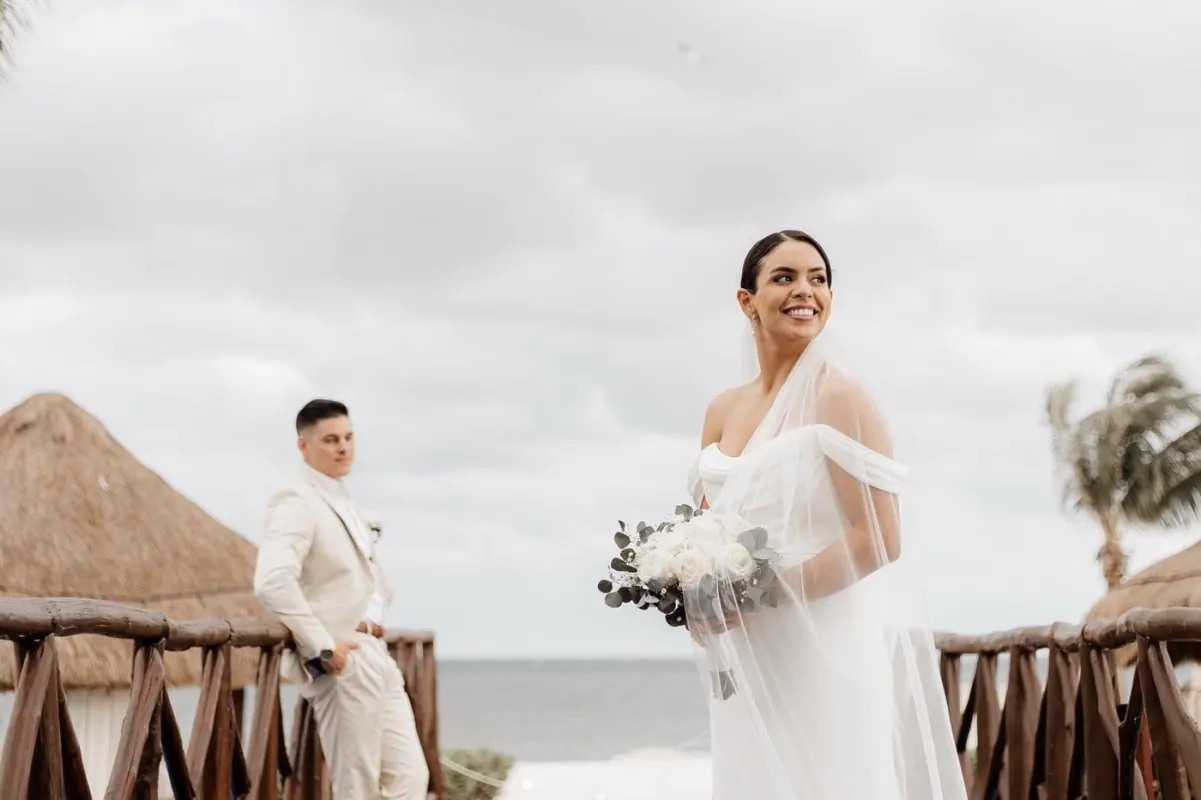
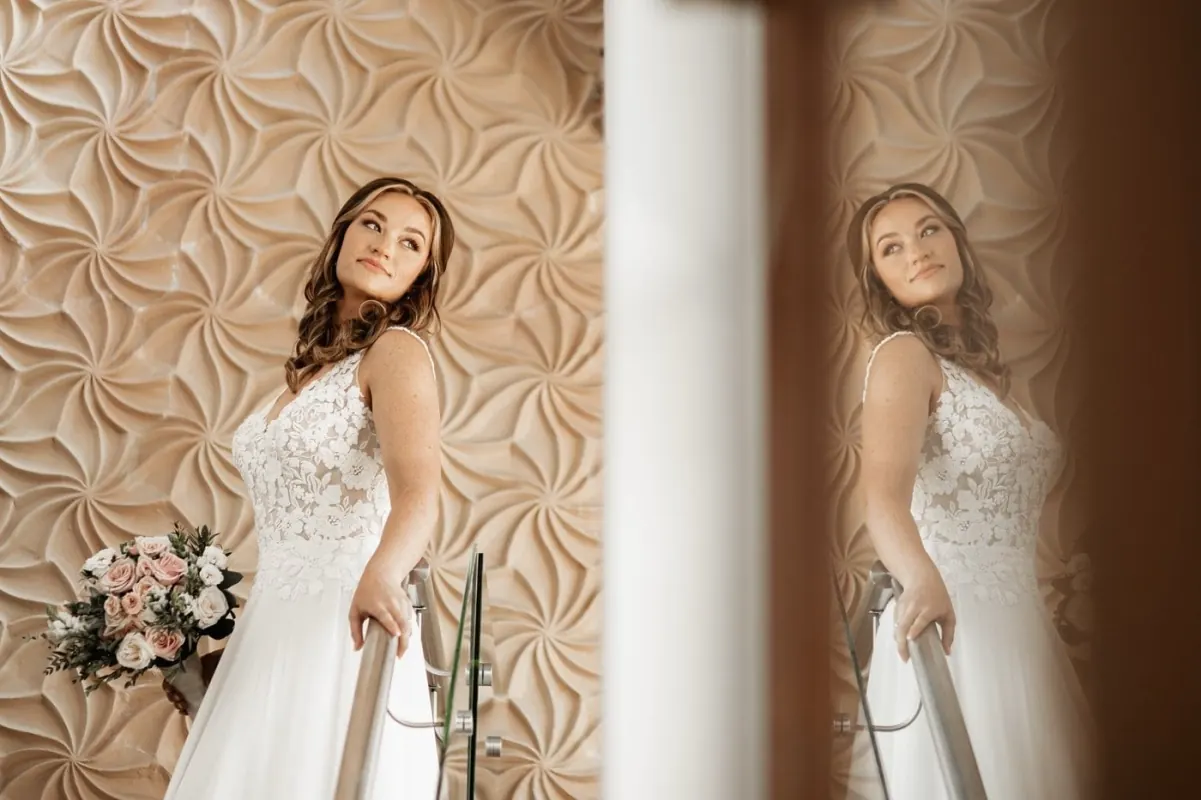
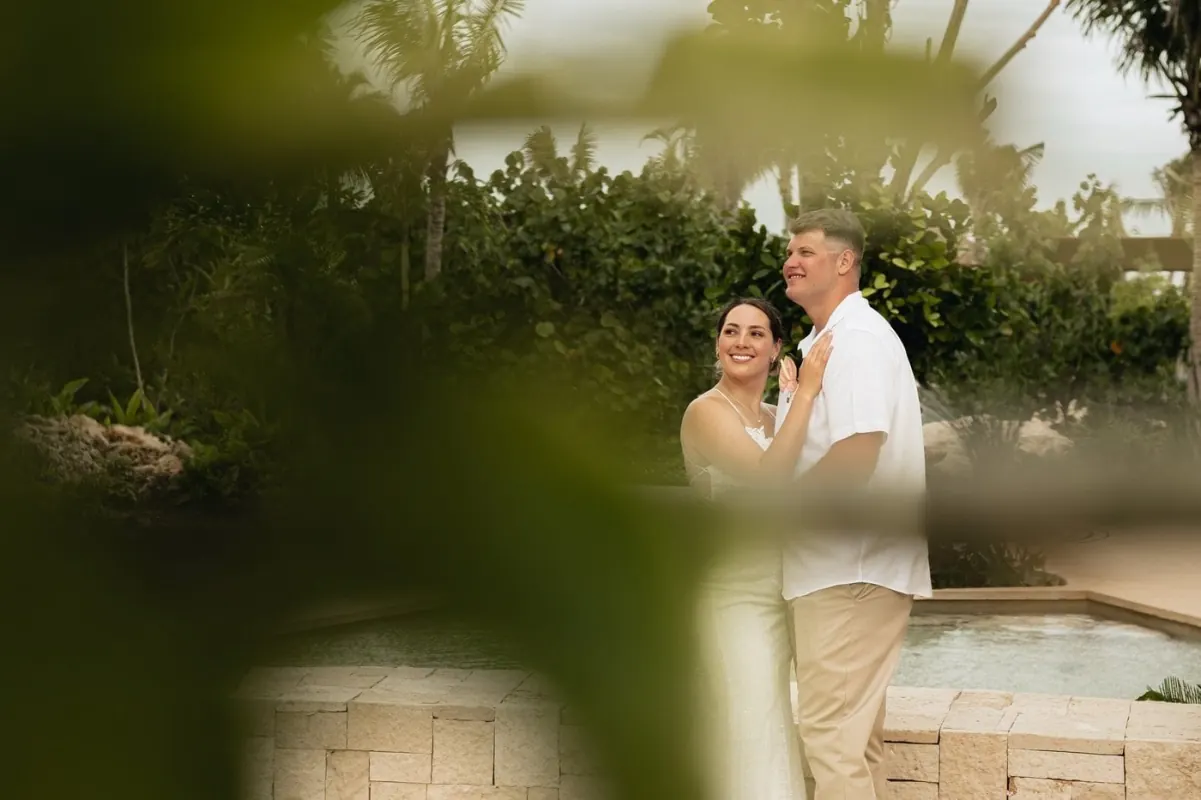
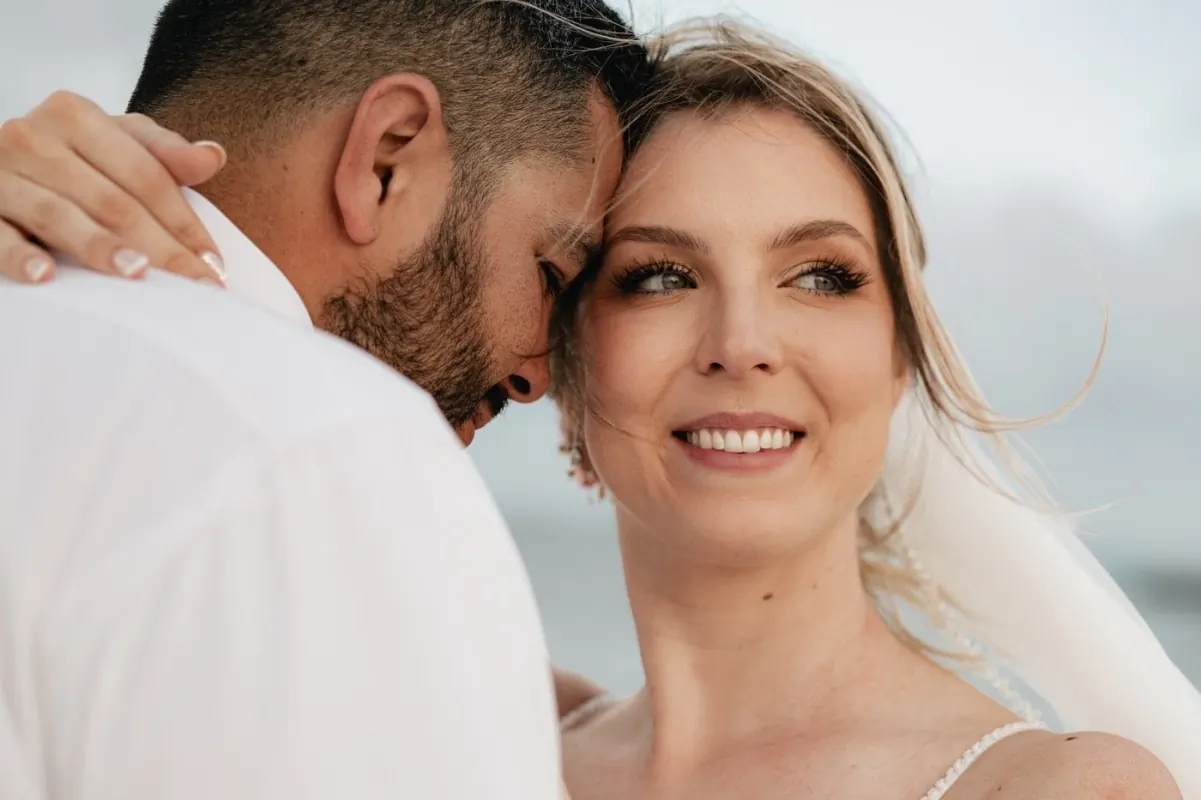
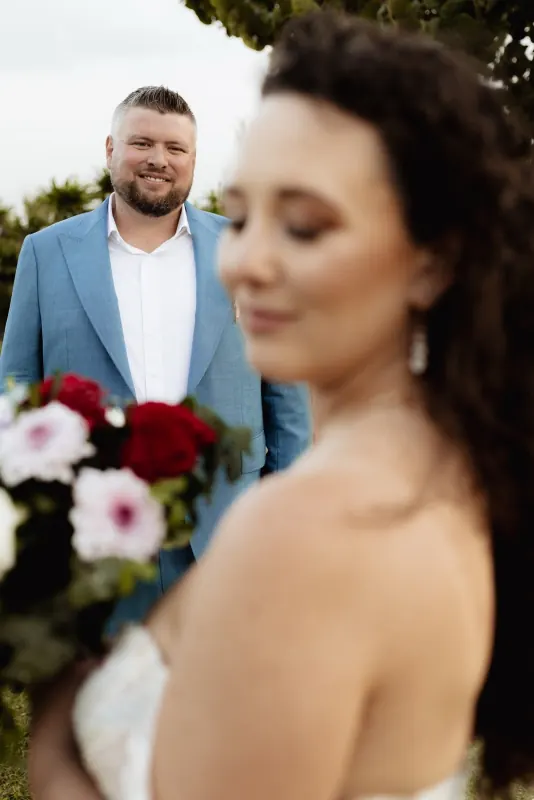
Couples who said yes with us along this coast. Not every frame is from a Vow Renewal — we would rather show you honest work from the same beaches, the same light and the same team.
The clock in Tulum runs earlier
Tulum’s beach faces east and the jungle behind it is tall, so the useful evening light ends before the official sunset time — the canopy takes it and the sand goes flat and grey while the app still says you have forty minutes. So the ceremony wants to be about two hours before sunset, usually somewhere between 16:00 and 16:45, rather than the ninety minutes that works in Cancún. That gives real light on the vows and a portrait window afterwards, and then dinner happens under string lights for as long as it lasts. Our guide to coverage hours explains how the pieces stack up; here the start time is the variable that decides everything.
The other option, and the one we push for when the group is small, is first light. The sun lifts straight out of the Caribbean between 6:20 and 7:10, Las Palmas is empty, and the air is still. A renewal is twenty minutes long, so asking eight people to be on a beach at half past six is a reasonable request in a way it never is for a wedding. If you are here as a couple on an anniversary trip, this is the version we would choose: ceremony at sunrise, breakfast afterwards, a cenote in the middle of the day, and the whole thing finished before the heat.
Who leads it, and what the children do
No licence is required, because nothing is being registered. A professional celebrant writes and holds the script — worth it if you want structure and want to cry without also running the ceremony. A Mayan officiant is common here and suits the setting: copal, conch, the four cardinal points, roughly forty minutes, and it photographs unlike anything else on this coast, particularly in a cenote. Or a friend does it. Or one of your children does it, which is the version that produces the photograph you will actually print.
If grandchildren are coming, give them a job: pouring a layer of sand, carrying the rings, reading one line. A job is the difference between a child who is present in the gallery and a child who is being held at the back. Keep the ritual list to two at most — every addition costs five minutes and an object someone has to remember to bring down a dirt road. And decide beforehand whether you are re-blessing the original rings or exchanging new ones, because it changes how we shoot the hands.
The honest logistics: road, power, rain and the ruins
Three things about Tulum that nobody puts in a brochure. The beach road is one lane each way, unpaved in stretches, and it does not move at sunset — build transfers around that or people will arrive during your ceremony. The beach-road hotels are small, which is their charm, but they run on a mix of grid and generator and very few have a real indoor room; if a squall comes through between June and October, the covered palapa is your entire plan B, so ask what it holds before you book. Our rain backup guide describes what an actual plan looks like as opposed to a hopeful one.
And the ruins: the archaeological zone is INAH-protected. Ceremonies are not permitted inside, professional photography requires a paid permit, and drones are banned overhead. We use the public coastline beside it instead, where the same limestone cliff meets the same water. Sargassum, finally, hits Tulum harder than the rest of the coast between roughly April and August, and hotels rake only their own frontage — which is the strongest practical reason to keep a cenote in the plan. The month-by-month guide is worth reading before you buy flights, and we check conditions in the weeks before your date and again that morning.
Coverage for a Tulum renewal
Two to four hours, typically
Getting ready, the ceremony, whoever came with you, and the couple session at the end of the light. Three hours covers most renewals here.
A cenote ceremony or session
Either as the ceremony itself or as the morning after. Weather-proof, sargassum-proof, and the part of the gallery guests talk about.
Light planned around the canopy
We schedule earlier than we would in Cancún because the jungle takes the evening. If you only take one thing from this page, take that.
The two of you, at the end
The reason most couples book: thirty to forty minutes with no audience, no schedule and nothing left to organise.
How It Works
From your first message to your date being held
Four steps, and none of them is a price list. We would rather understand your day first.
-
Step one
You tell us the basics
Date, or the month you are aiming at, and roughly what you are picturing. Two lines is enough to start.
-
Step two
A brief planning call
Fifteen or twenty minutes with the photographer who would actually shoot it — the hour, the location, the light, what matters to you.
-
Step three
A quote written for your day
Coverage, hours, whether video or drone is worth it, and any fees we already know about. No package you have to squeeze into.
-
Step four
20 % holds the date
A deposit reserves your date and your team. The balance is due before the day, and every edited photo is included.
Reserve Your Date
Tell us about your Vow Renewal
A few details and we will set up a short planning call, then send a written quote for exactly your day. Peak season (November to April) books early.
Request received!
Thank you — the next step is a brief planning call. We'll understand your day first, then prepare a custom quote.
Planning call — choose a time with us Continue on WhatsAppPrefer to chat? We usually reply within minutes. Message us on WhatsApp
Prefer to meet us before you decide? Book a free 15-minute video call — no commitment
Vow Renewal in Tulum — the questions couples actually ask
Do we need paperwork or documents?
No, and this is the point people miss. A vow renewal has no legal effect, so there is nothing to file: no apostilles, no translations, no witnesses, no registry, no waiting period. That is also why the ceremony can be held in a cenote or at the end of a dirt track — no official has to be there for it to count. The legal versus symbolic guide covers what a legal ceremony in Mexico would require by contrast.
Who can officiate?
Anybody. A professional celebrant who writes the script with you, a Mayan officiant with copal and conch — very well suited to a cenote and about forty minutes long — a friend, or one of your children. No licence, no registration, no approval list. Send whoever it is the text a week ahead and have them read it out loud once.
How long is the ceremony and the coverage?
The ceremony runs fifteen to twenty-five minutes, or around forty with a Mayan officiant. Two to four hours of coverage is the normal range: getting ready, the ceremony, the group, and the couple session at the end of the light. For a couple alone on an anniversary trip, two hours is often exactly right.
Can we hold it at our hotel on the beach road?
Most will host one, since a renewal is far simpler for them than a wedding. Ask three things: what the covered space holds if it rains, whether the power is grid or generator, and whether an outside photographer means a vendor fee or a day pass. Fees on the beach road are generally lower than at the Cancún all-inclusives, but some properties do charge them.
Can the children and grandchildren take part?
Yes, and they should have a job rather than a seat — pouring sand, carrying rings, reading one line. One thing specific to Tulum: the beach hotels have stairs, sand walkways and no lifts, so if anyone in the group has limited mobility, tell us early. We will either choose a setting they can reach comfortably or say plainly that Cancún would serve you better.
How much does it cost?
A sunrise ceremony for two and an evening renewal with twenty relatives and a cenote session the next morning are different jobs, so we quote rather than publish a rate. Tell us the date, who is coming and whether the cenote is in, we set up a short planning video call, and you get a written quote afterwards. A 20 % deposit holds the date.
Vow Renewal at the resorts of Tulum
Each of these has its own wedding page with the venue, the light and the vendor rules. Your Vow Renewal can happen at any of them.
Read before you book
Planning something bigger, with guests and a reception? See all our wedding collections for Tulum