
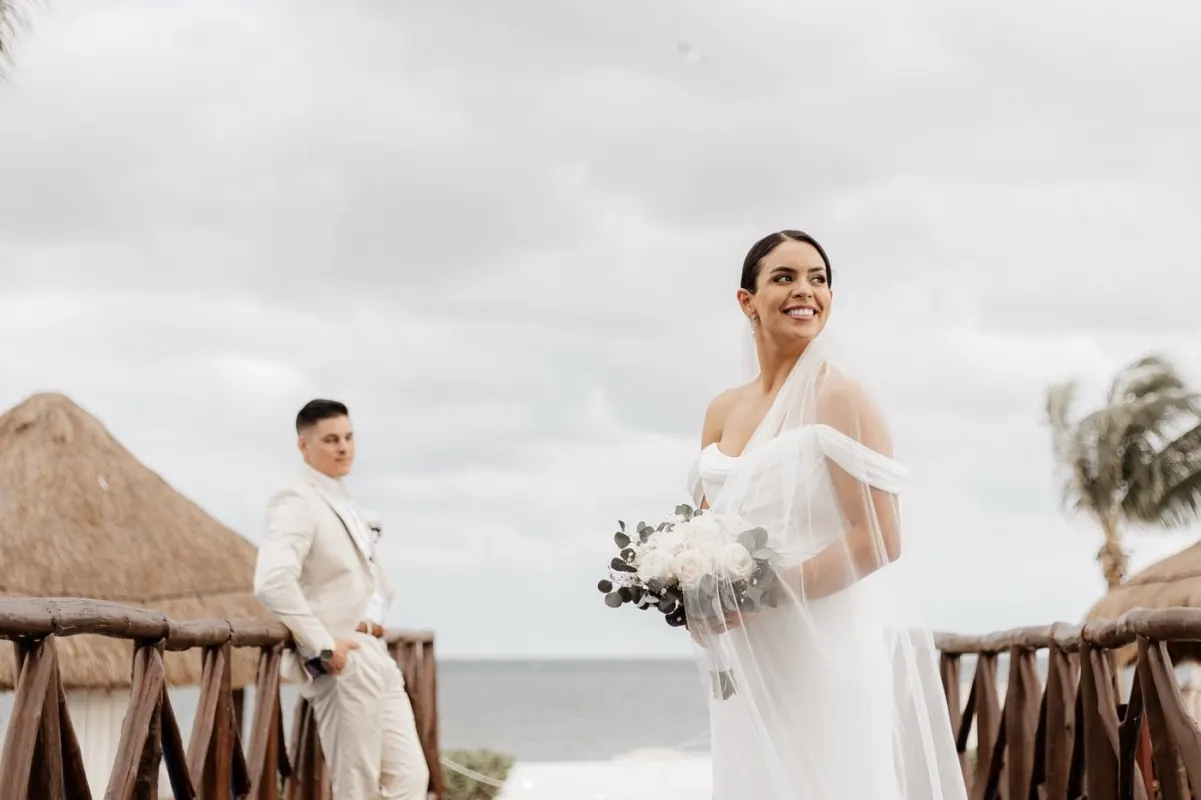
Every Wedding Habitas Tulum Can Hold, and the Talk That Shapes It
The Jungle Courtyard exists for a full wedding: vows under the canopy, dinner carried out of Moro, dancing until the palms go quiet. Strip that back and an elopement is what remains — a witness, the Mezzanine terrace, open water behind, nothing else required. Add ten friends and one long table beneath the palapa, and the same day reads as an intimate wedding instead. Renewing your vows belongs in the Maya Cenote Garden, where the water is older than the marriage, and a videographer can shadow the photographers through any of those shapes. Symbolic or civil, an LGBTQ+ wedding, day-after portraits down in the cove, engagement frames from before all this began — name the day you are building and we will pick the ground it stands on.
Rooms here are sorted by what you look at — jungle, plunge pool, open water — rather than by rank, and that flatness carries into the celebration: no grand suite, no head table lifted above the rest. Your Habitas Tulum wedding photographer begins where the hotel begins, by talking. Weeks ahead, one of our lead photographers blocks an hour for your day and nothing else — eye to eye if you have already landed here, otherwise on a video call — and comes out of it holding the wedding you are picturing and a list of what you want to keep. That routine has more than 1,000 couples behind it on this coast, photographed by a crew that works in both languages and holds Travellers’ Choice 2023–2025. The collections and the weddings themselves are on our Tulum wedding photographer page; WhatsApp us the date.
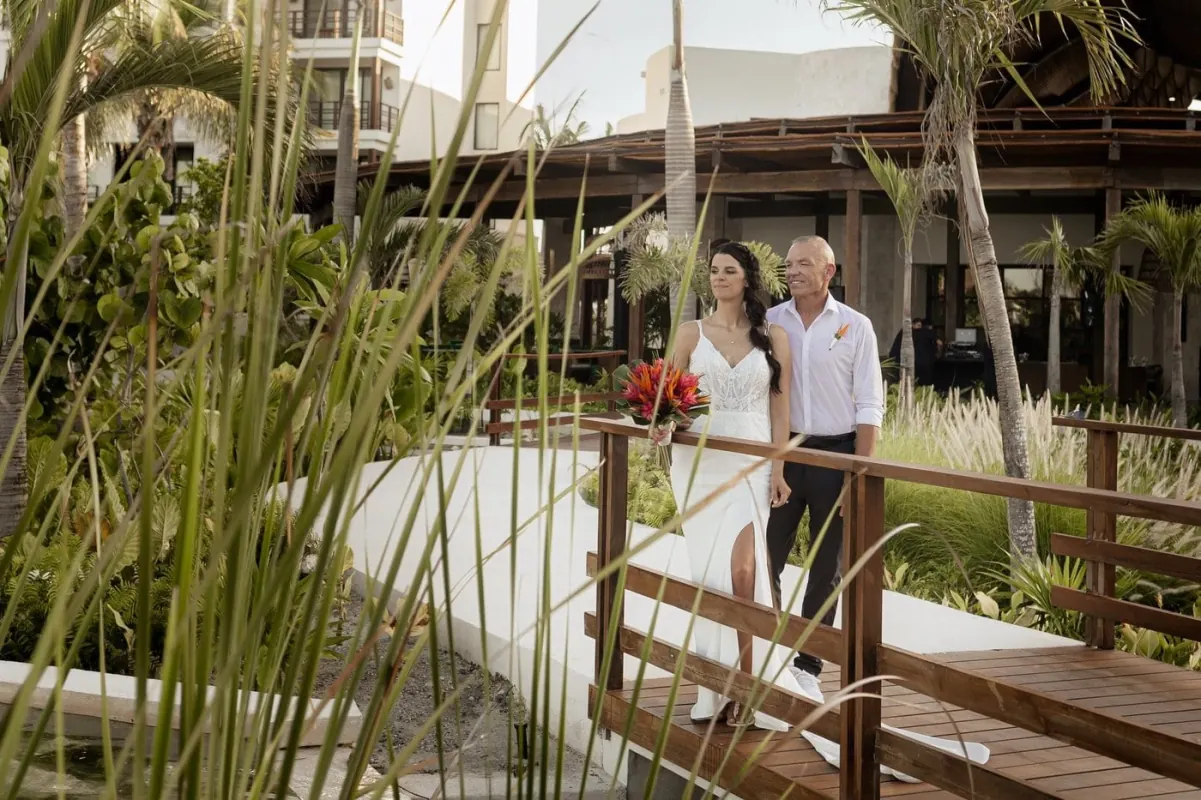
Four Things a Wedding Gains From a Place With No White Walls
Guest counts, menus and which space is free on your date belong to the wedding office — settle those with them. Ours is the picture, and at Habitas the picture is decided by what the buildings are made of long before anyone points a camera.
-
The Dress Is the Brightest Thing on the Property
Palapa, canvas, raw timber and sand keep the whole place in warm mid-tones. There is no white stucco, no marble, no gilt to argue with a wedding gown. We expose for the dress and everything behind it settles a step back on its own — the separation other venues need a flash to fake.
-
Thatch Filters the Day, It Does Not Cut It
Palm roofs and canvas walls let light through instead of stopping it, so the move from a shaded ceremony to open sand is gradual rather than a cliff. Guests keep their faces when they step under cover, and a wedding can cross from one space to another without us rebuilding the light in between.
-
Moro Puts the Camera Close to the Floor
The restaurant seats everyone low and walls the room in glass, which does two useful things at a wedding dinner: the jungle reads behind your heads instead of paint, and we work from near ground level, where toasts and hands are at eye height. The wood fire in the kitchen warms the whole room on camera.
-
The Rooftop Holds Both Landscapes at Once
Above the treetops, the Caribbean on one side and the Mayan canopy on the other land in a single frame. It is the one spot on the property where a wedding portrait carries both halves of where you married, and it is worth ten minutes of your timeline near the end of the light.
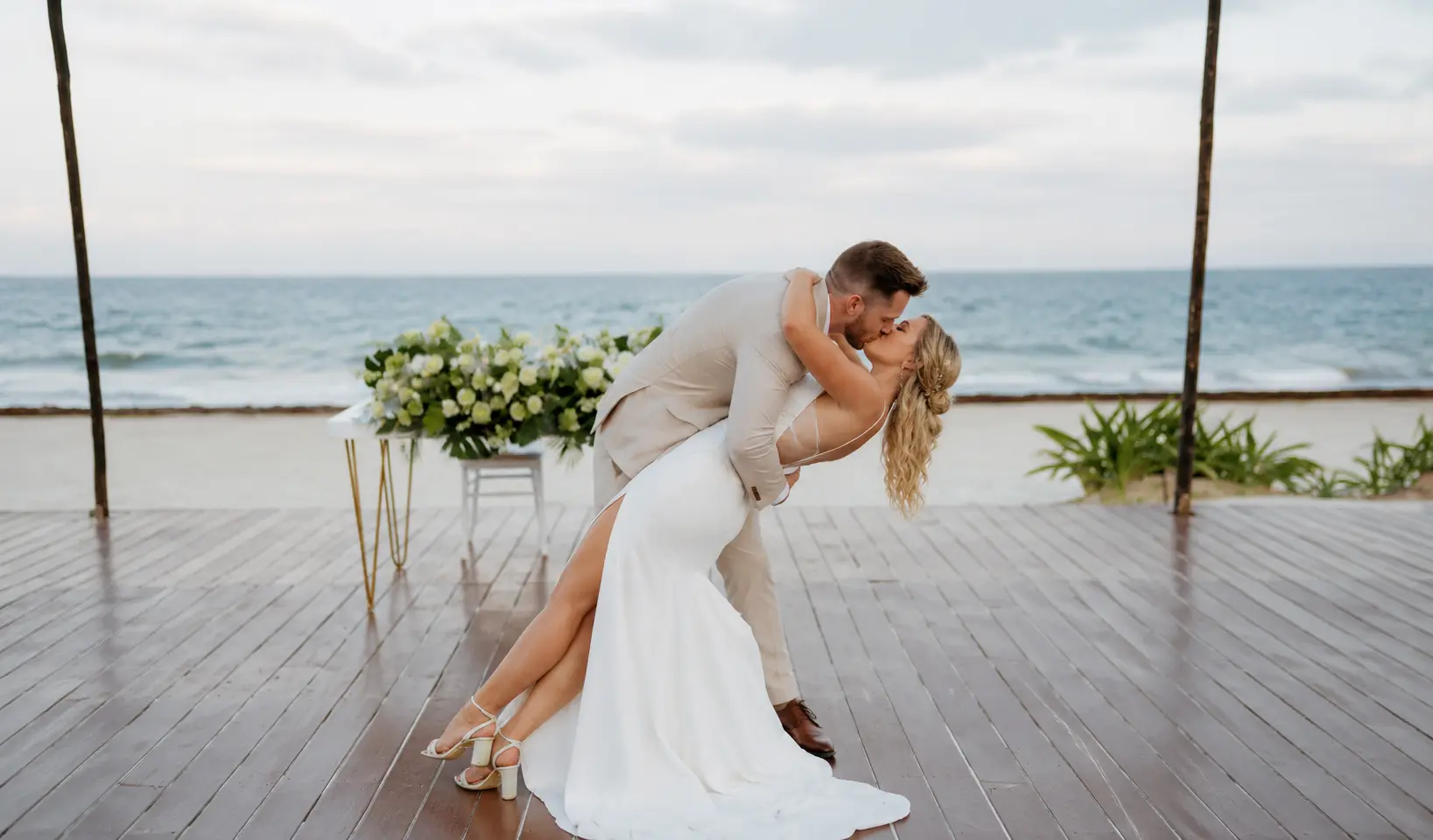
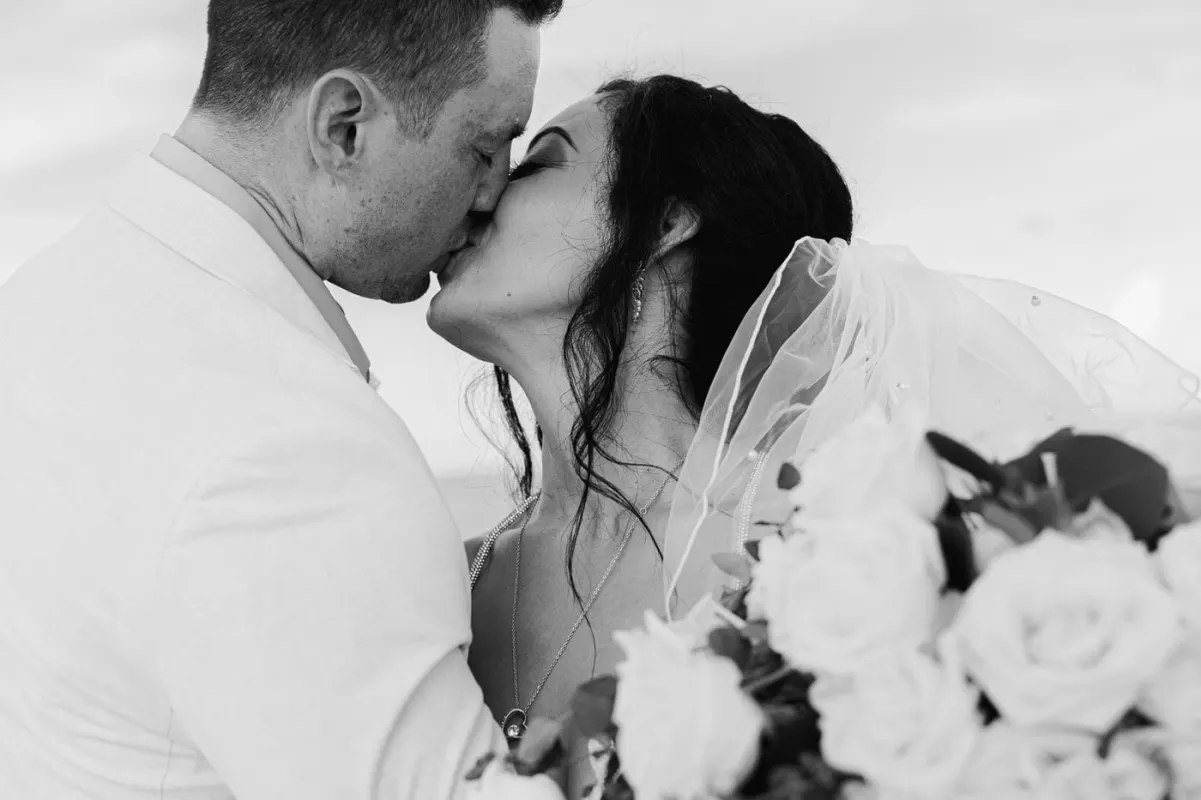
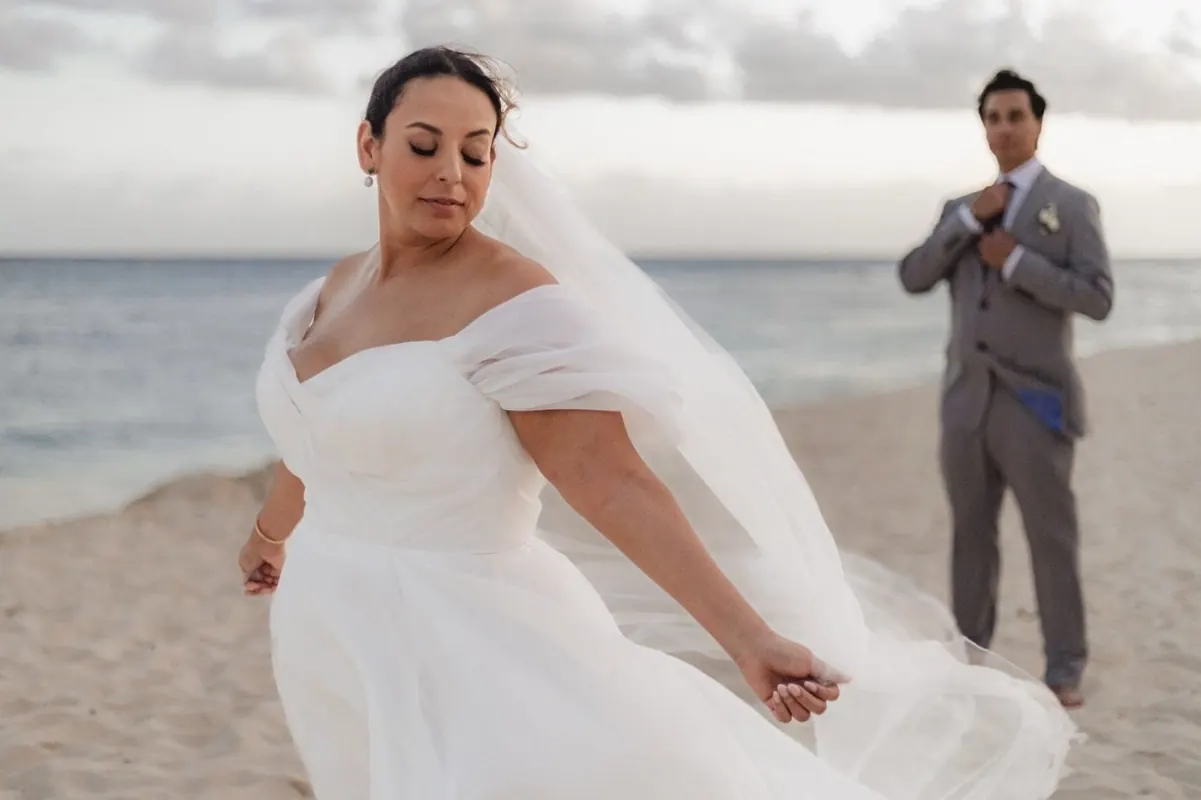
The Weddings a House of Palapa and Canvas Is Built to Hold
Habitas is small, and small properties bend. The same courtyard that seats a whole guest list can be struck down to one table, and the same stretch of sand works for a hundred people or for two. These are the three shapes we are asked for most here, each with a guide of its own:
The Full Wedding: Courtyard Vows, Dinner at Moro, Roof at the End
Getting ready in a jungle room, the first look among the trees, vows in the Jungle Courtyard, drinks on the sand and a reception that ends in the restaurant, with one or two photographers depending on how many of you there are. Our destination wedding photography timeline shows how we pace a full day so nothing has to be hurried.
Eloping Under the Canopy, or a Wedding of One Table
Two of you at first light on the cove, or a dozen at a single table on the Mezzanine, with the whole golden hour left for portraits because there is no schedule to feed. Start with our guide to eloping in Tulum and the intimate wedding guide.
Vows in the Cenote Garden, With or Without the Registry
Fresh water inside the grounds changes what a ceremony sounds like and how it photographs — cooler light, a darker ground, reflections that do half the work. It suits a renewal as well as a first time. See our cenote wedding guide and, for an anniversary, the vow renewal guide.
Where a Habitas Wedding Can Stand: Courtyard, Rooftop, Cove, Cenote Garden
The property gives you a handful of grounds and they are genuinely different from one another, which is unusual on a plot this size. The Jungle Courtyard is the big one — open to the sky, ringed by growth, the place a full ceremony and a dance floor belong. The Beach Club and its pool deck sit on a sheltered cove, so the sand out front is short and enclosed rather than a boulevard. Moro takes the seated dinner. The Rooftop, above the canopy, is the smallest and the most photogenic. The Mezzanine terrace holds a cocktail, a signing, or an entire elopement.
What we care about is the order you put them in. Sunlight leaves those four grounds at different moments — the cove first, then the courtyard, then Moro, then the roof — and a wedding that moves in that direction keeps its light for an extra half hour. A wedding that moves against it does not. We work that sequence out with you at the first conversation, before the wedding office is asked to hold anything.
An Address on Boca Paila, and What It Means for the Day
Habitas sits on the beach road south of the pueblo, on the strip where the jungle comes right down to the sand. Everything your wedding needs is inside the gate: rooms, ceremony ground, dinner, dance floor and a roof to finish on. Guests arriving from either airport reach one address and stay there, and we work the whole day inside the property rather than convoying anyone anywhere.
Reading Wedding Light Through Palm and Canvas
Golden hour — the soft, generous light in the hour bracketing sunset — is where wedding pictures live. On this coast the sun goes down behind the jungle rather than into the sea, which means the last direct light of the day comes off the water and hits you frontally on the sand, then fades quickly once the canopy takes it. We usually build the ceremony to begin roughly two hours before sundown, which leaves vows, family groupings and an unhurried portrait set inside the good light.
The seasonal catch is real: sunset drifts by well over an hour across the calendar, so a start time that finishes in gold in January finishes in the dark in June. We anchor every wedding timeline to the true sunset for your date. Our notes on the best months for a wedding on this coast map how the light and the weather move through the year.
Colour Is the One Wedding Decision Habitas Has Already Made
Most venues hand you a palette problem — a ballroom carpet, a painted wall, a coloured uplight — and a good chunk of editing goes into undoing it. Here the palette is fixed and it is friendly: sand, rope, unfinished wood, green, and the black of the fire in the kitchen. Bouquets read louder against it. Skin holds its warmth without correction. Bridesmaids in almost any shade will sit inside the scheme rather than fight it, and the only thing you have to decide is whether you want your flowers to whisper or to shout, because the background will not do either for you.
Putting an Outside Wedding Photographer in Writing, Early
Ask the wedding office in writing, while you are still comparing dates, how they handle a photographer you bring yourself. Boutique properties usually name a photographer fee or a day pass; both are ordinary line items, and the point is simply to have the terms on paper long before the morning of the wedding. We break the whole subject down in our guide to outside-photographer vendor fees at resorts on this coast, and we set an independent photographer beside the one folded into a package in resort photographer versus your own.
The Registry Version of Your Ceremony, and the Cenote Garden Version
A legal civil marriage in Mexico brings documents, witnesses and a tighter clock. Plenty of couples handle the legal part at home and stage a symbolic ceremony here instead — identical through the lens, and it frees the hour. Decide it before we draft your timeline, because it governs when the ceremony can start and, at a property this compact, when everything after it can start too.
Whatever shape the day takes, the wedding is not the end of the pictures. Couples often add a day-after or trash-the-dress session in the cove while the dress is still with them, and we photograph LGBTQ+ weddings here on the same terms as any other. If you want the day moving as well as still, our wedding videography notes explain how a filmmaker works alongside the photographers without either team crowding the other.
Have a Date at Habitas Tulum? Tell Us What You Want the Wedding to Feel Like.
Send us the date and how you picture it. Your photographer meets you before the wedding — in person or on a call — and together we work out the running order of the grounds, the ceremony hour against the real sunset, and what you want in your hands at the end. Every edited photo is included in every collection; the collections themselves, photo only or photo and film, live on our Tulum wedding page.
One Camera or Two, Film or None — Every Edited Photo Yours
What moves between our wedding collections is how much of the day we are with you, whether a second photographer covers the ceremony while the first stays with you, and whether a videographer films alongside. What never moves is the delivery: every edited photograph from your Habitas Tulum wedding is included, with no per-image cap and no shortlist to choose from.
The collections, what each one covers and their prices live on our Tulum wedding page, where you can also check whether your date is free.
Habitas Tulum Wedding Photography — FAQ
Can we bring you as our own wedding photographer to Habitas Tulum?
Yes. We are an independent studio on this coast, photographing weddings across Tulum and the Riviera Maya most weeks, and we would come to Habitas as the photographer you chose. Whatever the wedding office asks of an outside photographer — a fee, a day pass — we settle it with them alongside you, so it is one less thing on your list. Every edited image is yours, in every collection.
What happens after we book, and when do we actually meet our photographer?
Before the wedding, never on the morning of it. One of our lead photographers sits down with you — in person if you are already in Tulum, on a video call if you are planning from abroad — to hear how you imagine the day, walk the grounds in the right order, set the ceremony hour against the real sunset for your date, and agree exactly what we will deliver. By the time you arrive, the plan is already yours.
Do you film as well? Can we book photo and video for a Habitas Tulum wedding?
We do. Our photo and video collections add a videographer who works alongside the photographers through the ceremony, the speeches and the first dance, with the two teams choreographed so neither appears in the other's frame. Photo-only and photo-and-video collections are both listed on our Tulum wedding page.
Where do couples usually hold the ceremony at Habitas?
The Jungle Courtyard takes the largest ceremonies, open to the sky with growth all around it. The sheltered cove out front suits a smaller, barefoot ceremony. The Maya Cenote Garden gives you fresh water and a cooler, darker ground, and the Rooftop above the treetops is the smallest and the best of them for portraits afterwards. Which one is free on your date is a question for the wedding office; which order to use them in is a question for us.
Is it difficult to photograph a wedding under palapa roofs and canvas?
It is the opposite. Thatch and canvas diffuse daylight rather than block it, so shaded ground here stays open and soft instead of going flat, and there is no harsh line where cover ends and sun begins. We still bring lighting for the reception, once the fire and the lanterns are the only sources left, but through the ceremony and the portraits the property does most of the work.
Can we add a day-after or trash-the-dress shoot while we are still here?
Often the best hour of the whole trip. With the wedding behind you and no schedule left, we take the dress back down to the cove or into the trees at first light, when nobody else is up. It is calmer than the wedding day and it usually produces the frames that end up on the wall.
Do you photograph LGBTQ+ weddings, vow renewals and symbolic ceremonies here?
All of them, on exactly the same terms. A vow renewal in the cenote garden, a symbolic ceremony after a civil one at home, an LGBTQ+ wedding on the sand: the paperwork differs, the photography does not. Tell us which it is at the first conversation, because it changes the running order of the day and very little else.
More Tulum Weddings We Photograph
Tulum — beach & jungle
- Azulik Wedding Photographer
- Be Tulum Wedding Photographer
- Conrad Tulum Riviera Maya Wedding Photographer
- Dreams Tulum Wedding Photographer
- Hilton Tulum Riviera Maya Wedding Photographer
- Kore Tulum Wedding Photographer
- La Zebra Tulum Wedding Photographer
- Mi Amor Tulum Wedding Photographer
- Nomade Tulum Wedding Photographer
Akumal & Tulum resorts
- Bahia Principe Grand Coba Wedding Photographer
- Bahia Principe Grand Tulum Wedding Photographer
- Secrets Akumal Riviera Maya Wedding Photographer