

Why this one starts at half past six
A trash the dress session is not a wedding. There are no guests, no ceremony and no dinner: the two of you, a photographer and the water, for sixty to ninety minutes. The argument for it is simple and nobody makes it out loud — on the wedding day the dress is a responsibility, and that responsibility shows in every frame as posture. Here it stops being one. She walks into the sea in it, and the way she moves changes immediately. That is why these are so often the best photographs in the whole gallery, and why they belong to the day after rather than the day before.
Tulum adds a condition the other destinations do not. The beach faces east and the jungle behind it is tall, so the evening light disappears well before the official sunset and the sand goes flat and grey. And by mid-morning the beach road is awake — beach clubs, loungers, phones. A wedding dress in the water draws a crowd, and being watched puts the posture straight back on. First light solves both problems at once: the sun comes up out of the Caribbean between 6:20 and 7:10 and the sand is genuinely empty. The wedding day itself lives on our Tulum wedding photographer page.
Four things that are true in Tulum and nowhere else on this coast
The beach is actually empty at 6:30
Not quiet — empty. Las Palmas and the public accesses have nobody on them at first light, and an audience is the fastest way to make someone self-conscious in a wedding dress.
The light comes out of the sea
The coast faces east, so sunrise is direct and low across the water. There is no evening version of that here: the sun sets behind the jungle canopy, and the last hour on the sand is flatter than couples expect.
You are already on the beach road
The hotels here have twenty to forty rooms and the sand is in front of them. You walk out of the room in the dress. No transfer, no coordinator, no lobby full of people at six in the morning.
A cenote as the insurance
Five to twenty minutes up the Cobá road. Fresh water and limestone, immune to sargassum, wind and rain — and gentler on the fabric than salt water is.
Three Tulum settings, and one of them is a rule rather than a choice
Two on the coast, one inland. All three work at sunrise; only one works when the sea does not.
-
The sand in front of the beach road, at first light
Palms, pale sand and the sun lifting straight out of the water. The public accesses near Las Palmas put you on open beach without asking anyone for permission, and at 6:30 there is nobody to walk through the frame. By 9:30 the same stretch has loungers, music and an audience.
-
A cenote up the Cobá road
Fresh water instead of salt, limestone instead of sand, and the best hour is the middle of the day rather than the edges of it. Completely unaffected by seaweed, swell or wind. Entrance fee per person and usually a separate photography fee, and most cenotes ask you to shower and skip sunscreen.
-
The public coast beside the archaeological zone
The same limestone cliff and the same turquoise water as the postcard, on public sand where the rules do not apply. Inside the zone itself INAH permits no ceremonies, charges for professional photography and bans drones overhead — so we work beside it rather than in it.
We will confirm access, fees and the exact hour for your date before you commit to anything.
The Portfolio
Real weddings we photographed in Tulum
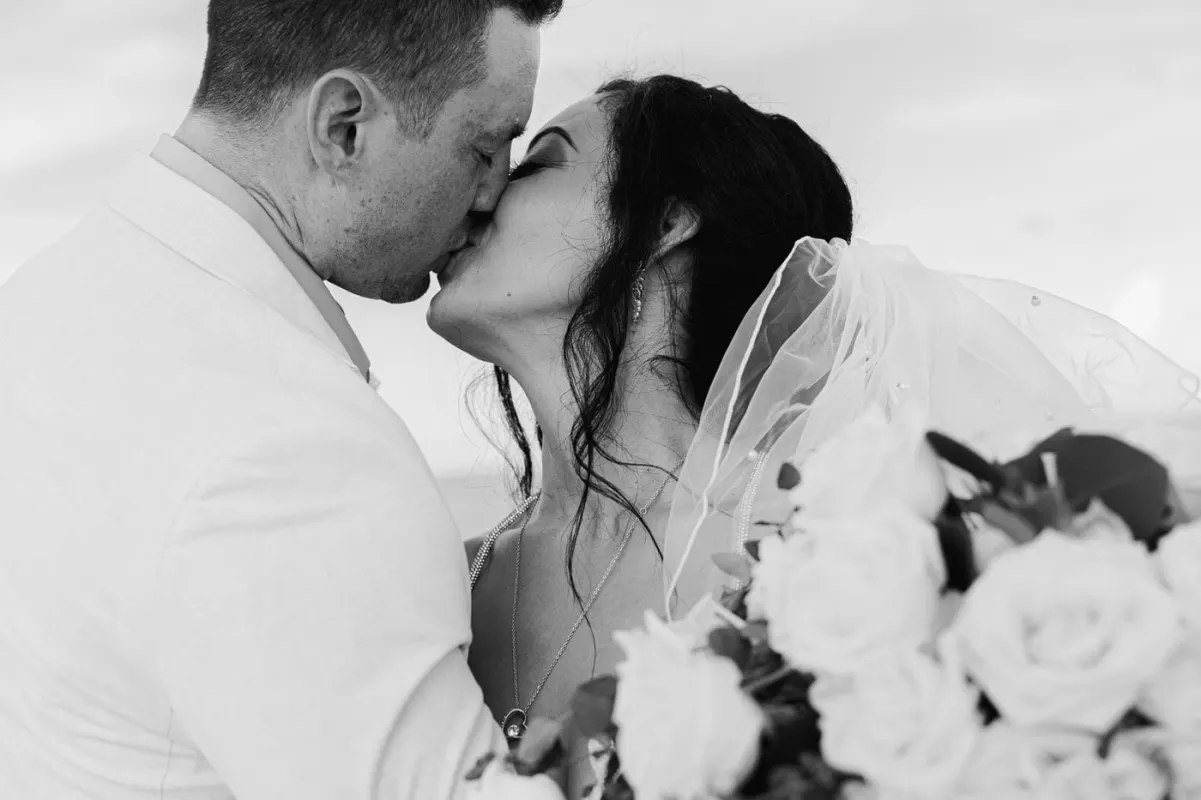
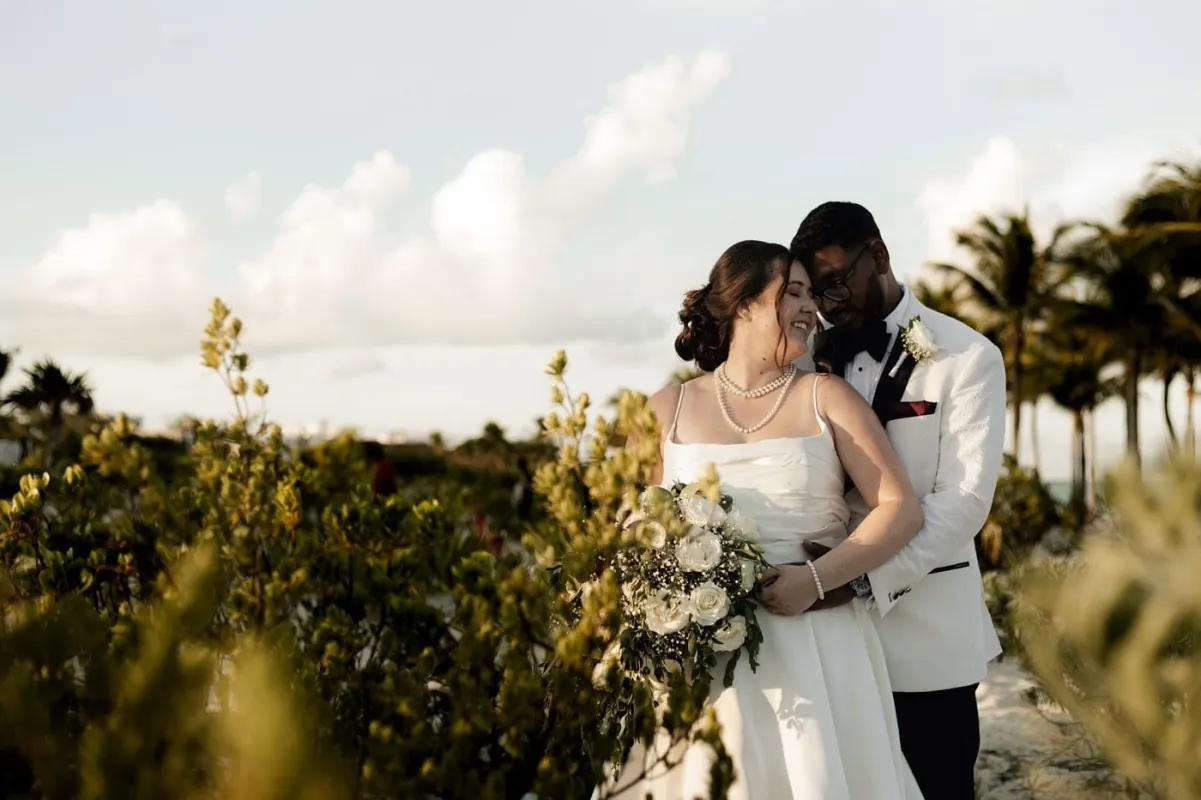
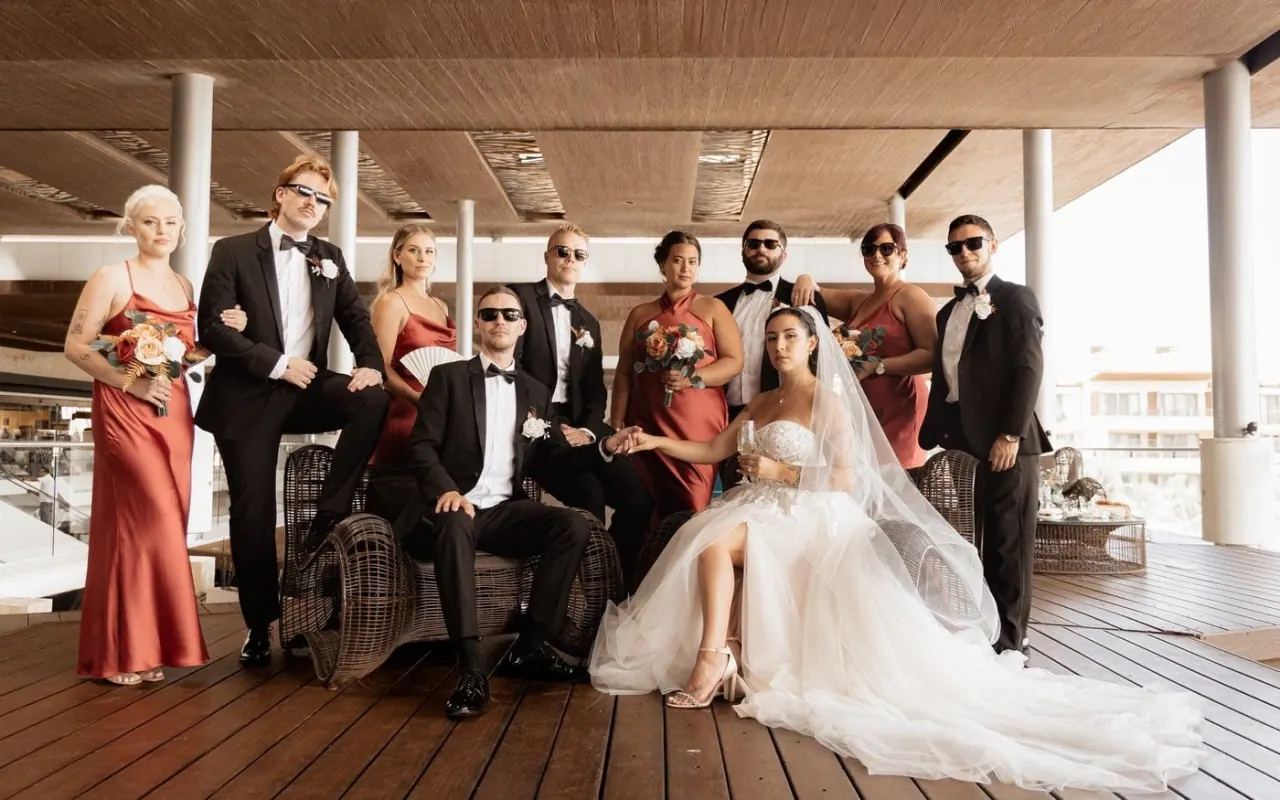
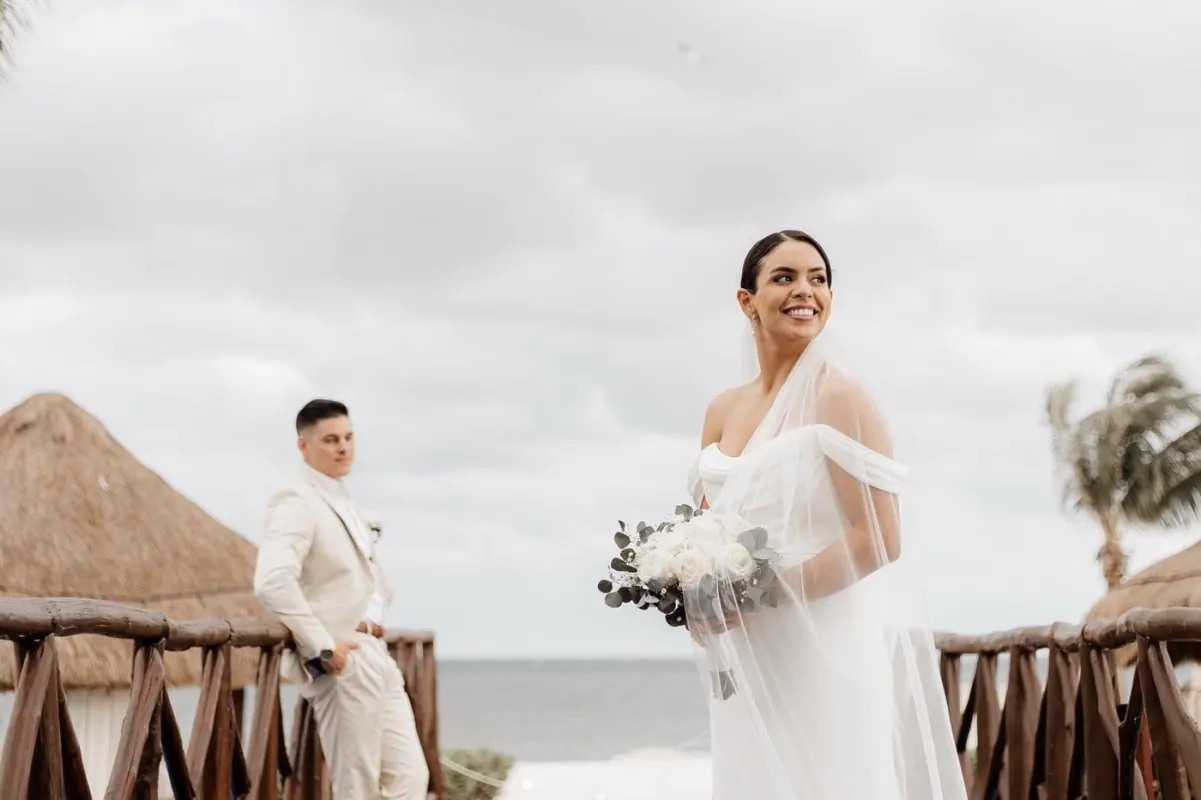
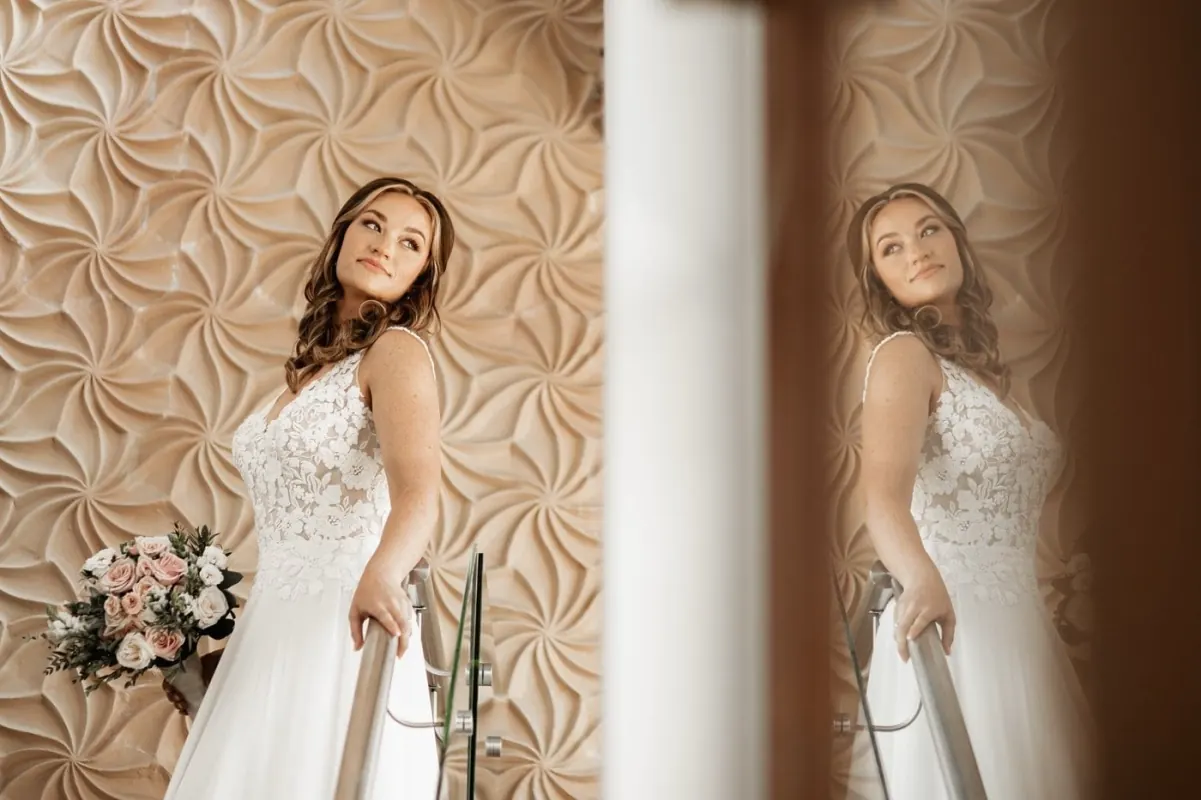
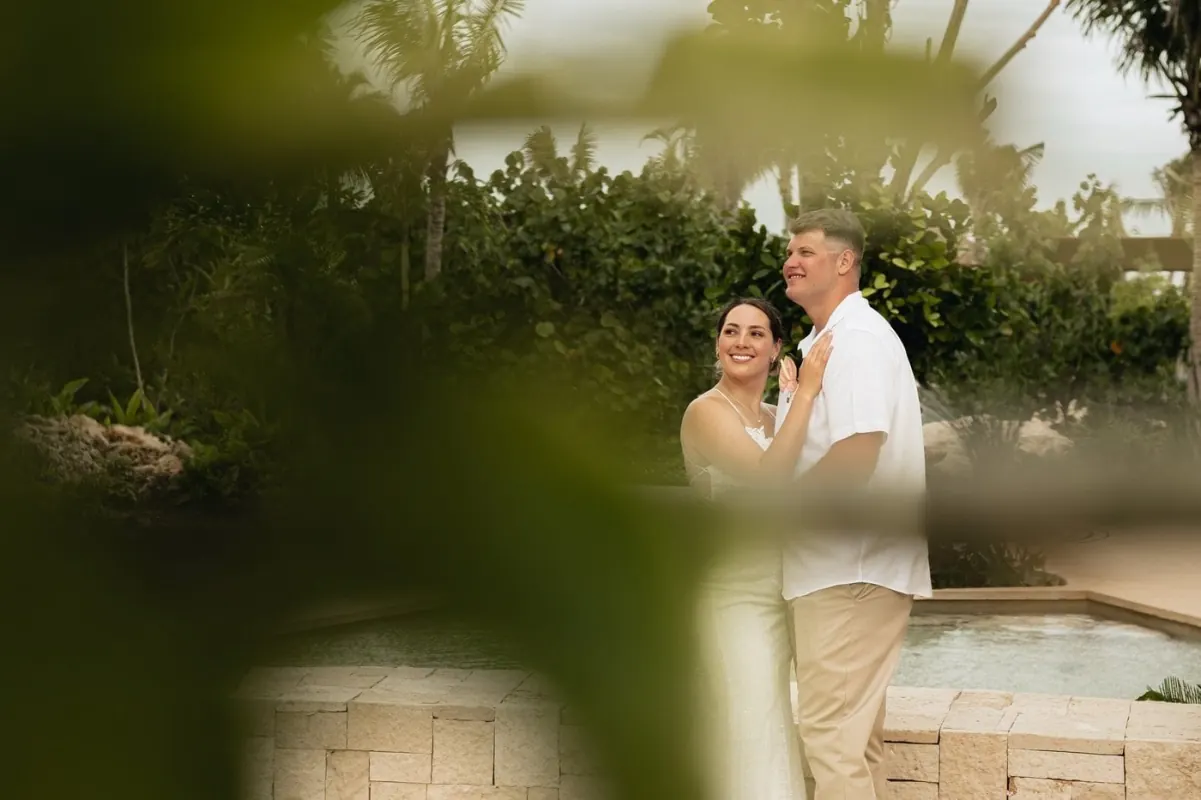
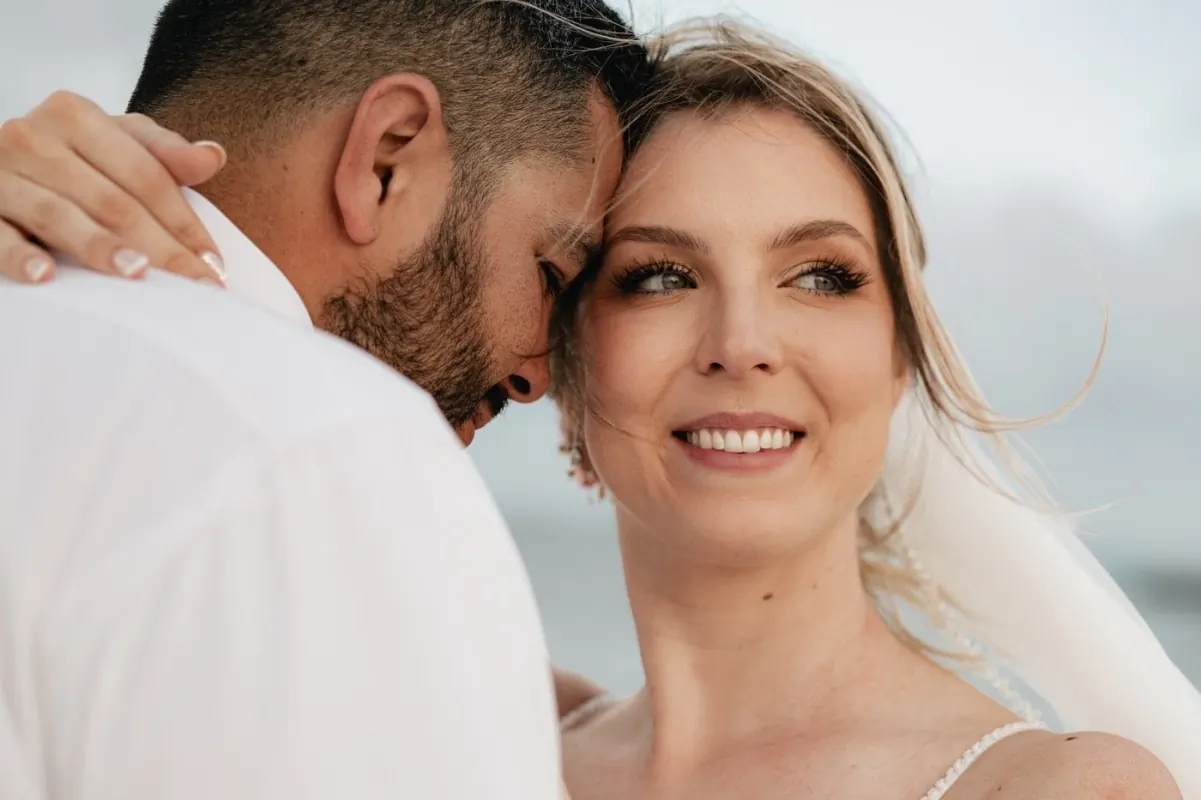
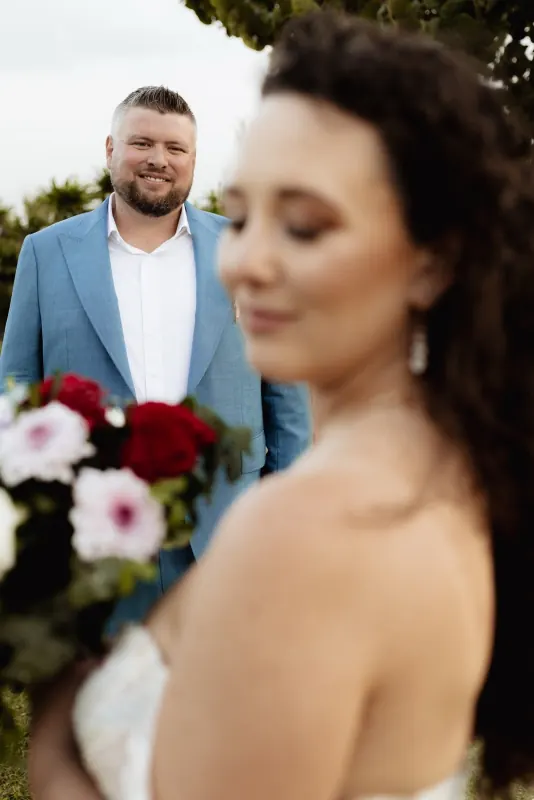
Couples who said yes with us along this coast. Not every frame is from a Trash the Dress — we would rather show you honest work from the same beaches, the same light and the same team.
The hour, and why the afternoon does not work here
Tulum sits on the same UTC−5 as the rest of the coast, but the usable light is shorter than the clock suggests. The jungle behind the beach is tall enough that the sun goes behind the canopy well before the official sunset — which is why weddings here start their ceremonies around two hours before sunset rather than ninety minutes. For a session in the water that shortens the evening window to almost nothing: by the time you are wet, the light is already flat. Midday is worse, and a white dress is the reason. Overhead sun clips white fabric before anything else in the frame, so the lace and the folds go to blank paper and stay there.
So the session is at first light, between 6:20 and 7:10 depending on the month, and it is one of the few pieces of scheduling advice here that has no counter-argument. The sun comes up out of the Caribbean and lands low and direct on the water, the sea is at its flattest before the day's breeze arrives, and the beach belongs to you. Sixty to ninety minutes is the whole session; the light window closes on its own, and by the time the first beach club puts out its loungers you are back in the room with coffee.
The dress, and the phone call that removes the risk
The name is misleading. Salt and sand come out at a specialist gown cleaner and most dresses come back looking much as they did before. What causes trouble is the decoration rather than the water: hand-sewn beading can discolour, glue-set stones can cloud or loosen, and very fine tulle snags once it is wet and heavy. So make one phone call before you fly — ask the cleaner whether they can recover this dress from salt water. Five minutes converts the whole thing from a gamble into a decision, and it is the only preparation that actually matters. If the gown is rented or borrowed, the answer is no.
The rest is practical. Seamless nude swimwear underneath, barefoot on sand — heels sink and are how people fall — a light base, waterproof mascara, and hair that does not depend on staying dry. Bring the veil: in wind and in water it does more than anything else you own. A soaked gown can weigh five kilos and wraps around the legs, so getting in and out of the water is a technique and it is our job to know it. Afterwards, rinse it in fresh water the same day, hang it in the shade, and do not roll it into a suitcase wet — that, rather than the sea, is what actually ruins dresses.
Sargassum, the road, and what the rain does not stop
Tulum catches sargassum harder than the rest of this coast, roughly April to August, and hotels rake only their own frontage. For a session in the water it is the deciding factor rather than an inconvenience: a wet hem pulled through decomposing seaweed stains brown and holds the smell for days. We check the beach the morning of, and when it has lost, the session moves inland to a cenote, which is unaffected by any of it and kinder to the fabric besides. If you are still choosing a week, read the month-by-month guide before you book flights.
Two more Tulum specifics. The beach road is one lane each way with unpaved stretches, and 6 a.m. is the only hour it moves freely — which is a further argument for sunrise and a real one if you are driving up the Cobá road to a cenote. And rain, unusually, is the one weather event that does not cancel this: you are getting wet on purpose, and a grey sky is soft, even light on white fabric. Lightning does cancel it, and so does a storm that makes the sea unsafe — the rain backup guide describes what a real plan B looks like. If the wedding itself was just the two of you, the pairing is close to automatic; our Tulum elopement page covers that format.
Sixty to ninety minutes, starting before the sun
A sunrise start, planned to the minute
We give you a meeting point and an exact time the week before, because first light here lasts about forty minutes and does not wait.
Dry sand, the water line, and in
The session builds. Frames on dry sand while the light is lowest, then the shallows, then properly in — by which point nobody is thinking about the dress any more.
A cenote alternative, decided that week
If the sargassum has won we move inland rather than shoot a brown beach. Entrance and camera fees are quoted openly, not discovered at the gate.
Delivery in about 72 hours
A private gallery, fully edited, usually before you fly home. No drone work over the archaeological zone — that is banned, and we do not pretend otherwise.
How It Works
From your first message to your date being held
Four steps, and none of them is a price list. We would rather understand your day first.
-
Step one
You tell us the basics
Date, or the month you are aiming at, and roughly what you are picturing. Two lines is enough to start.
-
Step two
A brief planning call
Fifteen or twenty minutes with the photographer who would actually shoot it — the hour, the location, the light, what matters to you.
-
Step three
A quote written for your day
Coverage, hours, whether video or drone is worth it, and any fees we already know about. No package you have to squeeze into.
-
Step four
20 % holds the date
A deposit reserves your date and your team. The balance is due before the day, and every edited photo is included.
Reserve Your Date
Tell us about your Trash the Dress
A few details and we will set up a short planning call, then send a written quote for exactly your day. Peak season (November to April) books early.
Request received!
Thank you — the next step is a brief planning call. We'll understand your day first, then prepare a custom quote.
Planning call — choose a time with us Continue on WhatsAppPrefer to chat? We usually reply within minutes. Message us on WhatsApp
Prefer to meet us before you decide? Book a free 15-minute video call — no commitment
Trash the Dress in Tulum — the questions couples actually ask
Will the dress be ruined?
Almost never. Salt and sand come out at a specialist gown cleaner and most dresses come back looking as they did. The real risks are hand-sewn beading, glue-set stones and very fine tulle. Ask the cleaner before you travel whether they can recover this dress from salt water, and if it is rented or borrowed, do not do this at all.
Cenote or the sea, in Tulum?
The sea at sunrise is the stronger photograph; a cenote is the reliable one. Tulum takes more sargassum than anywhere else on this coast, so between April and August the cenote is often the sensible booking — and fresh water is easier on the fabric than salt, with no sand in the hem afterwards.
When should we do it, relative to the wedding?
The day after, in almost every case. The dress has already done its job, the nerves are gone, and nobody is protecting anything — which is the whole reason these photographs work. Doing it beforehand puts the wedding dress at risk for nothing. If you married at home, any trip works.
How long is the session and what time does it start?
Sixty to ninety minutes, starting at first light — between 6:20 and 7:10 depending on the month. That is not a preference: the jungle takes the evening light early here, and by mid-morning the beach has people on it. We send the exact meeting time the week before.
Do we have to be married?
No. Plenty of these are shot years later on an anniversary trip, or after a courthouse wedding that was never photographed. There is no ceremony in this session and nothing to document — it is a dress, water and two people, and it works the same whenever it happens.
How much does it cost?
We quote rather than publish a rate, because a sunrise beach session and a cenote morning with entrance and camera fees are different days. Tell us your dates and which water you want, we set up a short planning call, and you get a written quote. A 20 % deposit holds the date.
Trash the Dress at the resorts of Tulum
Each of these has its own wedding page with the venue, the light and the vendor rules. Your Trash the Dress can happen at any of them.
Read before you book
Planning something bigger, with guests and a reception? See all our wedding collections for Tulum