
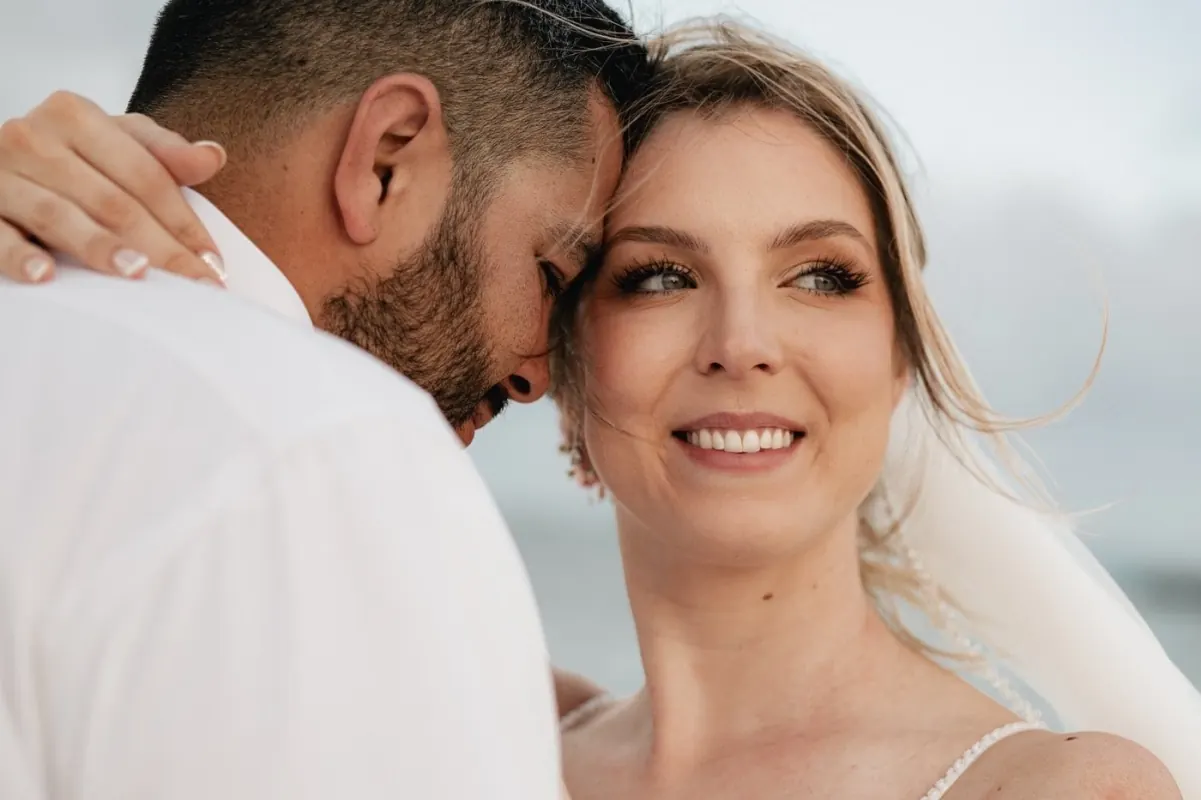
Build Your Wedding Day Backwards from Sunset
Most couples plan their wedding timeline forwards — hair at noon, ceremony at four, dinner at seven — and only then ask how many hours of photography to book. On the Riviera Maya, that order is backwards: the best photo of your wedding will almost certainly happen in the 30–45 minutes before sunset, so smart timelines start there and work in reverse.
After photographing 1,000+ couples across Cancun, Playa del Carmen, and Tulum over 6+ years, we've seen every coverage length in action. This guide lays out real sample timelines for 4, 6, and 8–10 hours, breaks the day into blocks with honest time estimates, and adds the Cancun-specific details — sunset times, resort distances — that checklists from up north miss.
What Each Part of the Day Really Takes
Every wedding timeline is assembled from the same handful of blocks. Give each one its honest minimum and the day flows; shave them too thin and the stress shows up in the photos.
-
Getting Ready — 60–90 min
Details, dress, makeup finishing touches, and the reveal with your people. The last 30 minutes are the keepers, so we arrive before the final touches, not after.
-
First Look — 20–30 min
A private reveal before the ceremony. It costs half an hour and buys you relaxed couple portraits plus the option to finish most formals before guests are seated.
-
Ceremony + Family Formals — 50–60 min
Most destination ceremonies run about 30 minutes; symbolic ones can be shorter. Family formals take 20–30 minutes with a shot list, far longer without one.
-
Golden Hour Portraits — 30–45 min
The non-negotiable block. Soft Caribbean light, empty-looking beach, just the two of you. Every other block can flex — this one is why you got married in paradise.
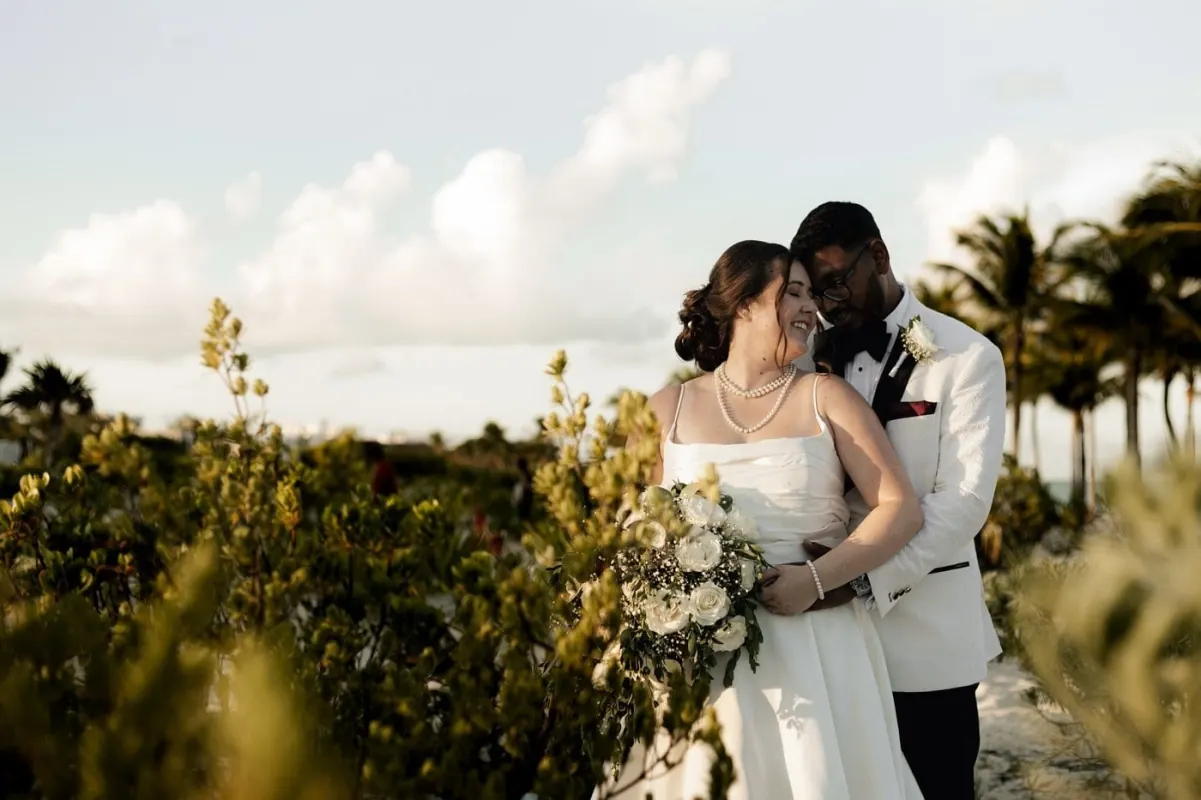
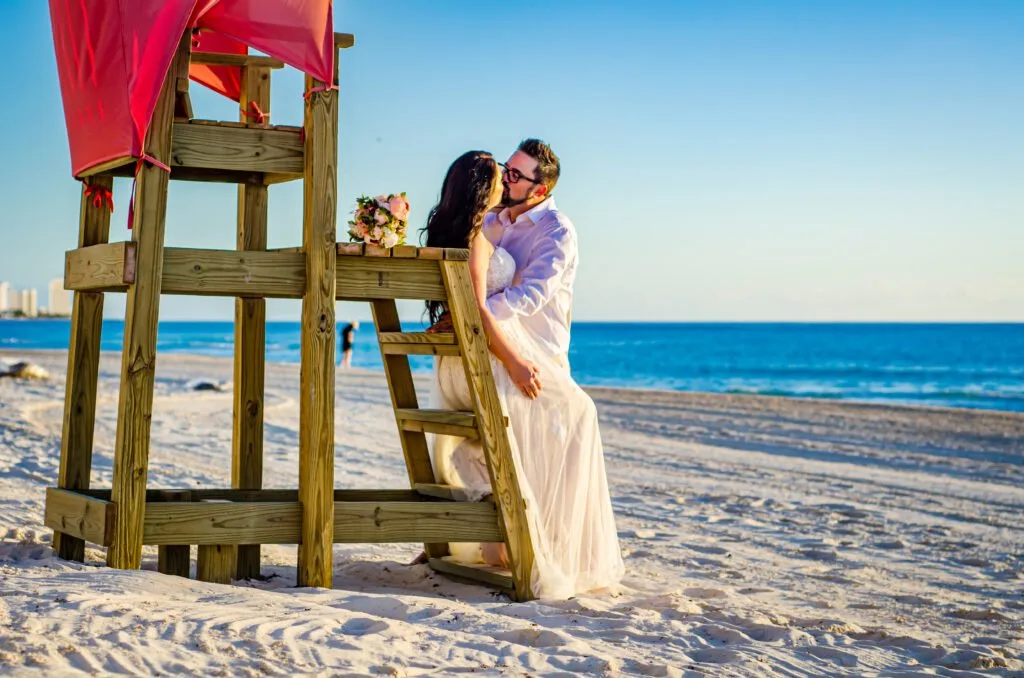
How many hours of wedding photography do you need?
For most destination weddings in Cancun and the Riviera Maya, 6 hours of coverage is the sweet spot — it captures everything from the end of getting ready through your first dances. Elopements are beautifully served by 4 hours, while larger guest lists, multiple locations, or a reception documented deep into the night call for 8–10. The right answer comes down to three questions: how many guests, first look or not, and how much of the party you want in the album.
4 hours — elopements and intimate weddings
A 4-hour timeline works when the day itself is compact: a ceremony, portraits, and a small celebration. A typical flow — 30 minutes of finishing touches and details, a 30-minute ceremony, 20 minutes with your witnesses and family, a generous 45-minute golden-hour session on the sand, and the first hour of dinner or toasts. With no large guest list to wrangle, almost every minute goes to the two of you. If this sounds like your day, our complete guide to eloping in Cancun and the Riviera Maya walks through the legal and logistical side too.
6 hours — the most common choice
Six hours is what the majority of our couples book, and for good reason: it stretches from the last hour of getting ready all the way to the first dances. A sample 6-hour timeline anchored to a 6:45 pm summer sunset: coverage begins at 2:00 pm with details and the dress, first look at 3:15, ceremony at 4:00, family formals at 4:45, cocktail-hour candids at 5:15, couple portraits at 6:00 as the light turns gold, grand entrance at 7:00, and first dances plus toasts before coverage ends at 8:00. You get the full narrative arc of the day without paying for hours of open-bar dance floor.
8–10 hours — the full story
Choose extended coverage when the day has more moving parts: both partners getting ready in different suites, a ceremony and reception at different venues, cultural traditions that add events to the evening, or simply a party worth remembering. Eight hours typically runs from mid-morning preparation through an hour or more of open dancing; ten covers practically everything short of the after-party. For how coverage length affects investment, see our breakdown of what a Cancun wedding photographer costs.
Why should a Cancun timeline run backwards from sunset?
Because in the tropics, sunset is early and fast. Cancun's sun drops around 5:30 pm in winter and only stretches to about 7:30 pm at the height of summer — there are no 9:00 pm golden hours here like a June wedding in Michigan. And once the sun touches the horizon, usable light disappears in roughly 20 minutes rather than lingering for an hour.
So we plan in reverse. Lock the couple-portrait block into the 30–45 minutes before sunset, then place the ceremony so it ends with enough cushion to get there — for a December wedding that often means a 3:30 or 4:00 pm ceremony. Midday light on white sand is harsh and squint-inducing; late afternoon brings the soft glow that made you want a beach wedding in the first place. If you're still choosing where that session happens, our guide to the best wedding photo locations in Cancun and the Riviera Maya compares the beaches, cenotes, and ruins worth the detour.
How much buffer do you need between venues in the Riviera Maya?
More than the map suggests. Riviera Maya distances are deceptive: your resort may technically be "in Playa del Carmen" yet sit 25 minutes from the beach club hosting your reception, and Cancun's hotel zone is a single boulevard that backs up at predictable hours. As working rules of thumb: add 30 minutes of buffer for any venue change, 45–60 minutes when moving between towns (Cancun to Puerto Morelos, Playa del Carmen to Tulum), and treat the Isla Mujeres ferry as its own block with a fixed departure time. If you don't need the buffer, you've gained a calm fifteen minutes with a drink in hand; if you do, it just saved your sunset portraits.
How do you decide what's right for your wedding?
Run your day through three filters. Guest count: under 20 guests, 4 hours is usually plenty; 20–80, start at 6; over 80, lean 8+ because every group moment simply takes longer. First look: saying yes adds about 30 minutes but lets you finish most portraits before the ceremony, making shorter packages work harder. Skipping it compresses all portraits into cocktail hour, which only works if the ceremony ends at least 90 minutes before sunset. Detail level: a designer gown, custom florals, and a styled tablescape deserve dedicated time at the start and a few minutes with the untouched reception room — an argument for the longer tiers.
One honest note: it's far easier to add an hour before the wedding than to recreate a missed moment after it. When couples are torn between two tiers, we suggest booking the shorter one early to reserve the date, then extending once the venue confirms the schedule. Every collection includes all of your edited photos — never capped by hours — and your full gallery arrives in 2–3 weeks.
Want a Timeline Built Around Your Actual Sunset?
Tell us your date and venue and we'll sketch a block-by-block timeline anchored to that day's real sunset — no rushed portraits. Wedding collections start from $1,550 USD with every edited photo included, and a 20% deposit reserves your date.
Wedding Photography Hours — FAQ
Is 4 hours of wedding photography enough?
For an elopement or intimate wedding — ceremony, portraits, and a small dinner — yes, comfortably. For a wedding with 30+ guests, getting-ready coverage, and a reception, 4 hours forces hard cuts; 6 is the realistic minimum.
Do getting-ready photos really matter?
More than most couples expect. The dress on the hanger, the quiet minutes with your mom, the reaction when you're fully ready — these are consistently among the most emotional images in the gallery. We only need the last 60–90 minutes of preparation, not the whole morning.
What if our ceremony is scheduled at high noon?
It happens, especially with church ceremonies or resort scheduling. We work with shade, architecture, and flash for the midday blocks, then build a dedicated golden-hour session into the late afternoon — even a 45-minute gap before sunset is enough to get the beach images you came for.
Do you stay for the reception?
With 6 hours we typically cover through the grand entrance, first dances, and toasts. With 8–10 we stay well into open dancing and cake cutting. Most key reception moments happen in the first 90 minutes, so even mid-length coverage captures the highlights.
Should we book one photographer or two for a long day?
For 4–6 hours in one location, one experienced photographer covers the day well. A second shooter earns their place on 8+ hour timelines, when both partners get ready in separate suites simultaneously, or when the guest list passes roughly 80 — they capture candids while the lead stays on you.
Can we split our coverage hours across two days?
Yes — destination weddings make this easy. Many couples use most of their hours on the wedding day and save a block for a next-day session: a relaxed sunrise shoot, a cenote session, or a trash-the-dress on an empty beach, with no timeline pressure. Ask us when booking and we'll structure the collection around it.