
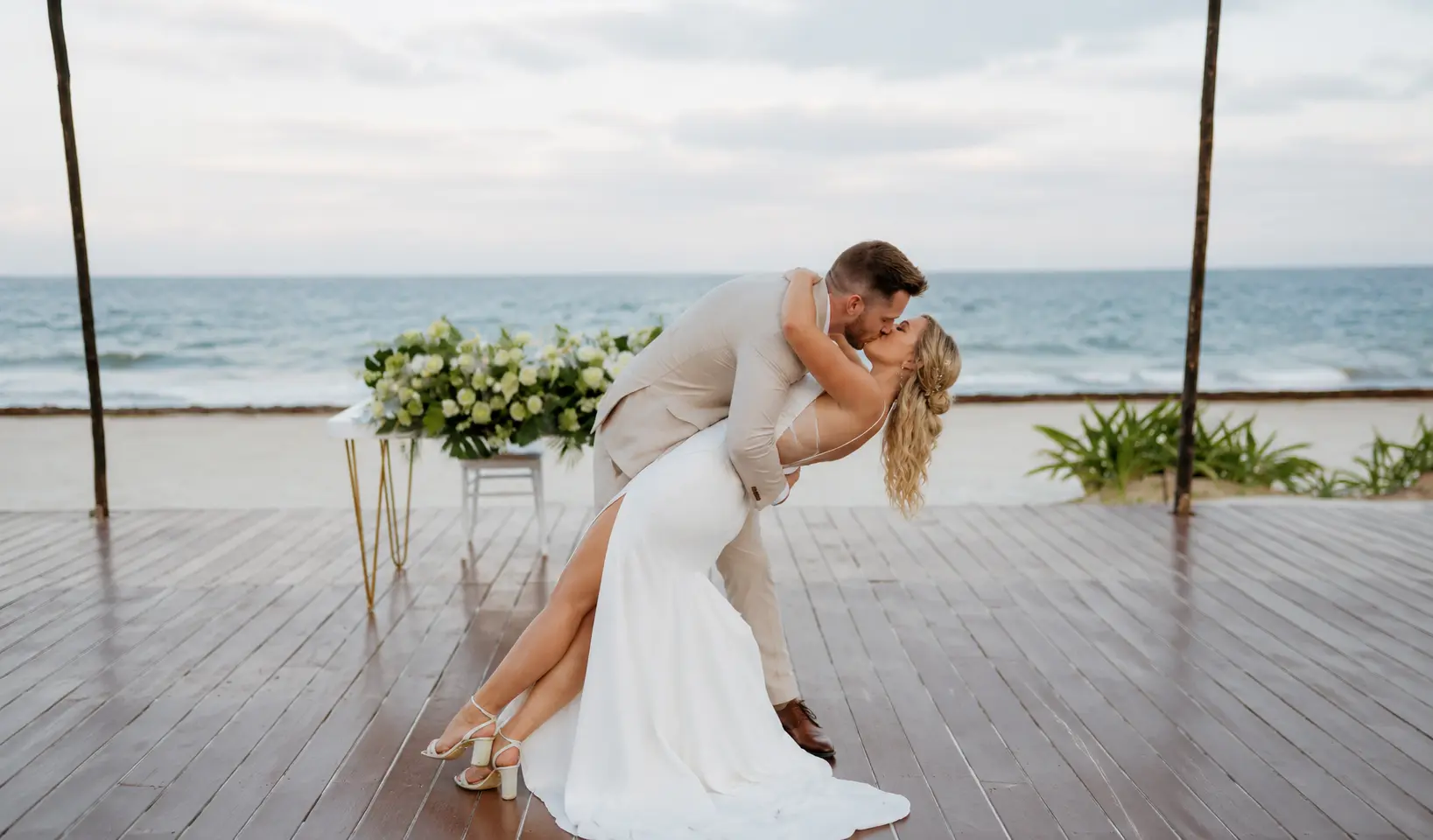
The ceremony is a text, and somebody has to write it
Take away the legal requirement and what you are left with is a blank page. That unnerves some couples and it should not: a symbolic ceremony is the only wedding format where the words are entirely yours, and on the Tulum beach road it is what almost everyone does. There is no obligatory declaration, no required reading, no institution to satisfy and nobody checking that a particular sentence was said out loud. There is a beginning, a middle and an end, and you decide what goes in each of them.
The shape that works is about twenty minutes: a welcome, one or two readings, something in the middle — a ritual, a letter, a shared silence — then the vows, the rings, and a line that tells the guests it is finished so they know when to cheer. That last item is not a joke. Half the awkward endings we photograph happen because nobody announced the end and thirty people sat waiting for a pronouncement that legally does not exist. Our legal versus symbolic guide covers what you give up by not signing here, which is very little, and what it saves you, which is a great deal. The full range of coverage is on our Tulum wedding photographer page.
Four consequences of writing your own ceremony
The start time answers to the light
A registrar gives you a slot; you choose an hour. In Tulum that hour is 16:00 to 16:45 — about two hours before the official sunset, because the tall jungle behind the beach takes the evening long before the horizon does.
Anyone can officiate
A professional bilingual celebrant, a brother, the friend who introduced you. Nothing certifies them because nothing is being certified. What they need is a printed script and a microphone, in that order.
The middle is yours to fill
Twenty minutes with no legal content in them leaves room for a letter read aloud, a ritual, a song, or five people saying one sentence each. This is reliably where the best photographs of the ceremony come from.
No documents, no witnesses, no registrar
Nothing to translate, nothing to apostille, no blood test and no four people with official identification. You arrive with rings and a script.
Three Tulum settings, and what to ask each one
None of these requires a licensed venue, so the questions are practical rather than legal.
-
A beach-road hotel
Twenty to forty rooms, a strip of sand and a palapa for dinner. Ask three things before signing: seated capacity, whether the power is grid or generator and what it will carry, and exactly where everyone goes if it rains. A ceremony draws less power than a party, but an officiant who cannot be heard over the surf loses you the vows and half the reactions.
-
A villa on the jungle side
Everyone under one roof, a cook, a pool, complete privacy, and no coordinator with an opinion about your running order. It removes the outside-supplier question entirely, and the getting-ready coverage is the strongest any format produces here because the whole morning happens in one house.
-
A cenote up the Cobá road
Fresh water and limestone instead of sand, best light around midday, room for about twenty people who can walk in, and complete immunity to sargassum, wind and rain. It is also the setting where copal smoke and candles behave, because there is no onshore breeze to take them.
We will confirm access, fees and the exact hour for your date before you commit to anything.
The Portfolio
Real weddings we photographed in Tulum
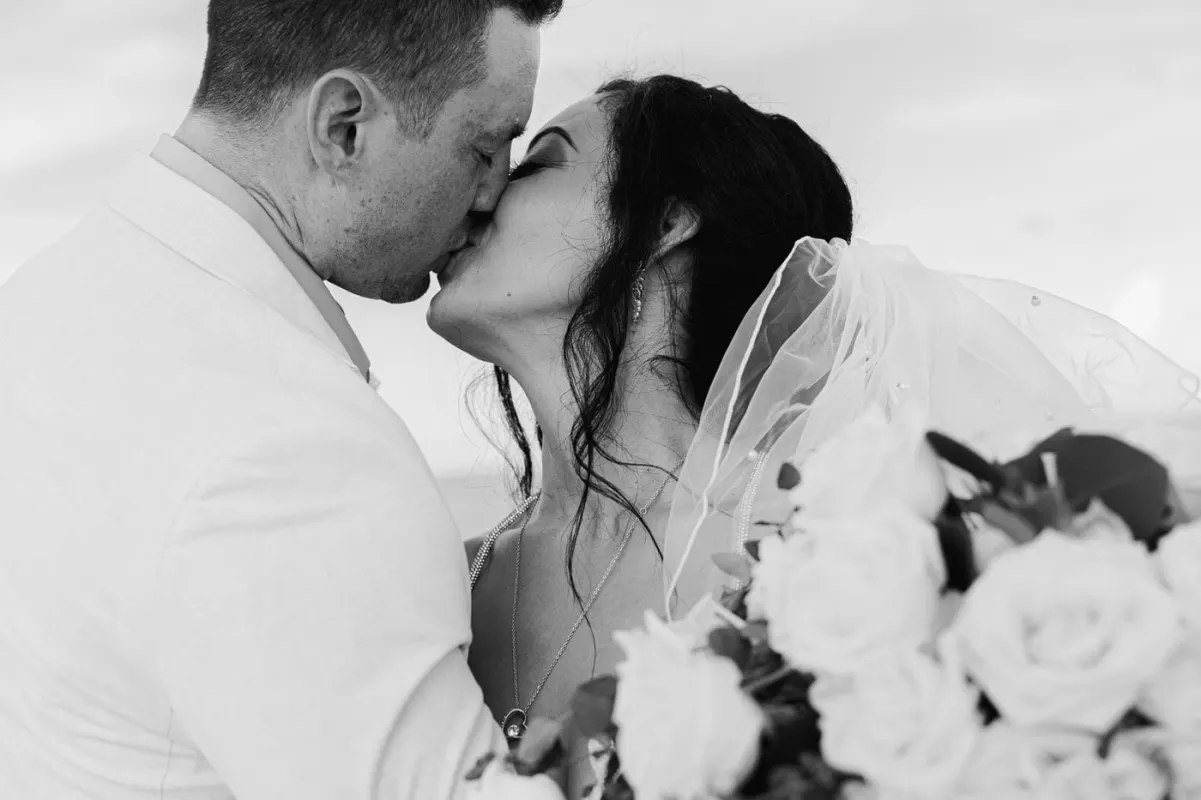
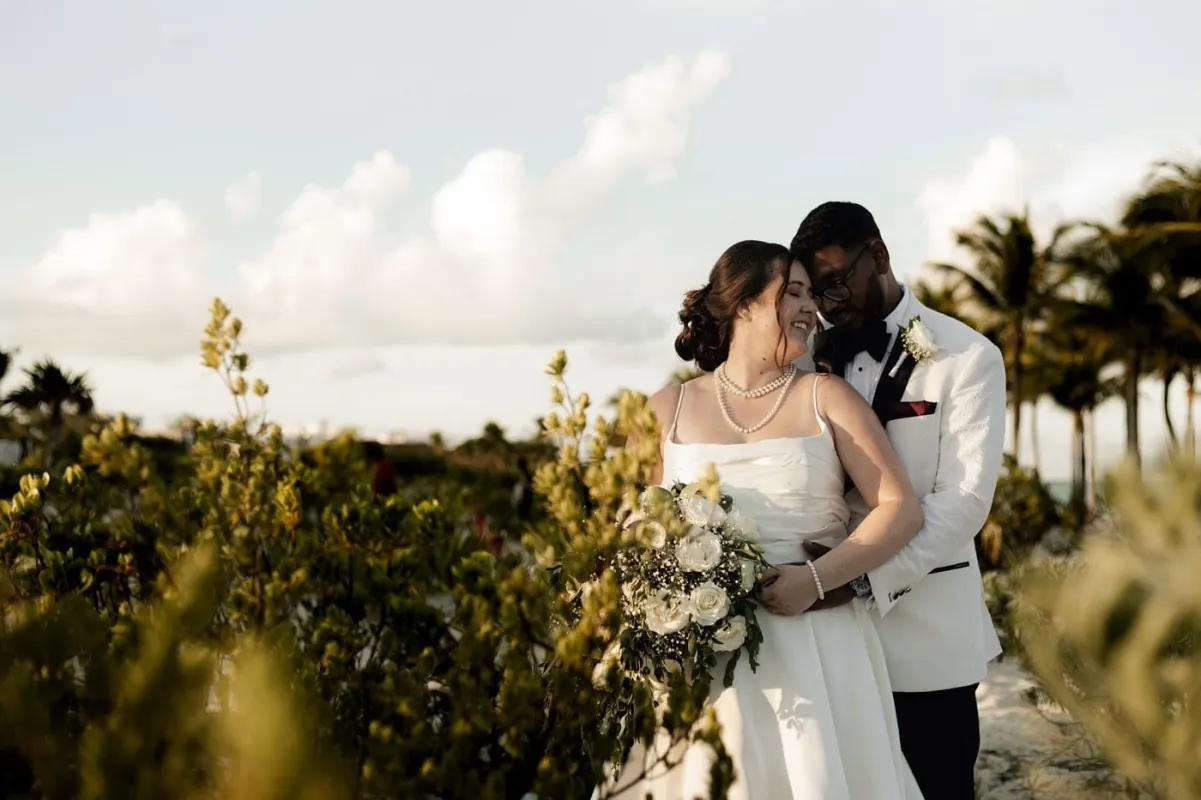
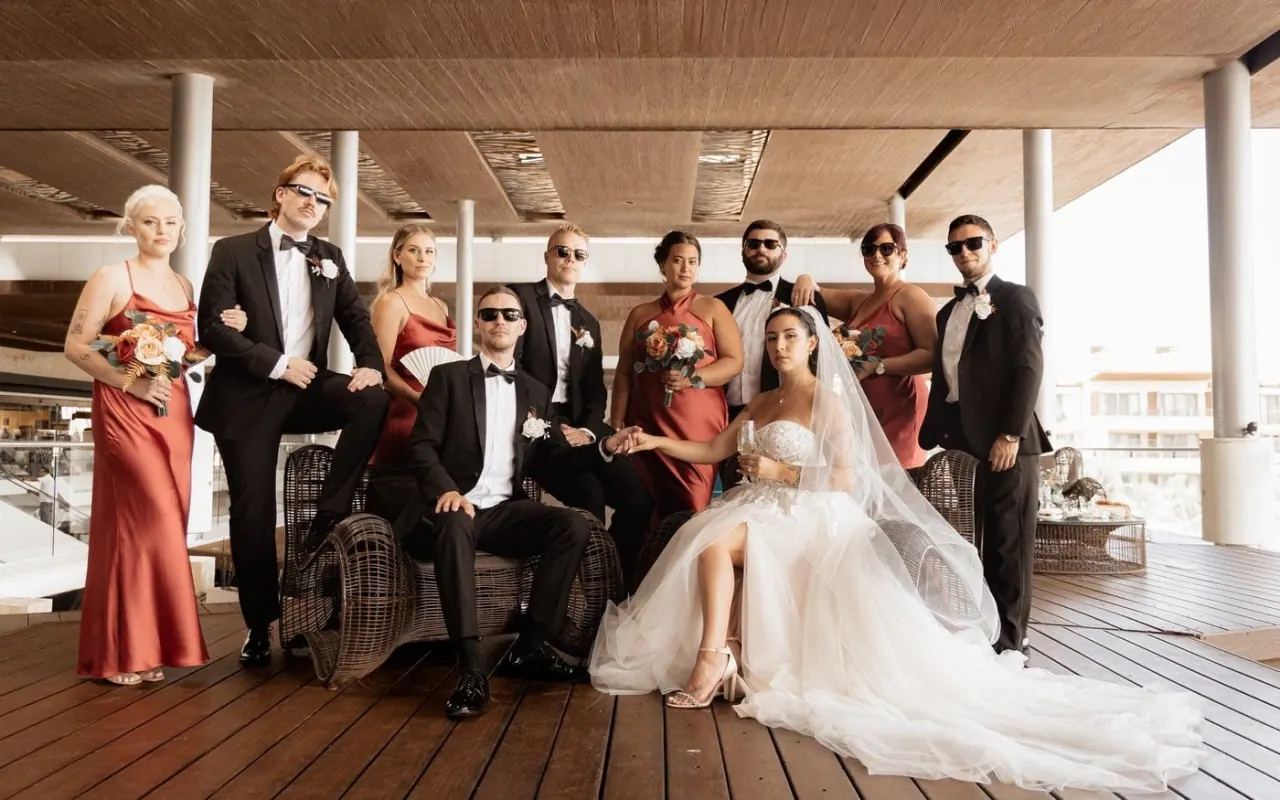
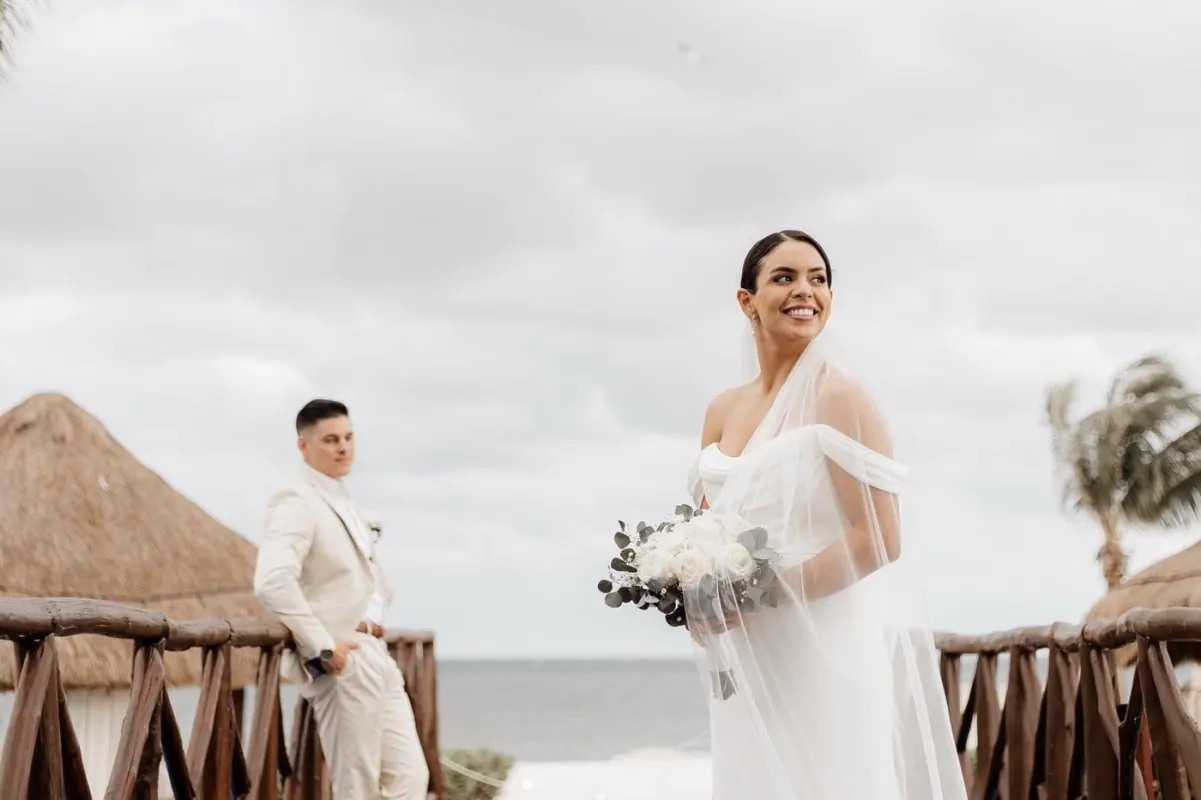
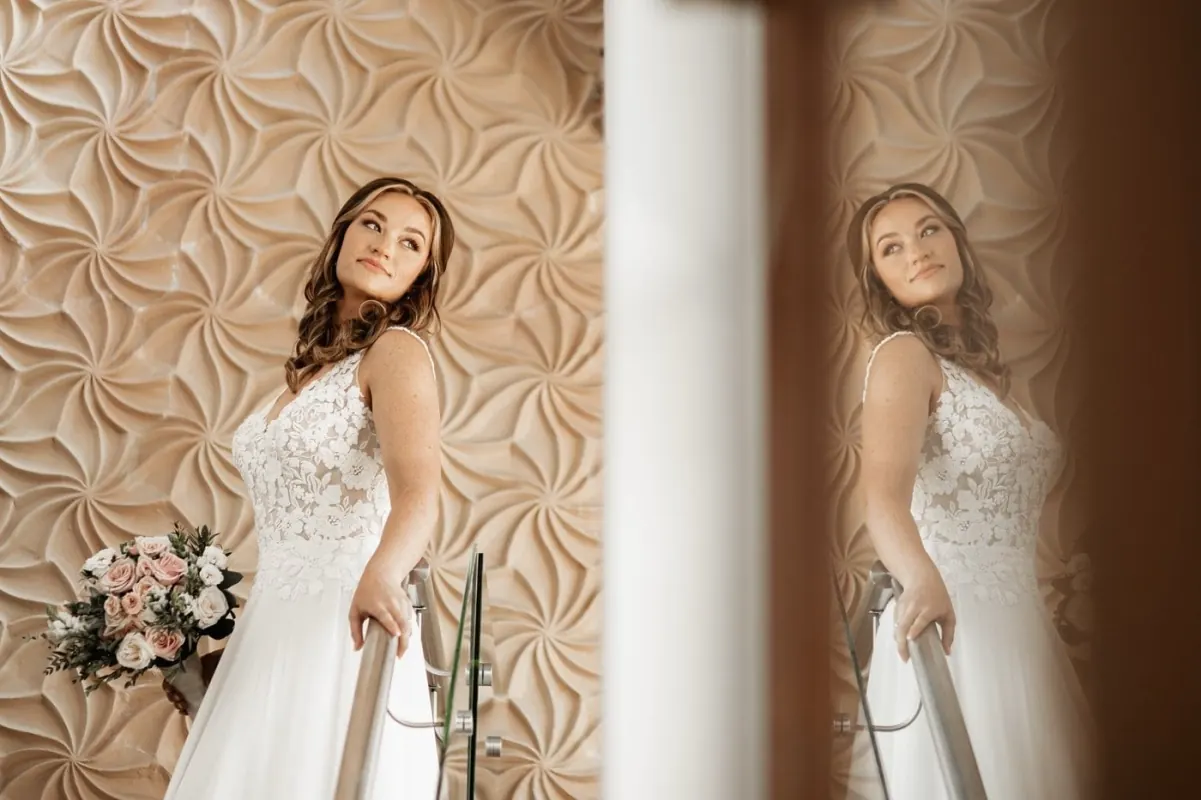
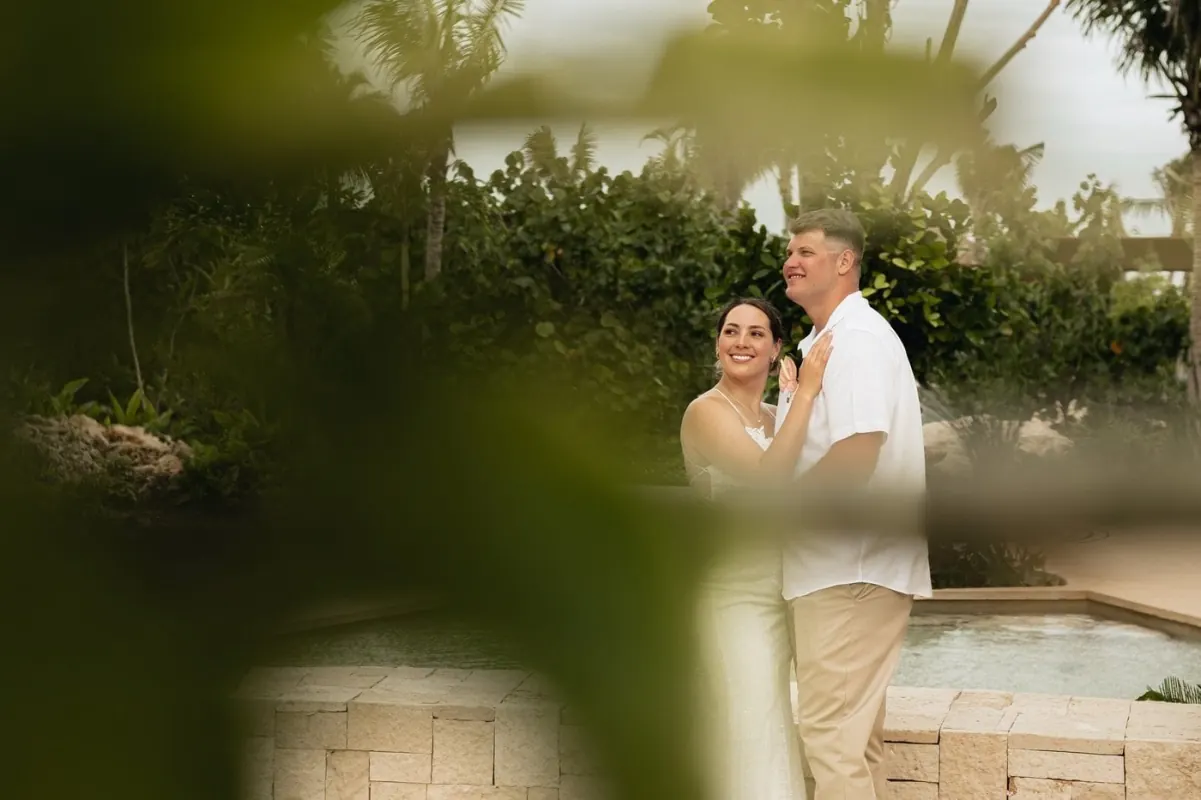
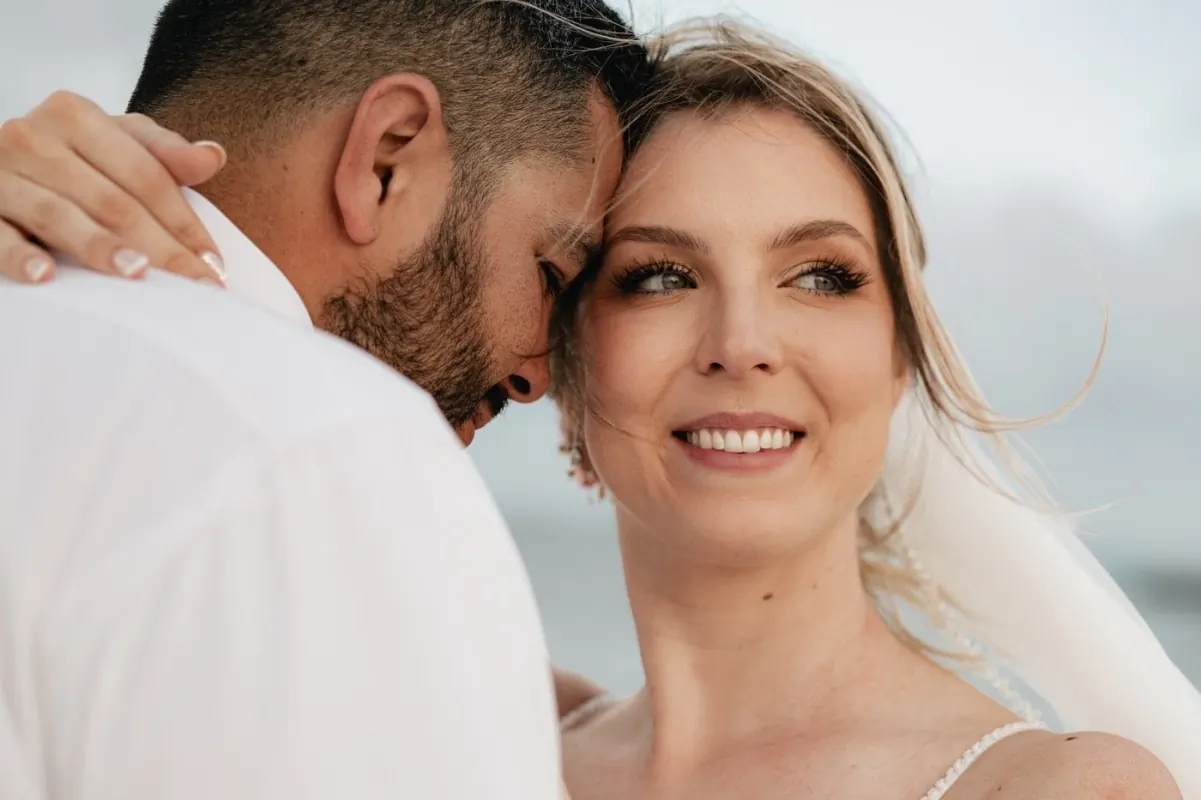
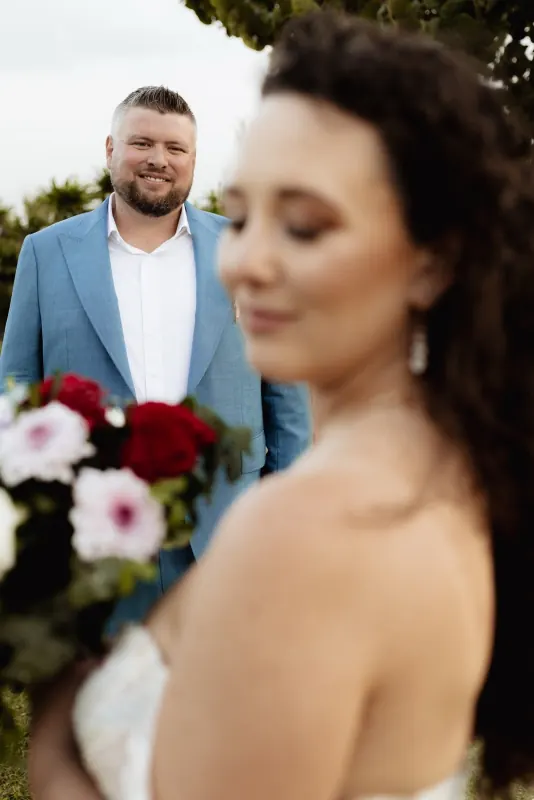
Couples who said yes with us along this coast. Not every frame is from a Symbolic Ceremony — we would rather show you honest work from the same beaches, the same light and the same team.
How to write twenty minutes that do not drag
The ceremonies that work have three or four moving parts and a hard stop. A welcome of about two minutes that names why everyone flew here. One reading — one, not four — chosen because it sounds like you rather than because it appears on every list on the internet. Something in the middle where the two of you are doing a thing rather than listening: a ritual, a letter, a promise made to a child who is standing right there. Then vows, rings, and an unambiguous ending. Anything beyond that is padding, and padding photographs as thirty guests checking the time.
Vows are where couples stall, so here is the rule that works: two minutes each, written separately, read from a card rather than memorised. Memorised vows fail under an audience and card-read vows never do, and a card held in a shaking hand is a far better photograph than a blank stare at the sea. If a friend is officiating, give them a full printed script and run a rehearsal on the sand the day before at the actual hour, so they learn where the sun will be and how loud the water is. The gap between a good amateur officiant and a disaster is entirely preparation, and it costs nothing.
The hour, the canopy and the sound
Tulum’s beach faces east and the vegetation behind it is tall, so the usable light disappears earlier than couples expect: the sun goes behind the canopy well before the official sunset and the sand turns flat and grey. A ceremony here wants to start about two hours before sunset, usually between 16:00 and 16:45, which leaves real light on the vows and a portrait window straight afterwards while everyone else has a drink. The other option is first light, between 6:20 and 7:10 on an empty beach — the strongest light this coast has, and a reasonable thing to ask only of a small guest list.
Two logistics decide the rest. Sound: the surf is constant, and a celebrant speaking unamplified to thirty people on open sand will not be heard past the second row — confirm a microphone and a speaker, and confirm what powers them, because several beach-road properties run on a generator with a finite load. Rain: the beach road has very few indoor spaces, so a covered palapa or terrace is the difference between a twenty-minute pause and a genuine crisis, and our rain backup guide describes what a real plan B looks like. Add the road itself — one lane each way, unpaved in stretches, and slow at exactly the hour your guests will be travelling to you.
The ruins, and the legal part done at home
The archaeological zone is protected by INAH, and the answer never changes: no ceremonies inside, a paid permit for professional photography, and no drones overhead. Couples who pictured vows on the cliff above the water get the public coastline beside it instead, where the same limestone meets the same colour of sea and nobody is queuing behind you. It is worth knowing early rather than after it has become the centrepiece of a plan, because the alternative up the Cobá road is better anyway and almost nobody considers it first.
On the paperwork: practically everyone marrying on this beach is legally married at home, before or after the trip, and nothing in Tulum asks for proof either way. Doing it legally in Mexico instead means sworn translations, apostilles, a blood test in some municipalities, four witnesses with official identification, and a registrar who is not driving down an unpaved beach road for a 16:15 ceremony. Our page on the documents a legal Mexican wedding requires is the complete list; most couples read it once and book the symbolic. And if it is just the two of you with no guests at all, our elopement guide is the closer fit than this page.
Coverage for a written ceremony on the beach road
The ceremony you wrote, in order
We ask for the running order and the names a week ahead. Knowing that the letter comes before the rings is the difference between being in position and turning round too late.
Four to eight hours, quoted to the day
A ceremony followed by dinner under string lights is not a twelve-hour wedding. We quote the hours yours actually needs rather than a package built for a larger event.
Light planned around the canopy
We schedule earlier here than we would in Cancún, because the jungle takes the evening. Knowing that, and building the timeline backwards from it, is most of the job in Tulum.
A cenote session, before or after
Five minutes up the jungle road: fresh water, limestone and a beam of light through the rock, immune to everything the beach can throw at you.
How It Works
From your first message to your date being held
Four steps, and none of them is a price list. We would rather understand your day first.
-
Step one
You tell us the basics
Date, or the month you are aiming at, and roughly what you are picturing. Two lines is enough to start.
-
Step two
A brief planning call
Fifteen or twenty minutes with the photographer who would actually shoot it — the hour, the location, the light, what matters to you.
-
Step three
A quote written for your day
Coverage, hours, whether video or drone is worth it, and any fees we already know about. No package you have to squeeze into.
-
Step four
20 % holds the date
A deposit reserves your date and your team. The balance is due before the day, and every edited photo is included.
Reserve Your Date
Tell us about your Symbolic Ceremony
A few details and we will set up a short planning call, then send a written quote for exactly your day. Peak season (November to April) books early.
Request received!
Thank you — the next step is a brief planning call. We'll understand your day first, then prepare a custom quote.
Planning call — choose a time with us Continue on WhatsAppPrefer to chat? We usually reply within minutes. Message us on WhatsApp
Prefer to meet us before you decide? Book a free 15-minute video call — no commitment
Symbolic Ceremony in Tulum — the questions couples actually ask
Is a symbolic ceremony a real wedding?
It is the one your guests will describe as your wedding for the rest of their lives, and it has no legal effect whatsoever. Both are true at once. Nothing is registered, so nothing has to be translated, apostilled or witnessed — which is exactly why the ceremony can be at 16:15 on a beach with a friend officiating. The legal signature happens at home.
Do we sign at home before or after the trip?
Either, and nobody in Tulum will ask. Hotels here do not request a licence, a celebrant does not file anything, and there is no document that has to exist for the day to go ahead. Most couples sign beforehand purely so that nothing administrative is pending while they are on a plane.
Can a friend officiate instead of a professional?
Yes, and it is often the better ceremony — but only with preparation. Give them a full printed script rather than notes, rehearse on the sand the day before at the real hour, and make sure they have the microphone. The common failures are speaking too quietly against the surf and running eleven minutes over. Both are solved the day before, not on the day.
What language is the ceremony in?
Whatever your guests speak. A bilingual celebrant alternating two languages runs close to double the time, so budget thirty-five minutes rather than twenty. With a friend officiating, the cleaner route is one language plus a printed programme carrying the readings and the vows translated — it keeps the ceremony short, which on an exposed beach in the afternoon is a kindness to everybody.
Can we have a Mayan ceremony at the Tulum ruins?
Not at the ruins. The archaeological zone is INAH-protected, ceremonies are not permitted inside, professional photography needs a paid permit and drones are banned overhead. A Mayan ceremony is entirely possible elsewhere, and a cenote up the Cobá road is the better setting anyway: copal smoke needs still air, and on an open beach the breeze takes it in a second.
What does it cost?
We do not publish a rate. A twenty-minute ceremony at 16:30 with fifteen guests and a full beach-road day ending with dinner under lights are different quotes, and the honest way to reach one is a short planning video call. The written quote follows the call, and a 20 % deposit holds the date. Celebrant, sound and any hotel fee are quoted by whoever supplies them; what we quote is the photography.
Symbolic Ceremony at the resorts of Tulum
Each of these has its own wedding page with the venue, the light and the vendor rules. Your Symbolic Ceremony can happen at any of them.
Read before you book
Planning something bigger, with guests and a reception? See all our wedding collections for Tulum