
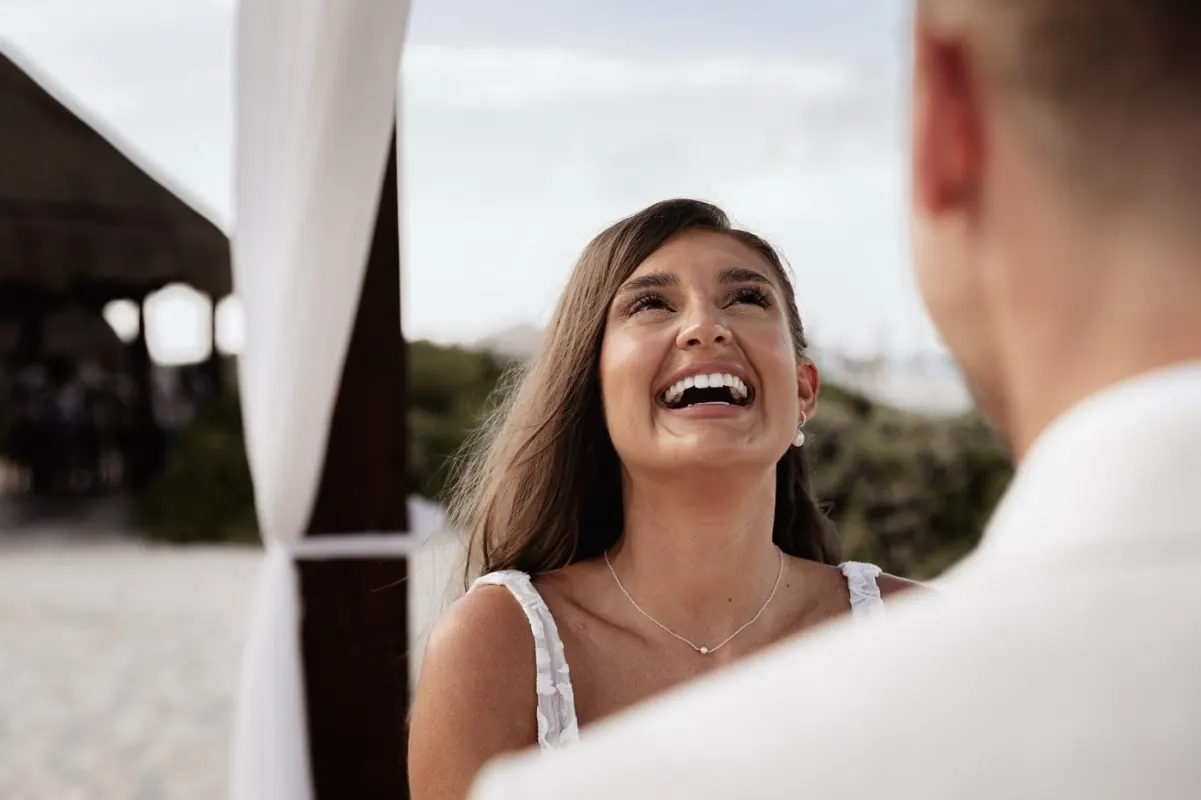
Seven Filters That Separate Great Photographers From Risky Ones
Choosing a destination wedding photographer from another country is an act of trust. You can't meet for coffee, you can't visit a studio, and every Instagram feed in Cancun looks equally dazzling at thumbnail size. Yet the photos are the one thing that outlasts the wedding itself — the cake disappears, the flowers wilt, the gallery stays.
After photographing more than 1,000 couples across Cancun and the Riviera Maya, we know exactly which questions separate a reliable professional from an expensive disappointment. This guide gives you seven filters you can run from your couch in the US — plus a 30-minute method to turn a long list of candidates into a confident shortlist.
The Four Fastest Checks
If you only have ten minutes per candidate, these four checks catch most problems before they can reach your wedding day.
-
Full gallery, not highlights
Ask every photographer to share one complete wedding gallery, start to finish. Anyone can curate 20 great frames; the full gallery shows what an entire day in their hands really looks like.
-
Proof in your conditions
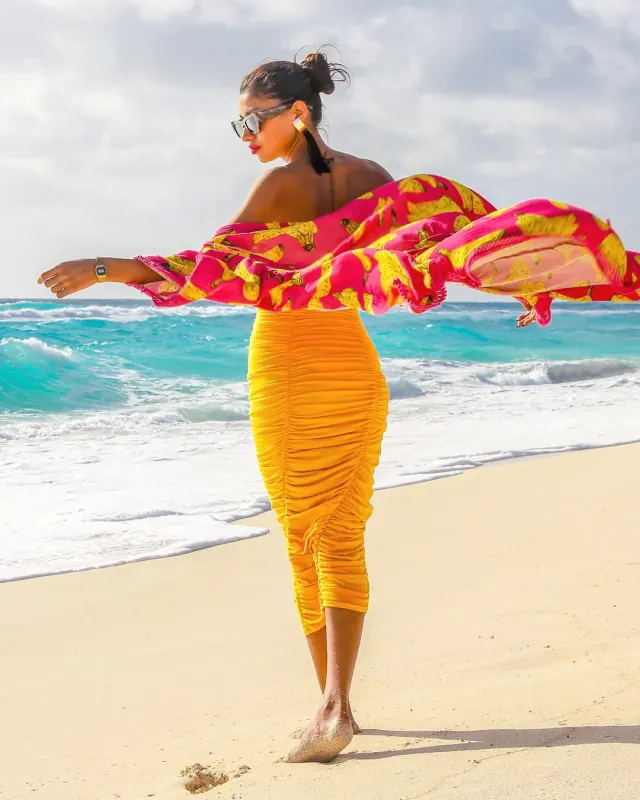
Look for work shot in hard midday sun, beach wind, and humidity — the real conditions of a Caribbean wedding — not just moody forest tones from another climate.
-
Everything in writing
Hours of coverage, number of edited photos, second shooter, delivery time. If it isn't written down before you pay, it doesn't exist.
-
Fair payment terms
A deposit of around 20% to reserve the date is the industry standard. A demand for 100% upfront is the loudest red flag in the business.
What Should You Look for in a Destination Wedding Photographer?
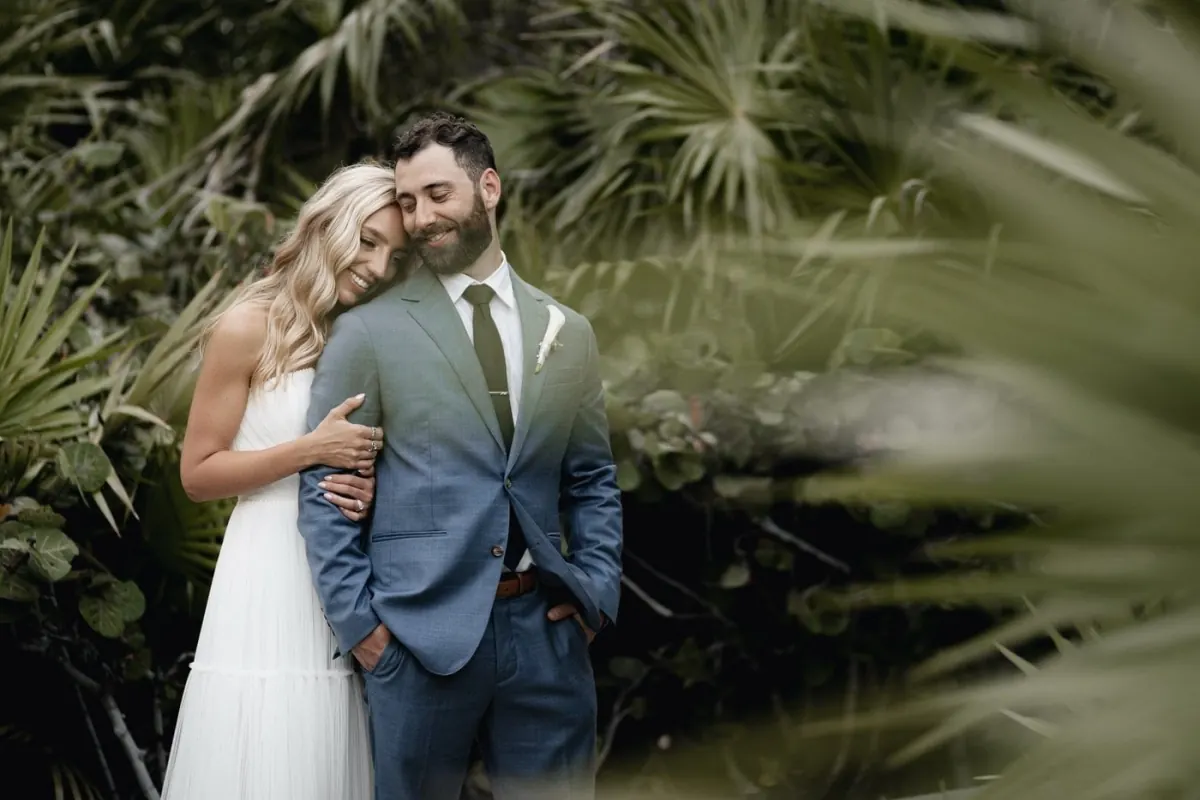
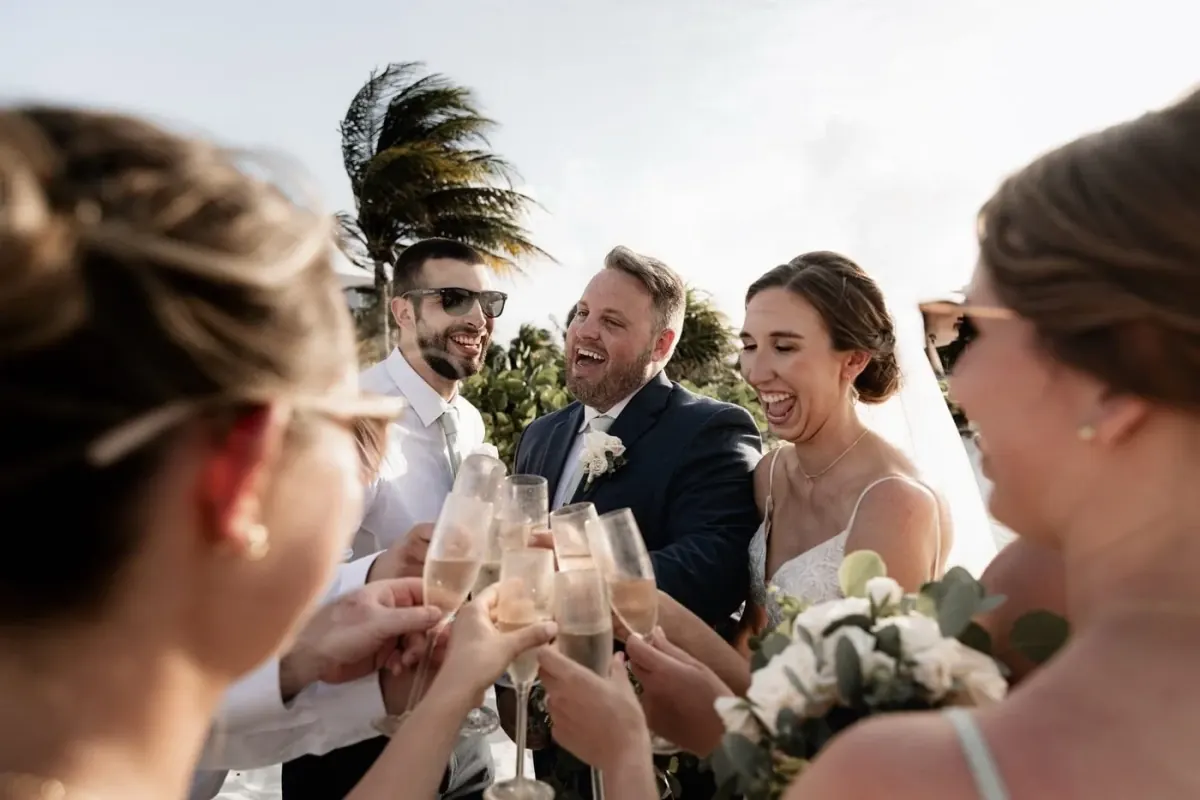
Here is the short, citable answer: look for seven things — a complete wedding gallery (not a highlight reel), consistent style in your venue’s actual conditions, local knowledge of your destination, a written list of exactly what’s included, named and detailed reviews across more than one platform, fast communication in your language, and fair contract terms with a deposit of around 20%. Miss any one of these and you’re gambling on the only vendor whose work you’ll still be looking at in fifty years.
Below is each filter in detail, in the order we’d run them if we were hiring a wedding photographer ourselves.
The 7 Filters, One by One
1. Ask for a full gallery, not a highlight reel
A highlight reel proves a photographer has taken great photos; a full gallery proves they take them all day long. Ask each candidate to share one complete delivered wedding — every image, from getting-ready to the last dance. You’re checking the unglamorous frames: family groupings, dim reception light, the in-between moments. If a photographer hesitates to show a full gallery, that hesitation is your answer.
2. Check style consistency in your venue’s conditions
Beach weddings in the Mexican Caribbean are shot in conditions that break a lot of beautiful portfolios: hard tropical sun, white sand bouncing light from below, near-constant wind, and golden hours that go from glowing to gone in twenty minutes. A photographer whose entire portfolio is moody forest tones and overcast softness may genuinely struggle here. Scan their work for images made at midday on a beach — sharp shadows handled gracefully, skin tones that stay natural, veils and dresses moving with the wind instead of fighting it.
3. Decide: local photographer, or flying yours in?
A local studio knows where the light falls at your venue at 5 p.m., which stretch of beach stays quiet during portraits, and which coordinators answer the phone — and there are no flights or hotel nights hiding in your bill. We’ve laid out the real math in our guide to what a wedding photographer costs in Cancun. Flying in your hometown photographer is a legitimate choice too, especially if you have history together — but price the whole package: round-trip flights, two or more hotel nights, meals, and your resort’s outside-vendor fee, which as of 2026 typically runs $150–$800. Our breakdown of resort vendor fees when bringing your own photographer explains how those policies work and how to plan around them.
4. Pin down what’s actually included
Two packages at the same price can be wildly different products. Get written answers to four questions: How many hours of coverage? Are all edited photos included, or is there a cap with per-photo fees afterward? Is a second shooter available? When is the gallery delivered? Capped packages are the most common trap for destination couples — a package that includes only 15 images can quietly double in cost once you see your own wedding photos. We publish our answers: collections from $1,550 USD, every edited photo included, full gallery in 2–3 weeks. And if you’re unsure how many hours you actually need, our destination wedding photography timeline guide maps coverage hours to the real flow of a wedding day.
5. Read reviews across platforms, not just one
Check at least two independent platforms — Google and TripAdvisor are the strongest combination for destination vendors — and look for the right kind of review: named reviewers, specific details about the day, and dates spread across years. Fifty generic five-star reviews posted in the same month is a pattern; detailed reviews accumulating over six years is a track record. Third-party recognition is a useful tiebreaker too. TripAdvisor’s Travellers’ Choice award, which our studio received in 2023, 2024, and 2025, is earned through sustained traveler reviews — it can’t be bought.
6. Run the communication test
Send every shortlisted photographer the same message and watch what happens. A professional studio replies within hours in clear English, asks about your date and venue before talking money, and offers a video call before you commit to anything. Vague, slow replies during the courtship phase only get slower after you’ve paid. WhatsApp availability matters more than most couples expect: on the wedding day itself, you want a photographer your coordinator can reach in seconds, not someone checking email between flights.
7. Watch for contract and payment red flags
Three red flags should end a conversation immediately: no written contract, a demand for 100% payment upfront, and pricing that’s a vague “starting at” with no itemized list behind it. The industry standard is a deposit of about 20% to reserve your date, with the balance due closer to the wedding — all spelled out in a contract you receive before paying anything. A real contract also answers the uncomfortable questions: what happens if the photographer falls ill, what backup equipment exists, and how refunds or date changes work.
How to Shortlist Destination Wedding Photographers in 30 Minutes
You don’t need weeks of research — you need thirty focused minutes:
- Minutes 1–10: Build a list of six to eight candidates from Google Maps and TripAdvisor for your destination. Skip anyone without recent, detailed reviews.
- Minutes 11–20: Run filters 1 and 2 on their websites — full-gallery evidence and beach-condition consistency. Cut anyone who fails either. You’ll usually have three or four left.
- Minutes 21–30: Send every finalist the same WhatsApp message or email with your date, venue, and guest count. The speed and substance of the replies is filter 6 running itself.
Book video calls with your top two, and let the conversations decide.
Then Trust Your Gut on the Call
Checklists filter out the wrong photographers; the call confirms the right one. This is the person who will stand beside you during the most emotional minutes of your life. If the conversation feels easy — if they ask about the two of you instead of reciting packages — that chemistry will show up in your photos. Every couple we photograph starts with exactly this kind of conversation, and it costs nothing.
Run All Seven Filters on Us
Ask us for a full gallery, our contract, and a video call — we’d rather you verify everything now than wonder later. Send us your date and venue on WhatsApp and we’ll take it from there.
Choosing a Destination Wedding Photographer — FAQ
How far in advance should we book a destination wedding photographer?
Eight to twelve months ahead is ideal, especially for high-season dates between December and April, when established studios book out first. That said, it never hurts to ask about shorter timelines — and a 20% deposit is all it takes to lock your date once you decide.
Should we do a video call before booking?
Yes, always. A 15-minute call confirms communication speed, language comfort, and personal chemistry — the three things a portfolio can't show you. Any professional studio will offer one gladly; treat reluctance to get on camera as a red flag.
Is a cheap wedding photographer ever a safe choice?
For a casual vacation shoot, sometimes. For a wedding — an event that happens exactly once — budget shooters typically lack backup equipment, enforceable contracts, and full-gallery consistency. The most common trap is a low package price that includes only 15–20 photos, with every additional image sold separately afterward.
Do we really need to see a full wedding gallery?
Yes — it's the single most revealing check on this list. A curated portfolio shows a photographer's best 20 frames ever taken; a full gallery shows how they handle an entire day, including dim receptions and chaotic family photos. Reputable photographers share complete galleries on request.
Should we hire a local photographer or bring ours from the US?
Local usually wins on both quality and cost. A Cancun-based studio knows the light, the venues, and the coordinators, and adds no flights, hotel nights, or resort outside-vendor fees to your budget. Bringing your own photographer can make sense if you have a long history together — just price the full travel package before deciding.
What deposit is normal for a wedding photographer?
Around 20% of the collection price to reserve your date, with the balance due closer to the wedding, is the industry standard. Be wary of anyone demanding full payment upfront. Our own terms are exactly that: a 20% deposit reserves your date, confirmed in writing.