
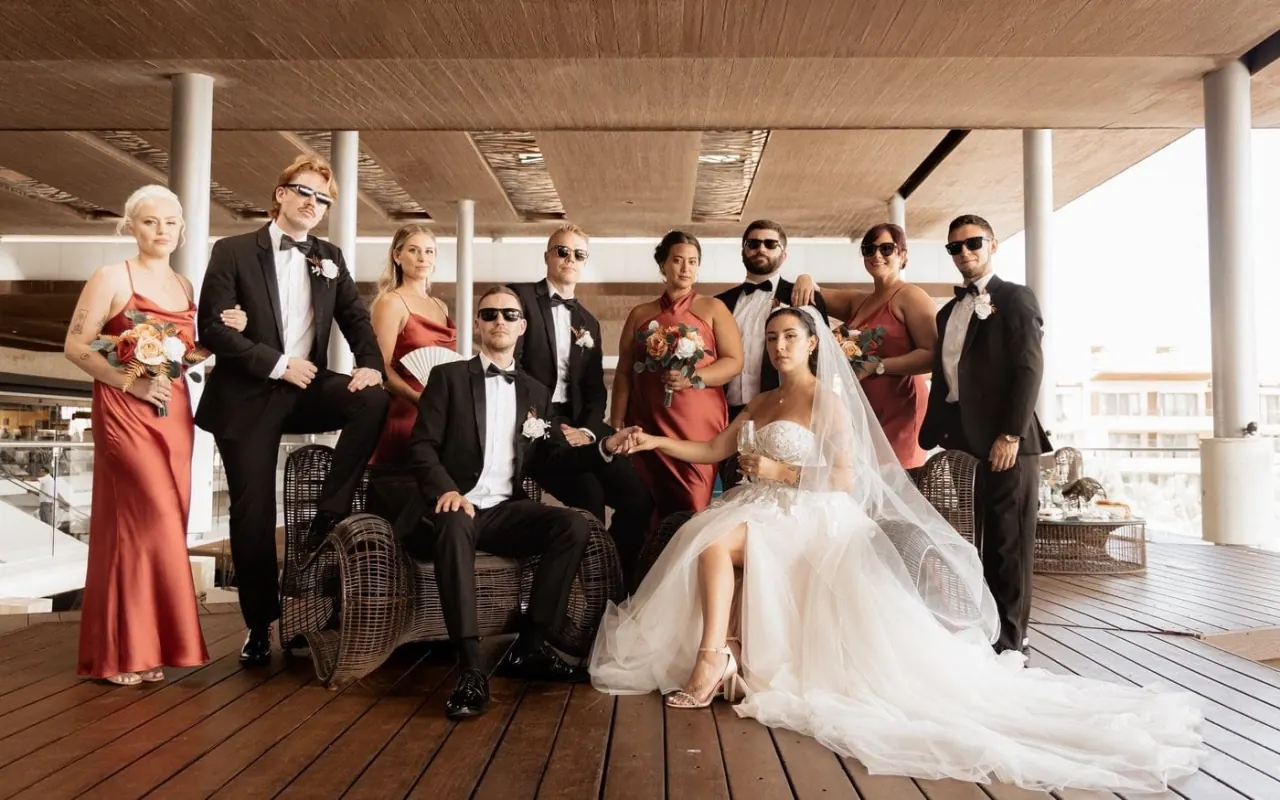
A Cancun Beach Wedding, From a Photographer's Seat
You've seen the photos — barefoot on the sand, a white arch framing the turquoise sea, a veil lifting in the breeze. What those images don't show is the shape of the day around them: the soft early light, the wind that arrives every afternoon, the heat that sends guests reaching for water, and the single golden-hour block that quietly makes or breaks the gallery. This is that day, walked through hour by hour.
We've photographed 1,000+ couples on these beaches over 6+ years, from intimate ceremonies on the public sand at Playa Delfines to full resort celebrations along the hotel zone. Knowing what each part of a Cancun beach wedding really involves is the difference between fighting the elements and letting them do the work. Here's what to expect, and how to plan for it.
What Each Part of a Beach Wedding Really Involves
A Cancun beach wedding moves through the same handful of moments every time. Knowing what each one asks of you — and of the light, the wind, and your guests — is how the day stays calm and the photos stay effortless.
-
Morning Prep & the Light
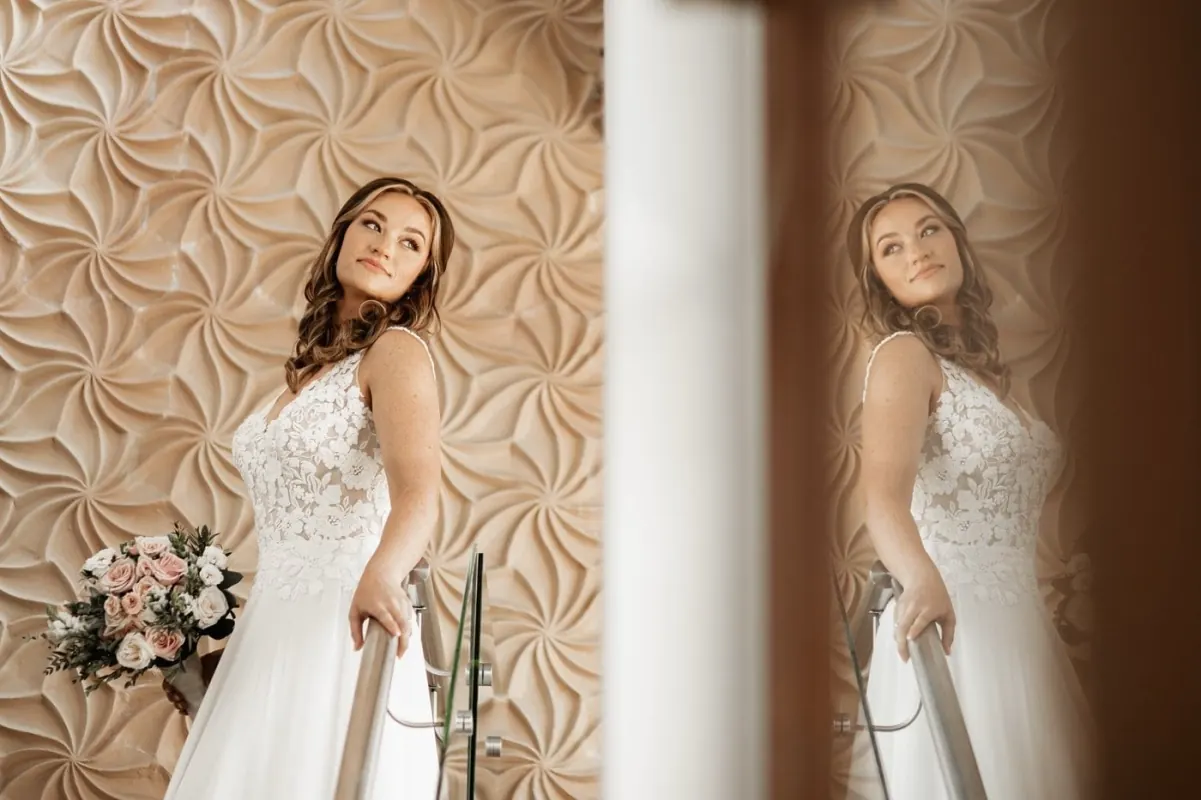
The calmest, softest part of the day. Mornings on the Caribbean are typically still and luminous — ideal for getting-ready details and the dress. We need only the last 60–90 minutes before you're fully ready, not the whole morning.
-
The Ceremony Setup
An arch on the sand, chairs facing the water, you barefoot with the sea behind you. Symbolic beach ceremonies usually run about 20–30 minutes. The setting does most of the work; we just stay out of the way and catch the real reactions.
-
Toast & Golden-Hour Portraits
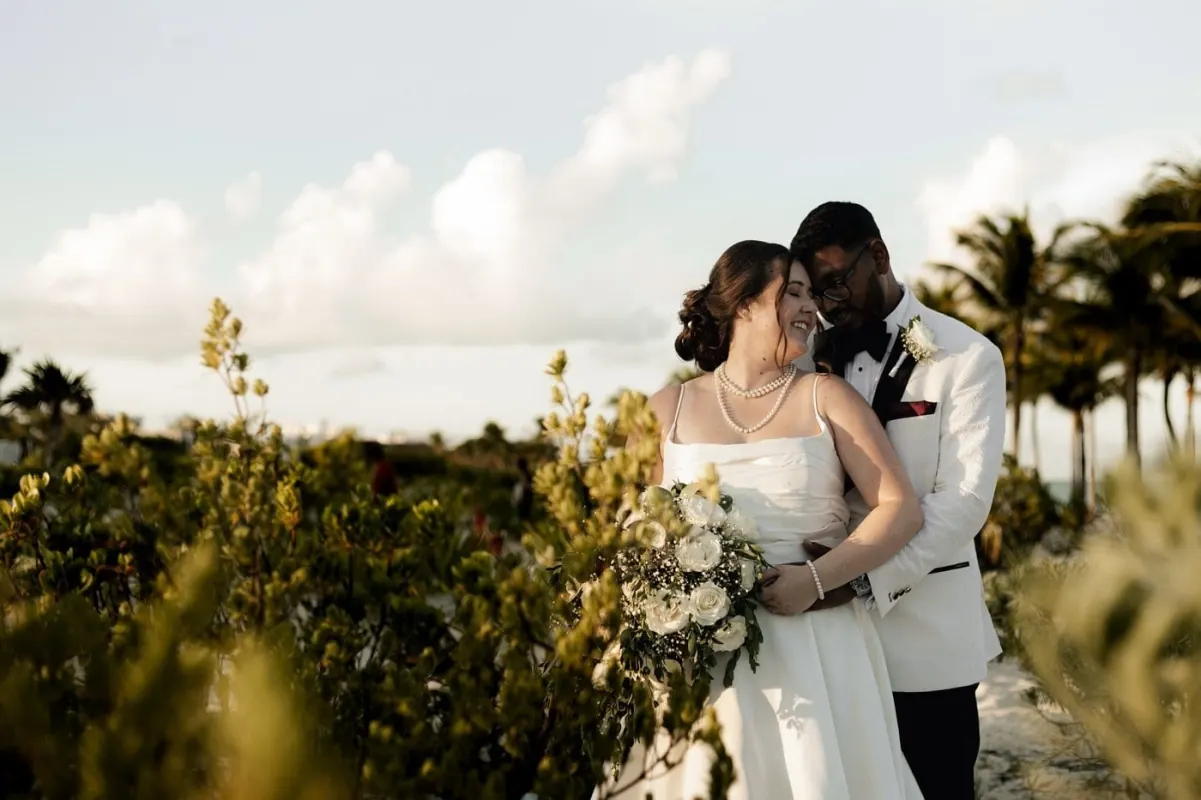
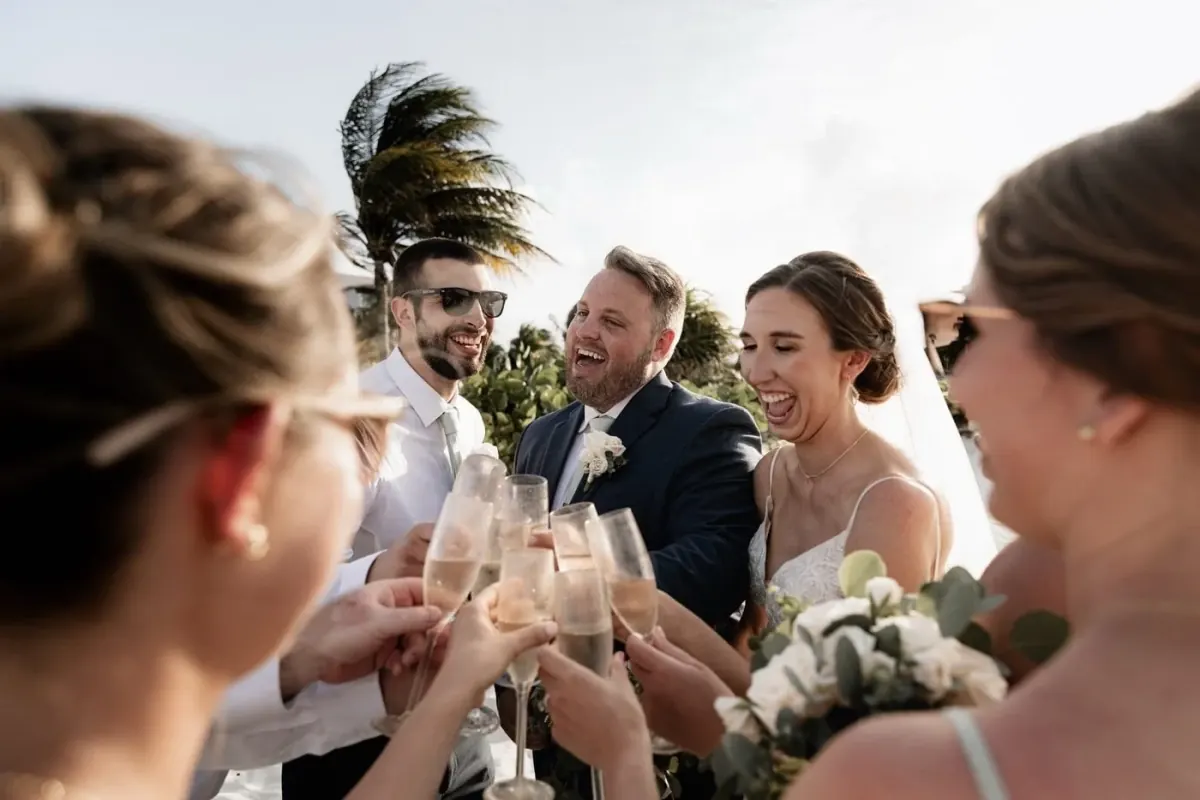
The non-negotiable block. After the toast, we steal the 30–45 minutes before sunset for just the two of you on an empty-looking beach in soft, gold light. Every other part of the day can flex — this one is why you came here.
-
The After-Party
Once the sun is down, the party begins — dinner under string lights, first dances on a sandy floor, drinks with the people who flew in for you. Beaches go dark fast, so this is a lights-and-flash chapter rather than a daylight one.
How does a Cancun beach wedding day actually unfold?
Picture a real one. The morning is quiet and bright — the Caribbean is usually at its calmest before noon, so getting ready happens in the prettiest, softest light of the day. The dress hangs by a window, makeup finishes, and your people drift in and out. We arrive for the last hour or so of preparation, because the reveal and the quiet minutes just before it are consistently among the most emotional frames in the gallery.
By afternoon the beach is set: a simple arch on the sand, a few rows of chairs facing the water, and you walking barefoot toward the sea. A symbolic ceremony runs about 20 to 30 minutes. Then comes a toast, golden-hour portraits as the light turns, and dinner and dancing once the sun is down. The whole arc is unhurried — but only if the ceremony is placed at the right hour, which is the single most important decision you'll make. More on that below.
Why does the ceremony time matter so much?
Because in the tropics the sun is harsh at midday and the good light comes late. A noon or 1:00 pm ceremony puts you under a high, white-hot sun: squinting, hard shadows, and a glare bouncing off the sand and water. The same beach at 4:30 or 5:00 pm is a different planet — soft, warm, forgiving light that flatters everyone and makes the sea glow. That late-afternoon glow is exactly the look that made you want a beach wedding in the first place.
So we plan in reverse. We lock the couple-portrait block into the 30–45 minutes before sunset, then place the ceremony so it ends with enough cushion to get there. In Cancun the sun sets around 5:30 pm in winter and stretches to roughly 7:30 pm at the height of summer — there are no 9:00 pm golden hours here. A December ceremony at 3:30 or 4:00 pm lands perfectly; a June one can begin later. If you want the full block-by-block version, our destination wedding photography timeline lays out sample 4-, 6-, and 8-hour days anchored to a real sunset.
What are the wind and sun really like?
Honest answer: there's almost always a sea breeze, and it picks up through the afternoon. This is good news for photos — hair lifting in the wind and a veil catching the air are genuinely some of the most beautiful beach-wedding images we make. But it pays to plan for it. A cathedral veil that drags will become a sail; a shorter veil, or pinning the style so it moves rather than collapses, gives you the romance without the wrestling match. Tell your stylist it's an outdoor beach ceremony so the look is built to flex.
The sun deserves the same respect. Midday glare is unflattering and uncomfortable; late-afternoon light is gentle and golden. If your ceremony time is fixed earlier for venue reasons, we work with shade, angles, and flash through the bright blocks and still build a dedicated golden-hour session into the late afternoon. The season shifts your sunset, too — picking the right month matters, and our guide to the best months for a wedding in Cancun breaks down weather, crowds, and light through the year.
How do you keep guests comfortable on the sand?
A beach wedding is a hot one, and guests who arrive from cooler climates feel it. A few small touches change everything. Offer shade for the seated ceremony or keep it short. Have water out before people sit down — a simple drink station does real work. Hand fans double as a thoughtful favor and a genuine relief. And set expectations on footwear: heels and soft sand are a losing battle, so it's kind to let guests know they can go barefoot or bring sandals. Comfortable guests are relaxed guests, and relaxed guests photograph beautifully.
What about the sand, the tide, and going barefoot?
Going barefoot is part of the magic — the sand is soft, the water is warm, and shoes mostly just fill with grit anyway. A couple of logistics make it smooth. Sand is loose, so an arch and any heavy decor want to be anchored, not just placed. The tide moves the usable beach through the day, which is one more reason the ceremony spot and time get chosen together rather than separately. And bring a small towel or a bottle of water for rinsing feet before you slip shoes back on for dinner — a tiny thing that saves a sandy reception.
What do couples wish they'd known beforehand?
Two things come up again and again. First, that sunset moves with the season, so the time that gives you that perfect glow in December is not the time that works in July — the month you choose quietly sets your whole timeline. Second, the public-beach versus resort-beach decision is worth making early, because it shapes both the look and the budget. Mexican beaches are federal property with public access, which means a stretch like Playa Delfines is open and free to use; a resort beach offers privacy and built-in services but usually comes with vendor fees for outside photographers. Neither is wrong — they're just different days. Our guide to resort wedding vendor fees in Cancun explains what to expect and which questions to ask your coordinator.
What does the photography look like?
We stay close all day and disappear into it — catching the reactions, the breeze, the laughter at dinner, and the quiet glance during portraits. Our wedding collections start from $1,550 USD and every edited photo is included; there are no caps or per-image fees, so the full story of the day comes home with you. Your complete gallery arrives in 2–3 weeks, and a 20% deposit reserves your date once you're ready. We're a bilingual team based in Cancun, and we cover the whole Riviera Maya.
Picturing Your Day on the Sand?
Tell us your date and where you're thinking of marrying, and we'll talk through the timing, the light, and the spot that fits the day you're imagining. Wedding collections start from $1,550 USD with every edited photo included.
Planning the Day — FAQ
What time should our beach ceremony be in Cancun?
Late afternoon, almost always. A ceremony that ends roughly 60–90 minutes before sunset gives you soft, golden light for the vows and a dedicated couple-portrait block right after. In winter that means a 3:30–4:00 pm start; in summer it can run later. Midday ceremonies fight harsh glare on the sand, so we plan the day backwards from sunset.
What about the wind on the beach?
Expect a sea breeze that builds through the afternoon — and lean into it. Hair lifting and a veil catching the air make some of the most beautiful beach-wedding photos. Just plan for it: choose a shorter or well-pinned veil and a hairstyle that moves rather than collapses, and tell your stylist it's an outdoor ceremony.
Is a public beach really an option for our wedding?
Yes. Mexican beaches are federal property with public access, so a stretch like Playa Delfines is open and free to use. A public beach gives you the natural, unfenced look at no venue cost; a resort beach offers privacy and services but usually adds vendor fees. Both work — they're just different kinds of day.
How hot does it get for a Cancun beach wedding?
Warm to hot year-round, and hotter at midday than guests from cooler climates expect. A late-afternoon ceremony is cooler as well as better lit. Keep guests comfortable with shade, water out before they sit, and hand fans, and you'll have relaxed guests who photograph beautifully.
What should guests wear to a beach wedding?
Light, breathable fabrics and footwear that works on sand. It's thoughtful to let guests know in advance they can go barefoot or bring sandals — heels and soft sand don't mix. Linen, flowing dresses, and lighter colors keep everyone cool and look wonderful in the bright coastal setting.
How long is your photography coverage, and when do we get the photos?
Coverage length is built around your day — most beach weddings land at 6 hours, from the last of getting ready through the first dances. Every collection includes all of your edited photos with no per-image caps. Your full gallery arrives in 2–3 weeks, and a 20% deposit reserves your date.