
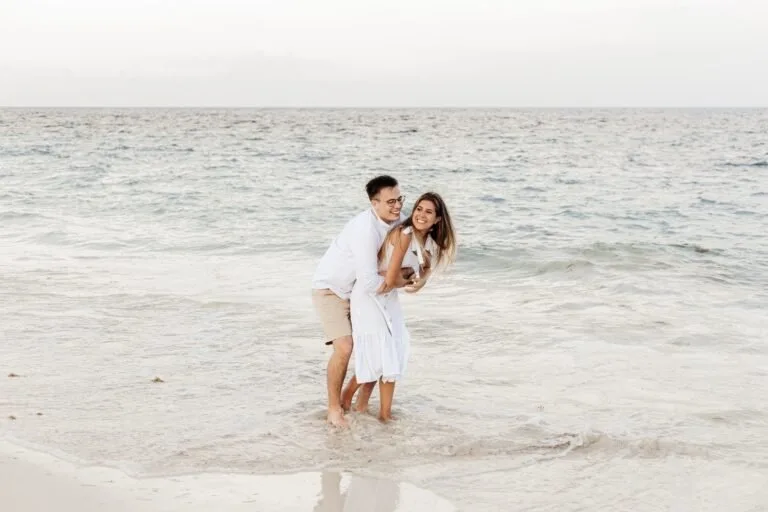
The Best Time of Day for Beach Wedding Photos
Ask any photographer when to schedule a beach wedding and the answer is always the same: chase the light. The hour you choose for your ceremony does more to shape your photos than the dress, the flowers, or the venue ever will. The same couple, on the same sand, will look entirely different at high noon than they do at sunrise or sunset — and the gap between flattering and unflattering can be just two hours either side of the wrong moment.
So which is better, sunrise or sunset? Both can be magical, and the right answer depends on your guests, your priorities, and the season you marry in. This is the honest, photographer's-eye breakdown: what golden hour actually is, why midday is the enemy, the real trade-offs of a dawn versus dusk ceremony, and how the Cancun coast changes the math.
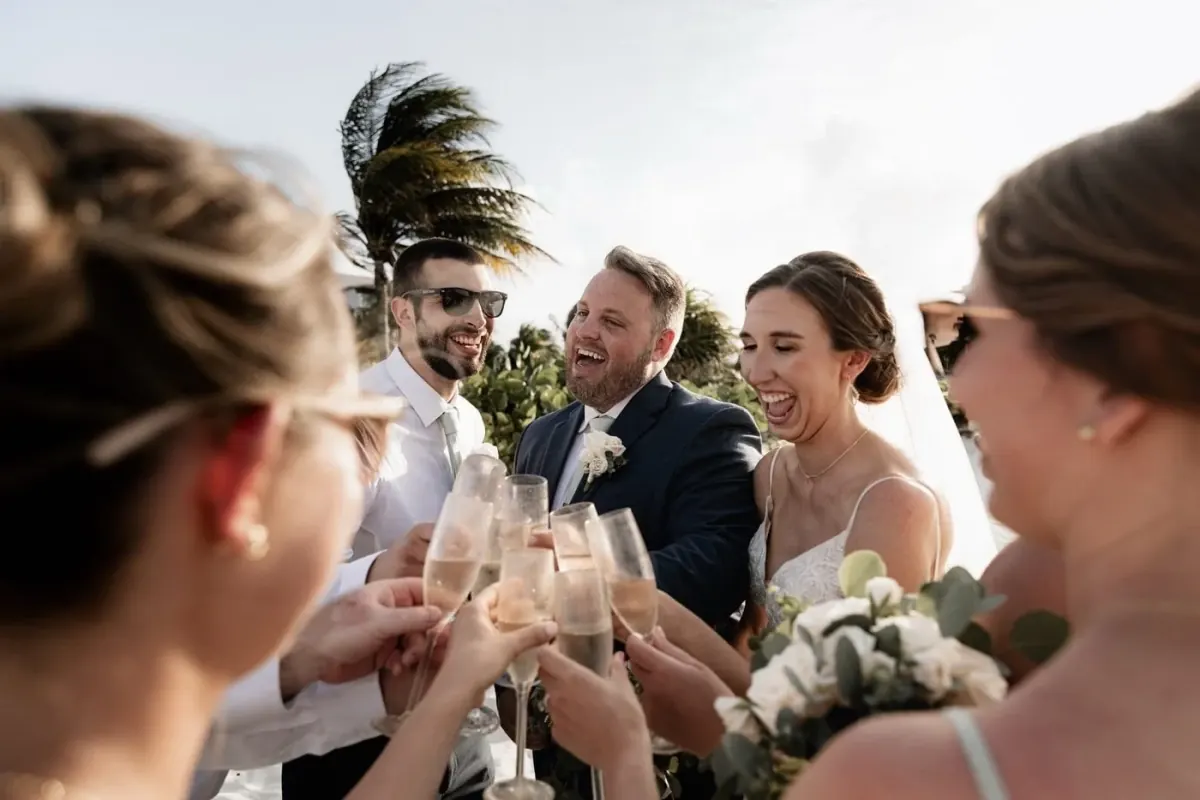
Why Golden Hour Wins
Golden hour is the soft, warm window just after sunrise and just before sunset, when the sun sits low and the light turns gentle and gold. It is the single most flattering light there is — and understanding why makes the whole sunrise-versus-sunset question easier to answer.
-
Soft, Directional Light
When the sun is low, its light passes through more atmosphere and softens. It wraps around faces instead of carving them, smooths skin, and adds a warm glow you cannot fake in editing. This is the light that makes beach photos look like the ones you pinned months ago.
-
No Squinting, No Harsh Shadows
At midday the sun sits directly overhead. It throws hard shadows under the eyes and nose, makes everyone squint into the glare, and turns a bright dress into blown-out white the camera cannot recover. Golden hour erases all of it — open eyes, even skin, soft shadows.
-
Colour You Cannot Edit In
The warm pinks of dawn and the deep golds of dusk are real, atmospheric colour. They sit in the sky, in the water, in the highlights on your skin. Midday light is flat, blue-white, and clinical by comparison. The hour gives you a palette no preset can truly reproduce.
-
Kinder in the Heat
On a tropical coast, midday is not just bad light — it is genuinely hot. Standing in formalwear under a noon sun in Cancun means sweat, sunburn, and exhausted guests. Sunrise and the hour before sunset are the coolest, most comfortable windows of the whole day.
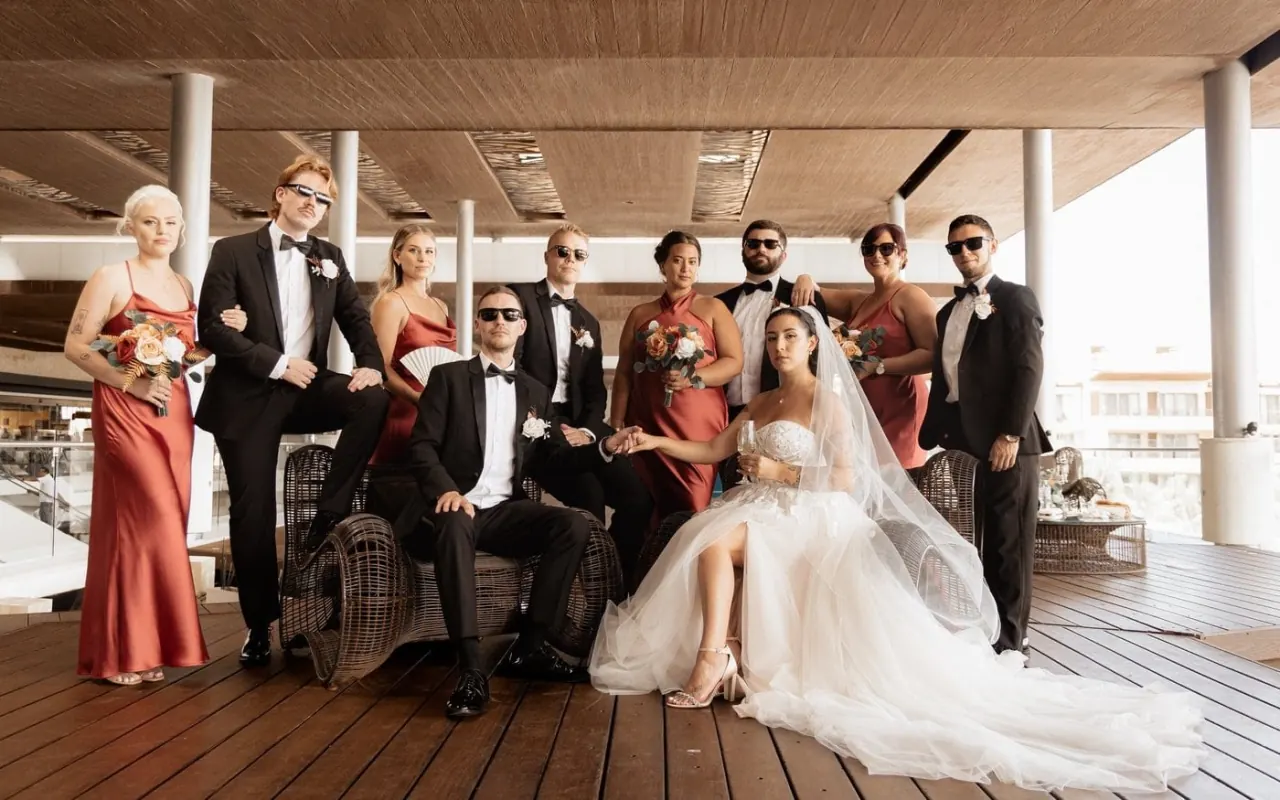

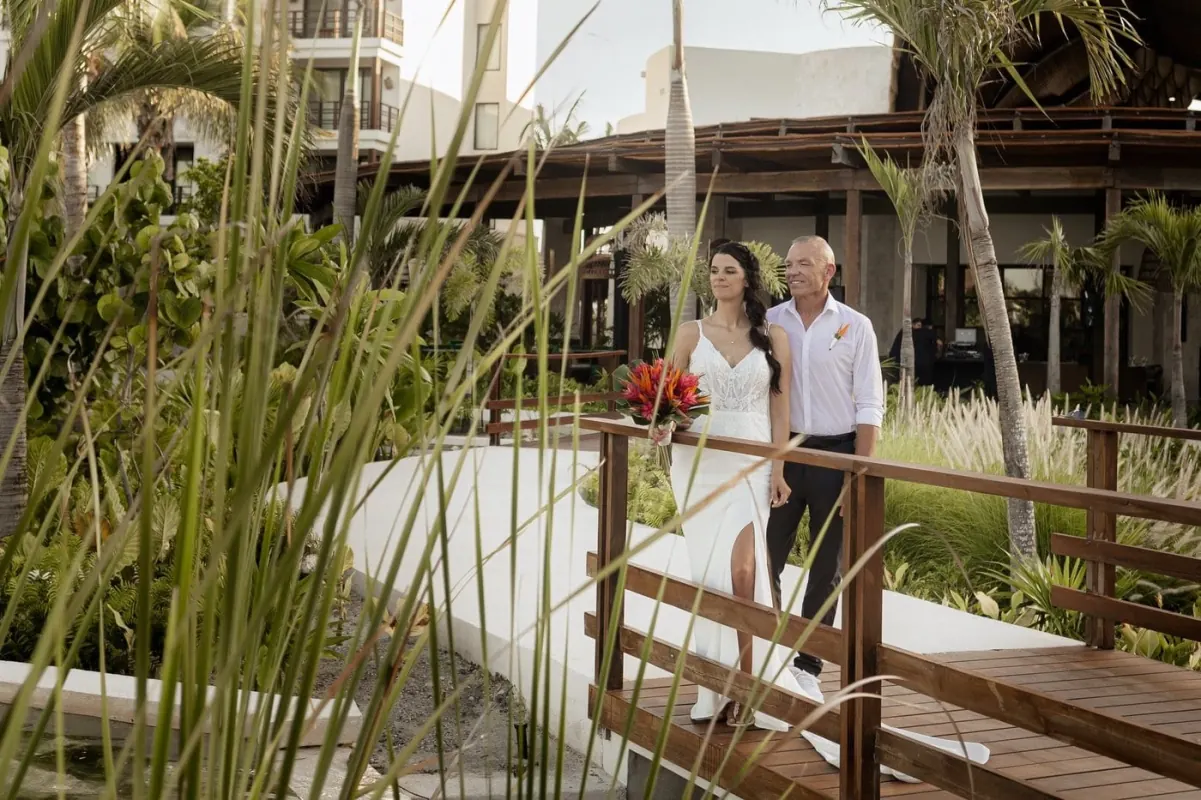
What is the best time of day for beach wedding photos?
Golden hour — the soft, warm window just after sunrise and just before sunset. If you take only one thing from this guide, take that. When the sun sits low on the horizon, its light travels through more atmosphere and softens into something gentle and gold. It wraps around faces instead of cutting across them, it adds warmth to skin and water that no editing can convincingly fake, and it lets you keep your eyes open instead of squinting. Every photographer plans around this hour because it is, simply, the most flattering light that exists.
The opposite is high noon. With the sun straight overhead, light falls hard and vertical: deep shadows pool under the eyes and nose, a white dress blows out into a featureless glare the camera cannot recover, and everyone squints. On a Cancun beach a midday ceremony adds a second problem — heat. Standing in full formalwear under a noon tropical sun means sweat, sunburn, and guests counting the minutes until shade. The light is working against you and so is the weather. So the real question is not whether to choose golden hour, but which end of the day to take it from.
Why choose a sunrise wedding or session?
Sunrise is the photographer's quiet favourite, and the reasons are unbeatable if you can convince everyone to set an alarm. The beach is empty — no sunbathers, no foot traffic, no strangers wandering through your frames. The temperature is at its lowest point of the entire day, which on this coast is a real gift. The light is soft and faintly pink, cooler and more delicate than the gold of dusk. And the privacy is total: at dawn, a public beach feels like it belongs only to you. For couple sessions and intimate ceremonies, we genuinely recommend an early start — our standard suggestion is an 8 a.m. session, when the sand is still empty and the light is at its gentlest.
The cost is the call time, and it is not small. A sunrise ceremony means hair and makeup begin in the dark, well before dawn, and it asks your guests to be dressed, awake, and on the sand at an hour most people are still asleep. For a couple's portrait session that is easy — it is just the two of you. For a full wedding with a guest list, it takes a crowd that is genuinely up for it. If your people are early risers and your guest count is small, sunrise rewards you with images almost no one else has. If they are not, the next window is waiting at the other end of the day.
Why choose a sunset wedding?
Sunset is the classic for a reason. The light turns warm and cinematic, deep gold spilling across the sand, and you get the postcard backdrop everyone pictures: the sun dropping toward the sea behind you as you say your vows. Just as importantly, the timing is guest-friendly. Nobody has to wake before dawn; people arrive relaxed, the day has had time to breathe, and the ceremony rolls naturally into dinner and dancing. For most destination weddings, sunset is the path of least resistance and the one your guests will thank you for.
The trade-off is twofold. First, the beach is busier at dusk than at dawn — golden hour is when everyone else also wants their photos, so popular stretches of sand fill up. Second, and more important: you lose the light fast. Once the sun touches the horizon, you have minutes, not hours, of that beautiful glow before it is gone. That means portraits after a sunset ceremony must be efficient and well-planned, not leisurely. If your ceremony is timed right at sunset, the smart move is a first look earlier in the day — it banks most of your couple and family portraits in good light beforehand, so you are not racing the dark afterward. Plan it, and sunset gives you everything. Wing it, and you can lose your portraits to nightfall.
What time is sunset in Cancun?
This is the detail couples most often overlook: sunset is not a fixed time, it shifts with the season. In Cancun it falls around 6:00 p.m. in the depths of winter and stretches to roughly 7:30 p.m. at the height of summer, with everything in between across the year. That ninety-minute swing matters enormously when you are building a schedule. A 5:00 p.m. ceremony that lands in glorious golden light in December would finish well before sunset in July — and a ceremony planned for the summer's late dusk would be starting in the dark if you held it in winter.
The rule is simple: do not pick a ceremony time and hope the light cooperates. Anchor your ceremony to the actual sunset on your actual date, then build outward from there. Once you have your date, we check the precise sunrise and sunset for that day and design the timeline around it. The season you marry in also changes the light, the heat, and the crowds in other ways worth knowing — our guide to the best months to marry in Cancun covers how the calendar shapes the whole experience.
Can we get the sunset over the water?
Here is the geographical truth most couples do not realise until they are standing on the beach. The Cancun hotel zone and most of the Riviera Maya face east, toward the Caribbean and the rising sun. That means the sun rises over the water and sets behind you, over the land. So that dreamy shot of the sun melting into the sea behind your vows? On these east-facing beaches, you cannot get it at sunset — at sunset the sea is in shadow and the colour is in the sky behind the dunes. You can, however, get the sun rising straight out of the ocean at dawn, which is one more quiet argument for a sunrise session.
The exception is Isla Mujeres. The island's west-facing Playa Norte looks back toward the mainland across open water, so it is one of the few spots on this coast where you genuinely can watch the sun drop into the sea at sunset. It is a short Ultramar ferry ride from Cancun and an unmatched setting for that over-the-water dusk image. If the sun-into-the-sea shot is the one you have always pictured, that is where it lives — our guide to getting married on Isla Mujeres walks through the logistics, the ferry, and the spots.
How do we build the timeline around the light?
We plan in reverse, starting from the sun. First we pin the exact sunrise and sunset for your date. Then we place your most photographed moments — the couple portraits, the family groupings, the ceremony itself — inside the most flattering windows that the day allows, and let everything else flex around them. For a sunset wedding that usually means a ceremony timed so the vows land in golden light, with a first look earlier in the afternoon to bank the bulk of the portraits before the light drops. For a sunrise wedding it means an early, unhurried start while the beach is empty and the light is soft and pink.
None of this is guesswork; it is the part of planning that quietly determines how your whole gallery looks. The mechanics of fitting getting-ready, ceremony, portraits, and party into the right hours — with realistic timing and built-in cushion — is exactly what our destination wedding photography timeline lays out, with sample schedules you can borrow. Get the light right and the rest of the day relaxes around it.
As for the photography itself: we shoot through all of it, sunrise or sunset, catching the real light rather than manufacturing it later. Our wedding collections start from $1,550 USD with every edited photo included — no caps and no per-image fees — and your complete gallery arrives in 2–3 weeks. A 20% deposit reserves your date. We are a bilingual team based in Cancun, covering the whole Riviera Maya, and we will time your day around the best light on your actual date.
Let's Time Your Day to the Light
Tell us your date and where you're marrying, and we'll check the exact sunrise and sunset and build your timeline around the most flattering hour — so your vows land in the best light of the day.
Sunrise vs Sunset — FAQ
What is the best time of day for beach wedding photos?
Golden hour — the soft, warm window just after sunrise and just before sunset, when the sun is low. The light is gentle and flattering, there are no harsh overhead shadows or squinting, and it adds a warm glow to skin and water that cannot be faked in editing. High noon is the worst time: hard shadows, blown-out highlights on a white dress, and uncomfortable tropical heat.
Is a noon or midday beach ceremony ever okay?
It is the hardest light to work with and the hottest part of the day, so we steer couples away from it when we can. If a midday slot is unavoidable — sometimes a venue or package fixes the time — we plan around it: open shade, careful positioning, and a separate portrait session at sunrise or sunset to capture the flattering light. But given a free choice, golden hour wins every time.
Sunrise or sunset — which is better for photos?
Both give you beautiful golden-hour light, so it comes down to priorities. Sunrise means an empty beach, the coolest temperatures, soft pink light, and total privacy, in exchange for a very early start. Sunset gives warm cinematic colour and guest-friendly timing, but the beach is busier and the light fades fast after the sun drops. For private couple sessions we often recommend an 8 a.m. sunrise start; for full guest weddings, sunset is usually the easier call.
What time is sunset in Cancun?
It shifts with the season — roughly 6:00 p.m. in winter and as late as about 7:30 p.m. in summer. That ninety-minute swing is why you should never pick a ceremony time and hope the light works out. Anchor your ceremony to the actual sunset on your specific date, then build the timeline outward from there. Once we have your date, we check the exact sunrise and sunset and plan around it.
Can we see the sunset over the water on our wedding day?
On most of the Cancun coast, no — the hotel zone and Riviera Maya face east, so the sun rises over the sea and sets behind you over the land. The exception is Isla Mujeres: its west-facing Playa Norte looks back across open water, making it one of the few spots where you can watch the sun drop into the sea at sunset. It is a short Ultramar ferry from Cancun. If you want the sun rising out of the ocean instead, a sunrise session on the mainland delivers exactly that.
How do you plan the wedding timeline around the light?
We work backwards from the sun. First we pin the exact sunrise and sunset for your date, then we place the most photographed moments — couple portraits, family groupings, and the ceremony — inside the most flattering windows the day allows. For a sunset wedding that often means a first look earlier in the afternoon to bank portraits before the light fades. Our destination wedding timeline guide lays out sample schedules with realistic timing and built-in cushion.