
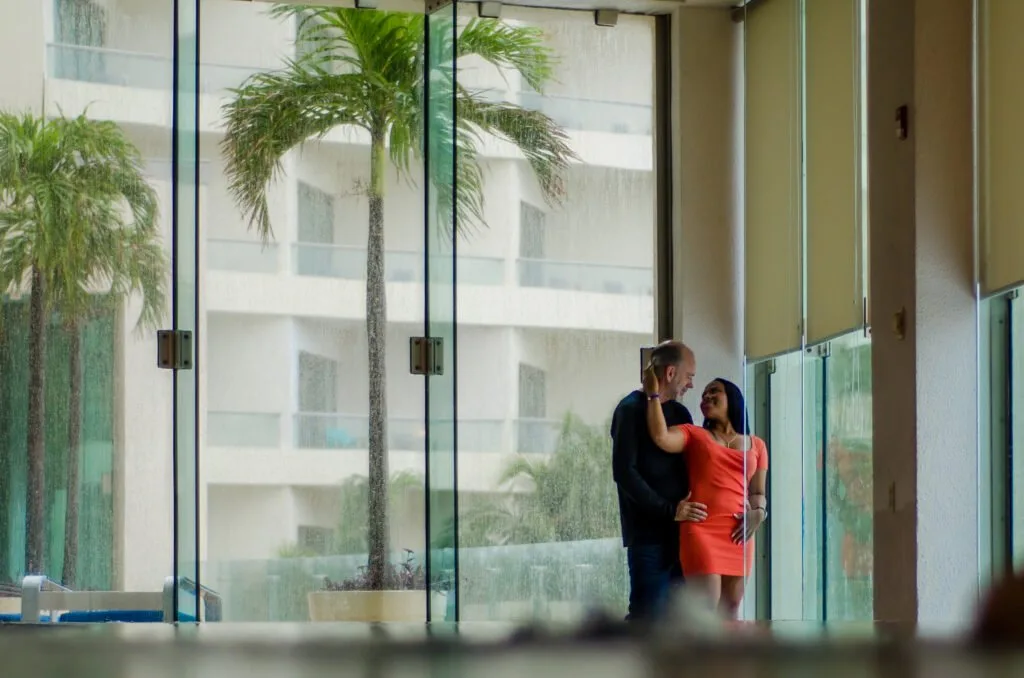
What you wear on the sand changes the whole photograph
A beach wedding in the Mexican Caribbean is not the same room you tried your dress on back home. The light is twice as bright, the air carries salt and a steady breeze, and the floor is soft sand that shifts under every step. After photographing weddings along the Riviera Maya for more than six years, we have learned that the outfits that look best in pictures are rarely the heaviest or the most structured. They are the ones that move, breathe, and catch the light.
This is a photographer's wardrobe guide, not a fashion column. We are thinking about how chiffon lifts when the wind comes off the water, how a linen suit reads in midday sun, and which colors keep their detail when the whole frame is glowing. Choose with the heat, the breeze, the sand, and the bright light in mind, and you will be comfortable all day and timeless in the gallery.
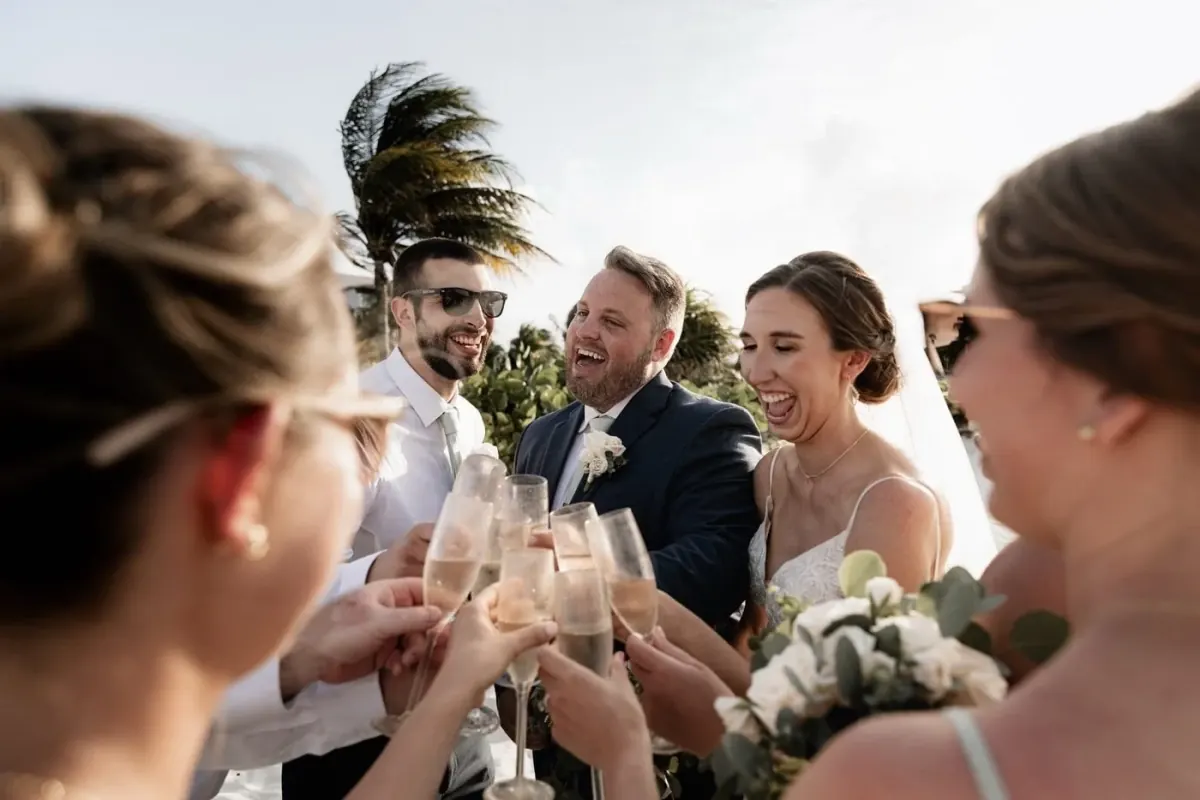
A dress that moves with the breeze
On a windy Caribbean beach, the dress that photographs as motion will outshine the one that simply sits there. Here is what we look for when a bride asks how to choose.
-
Fabrics that catch the wind
Chiffon, crepe, and organza are made for the beach. They are light enough to lift and ripple when the breeze comes off the water, turning a still pose into a moment with movement. That motion is what gives beach galleries their drama.
-
Lightweight over heavy beading
A heavily beaded ballgown is gorgeous indoors, but on a hot beach it traps heat and barely moves. In the Caribbean, a flowing silhouette photographs livelier and keeps you comfortable through a sunset session.
-
The veil decision
A veil is breathtaking in photos when the wind cooperates and a real gamble when it does not. Bring it, plan a few veil shots early, then have a backup plan to remove it so a gust never hijacks the rest of your portraits.
-
Hair and footing that survive the beach
A soft updo or a styled half-up look holds far better than loose waves in a sea breeze. On the sand, barefoot or a barefoot-sandal foot piece is both elegant and practical, because heels disappear into soft sand anyway.

What is the best fabric for a beach wedding dress?
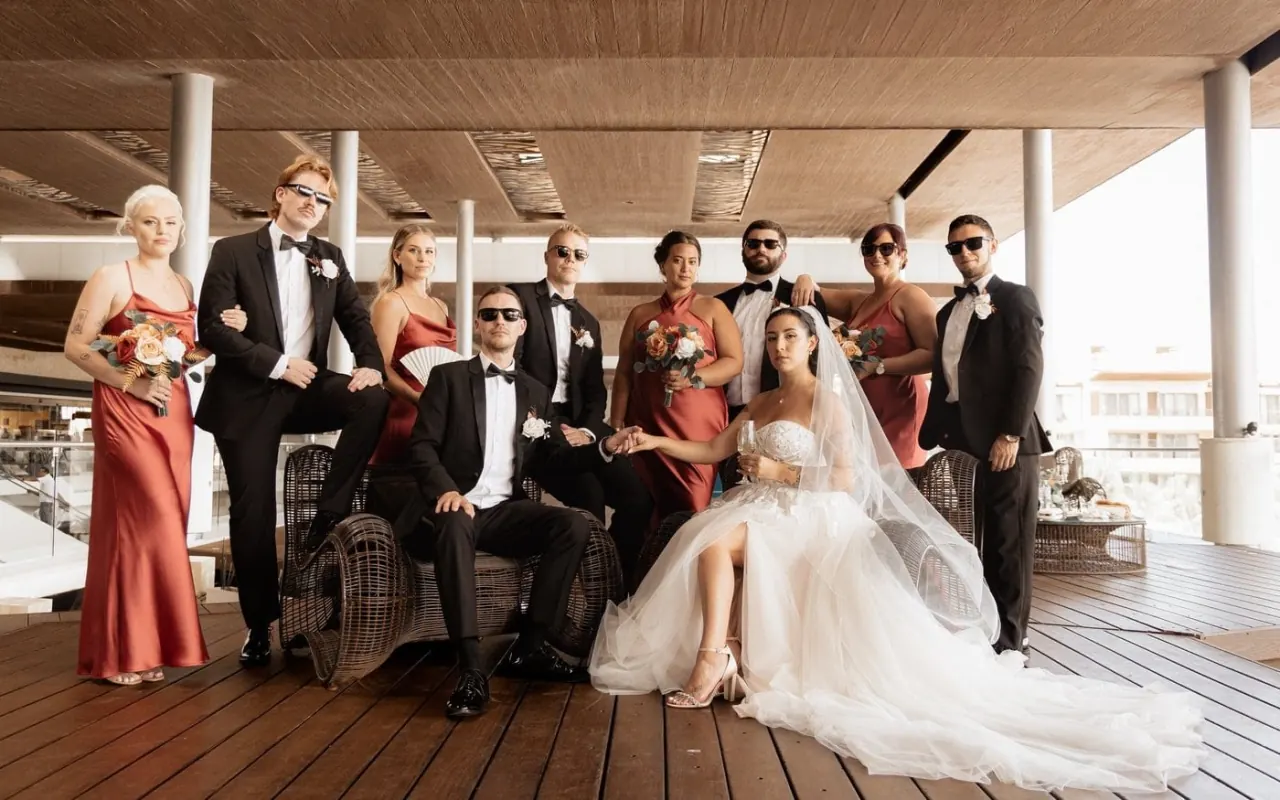
The fabrics that earn their place on a Caribbean beach are the ones that move. Chiffon is the classic for a reason: it is feather-light, it floats on the smallest breeze, and it photographs as motion rather than as a static shape. Crepe sits a little heavier and gives you a cleaner, more sculptural line while still flowing at the hem, which suits brides who want structure up top and movement below. Organza is crisp and holds soft volume, catching sea-breeze gusts beautifully in a way that reads as airy rather than stiff.
What we steer brides away from in the heat is heavy beadwork and dense satin. They are stunning under controlled indoor light, but on a beach at noon they absorb heat, weigh you down, and barely register the wind. A lightweight gown with subtle detail will keep you comfortable through a long day and look more alive in every frame. If you adore sparkle, place it at the bodice and let the skirt stay light, so the part that needs to move can still move.
Should I wear a veil on a windy beach?
A veil on the beach is one of the most beautiful things we photograph and one of the least predictable. When the wind catches it just right, the image is unforgettable. When the wind fights it, you spend your portraits with fabric wrapped across your face. We do not tell brides to skip the veil, we tell them to plan it. Wear it for the ceremony and for a dedicated set of veil shots while everyone has fresh energy, then have a bridesmaid ready to remove it cleanly so the rest of the session is not at the mercy of the next gust.
A few practical notes help enormously. A longer, lighter veil flows more gracefully than a short, stiff one, and a comb anchored firmly into a styled updo holds better than a loose pin. Tell your photographer you want veil moments and we will position you so the wind works for the camera instead of against it. That single conversation is the difference between a veil that makes the gallery and one that frustrates everyone on the sand.
What should the groom wear in the Caribbean heat?
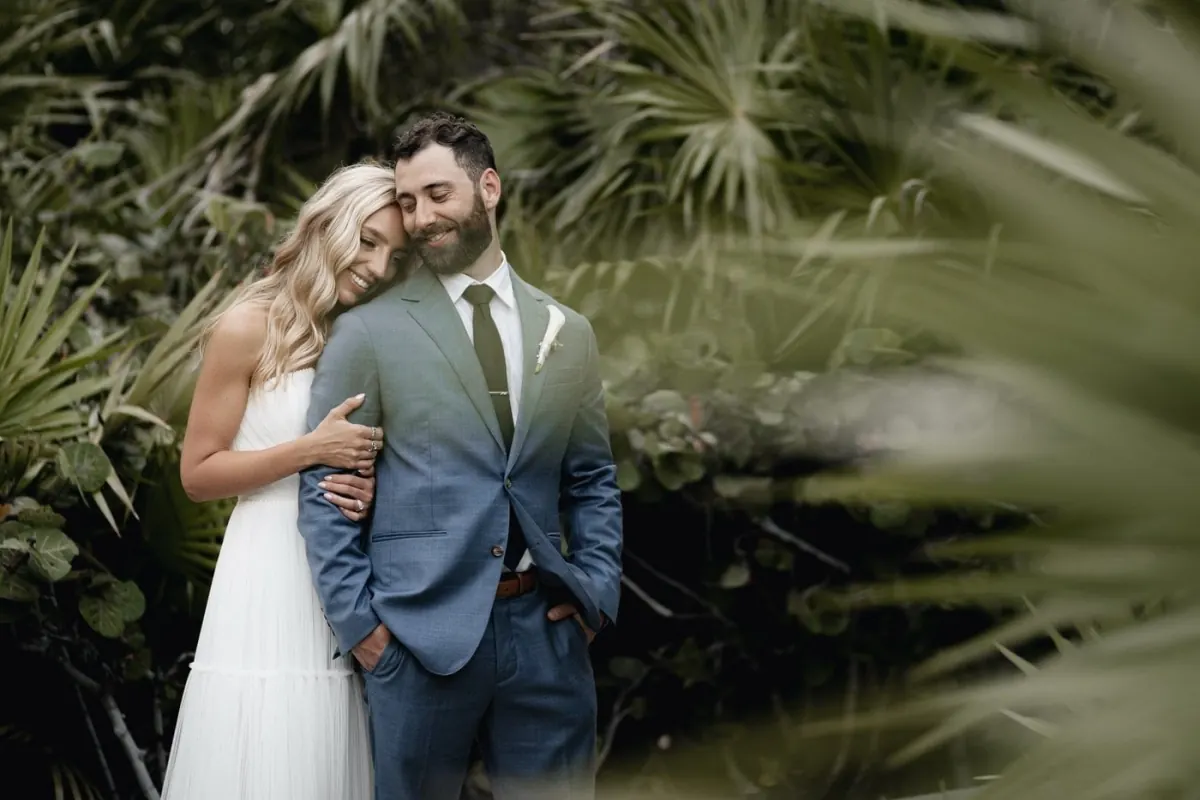
Linen is the groom's best friend on a beach in Mexico. A linen suit or a lightweight linen blend breathes in a way that wool simply cannot, and the gentle natural creasing reads as relaxed and intentional rather than wrinkled. Lighter colors are both cooler and more flattering in bright sun: stone, sand, soft beige, light grey, and pale blue keep their detail and bounce light back toward the face. A heavy three-piece suit in dark wool is a recipe for a sweating, miserable groom by the second photo, so skip the vest and the heavy layers.
Build in flexibility for the temperature swing across the day. A jacket you can take off, sleeves you can roll, and a shirt that looks intentional on its own give you a lighter look for the hottest part of the day and a sharper look for the cooler golden hour. For footwear, light loafers, woven shoes, or clean barefoot moments all work, paired with no-show socks so nothing peeks out awkwardly in the frame.
Barefoot or shoes on the sand?
On soft sand, barefoot almost always wins. Heels sink and disappear, dress shoes fill with sand, and both leave you fighting your footing instead of enjoying your portraits. For brides, a barefoot-sandal foot piece, a bare foot under a long gown, or delicate flats for the walk down the aisle all photograph cleanly. For grooms, going barefoot for the beach portion and slipping shoes back on for any hard-surface moments is the easy, comfortable choice. Either way, plan to brush off and rinse your feet before the reception so sand does not travel with you all night.
If there is a firmer boardwalk, deck, or paved area as part of your venue, that is where shoes earn their place, and we are happy to map the session so your footwear matches the surface. The goal is simple: you should be thinking about each other, not about where to put your feet.
What colors photograph best in bright Caribbean light?
The Caribbean is a high-key environment: white sand, turquoise water, and a sky that glows. Whites, creams, ivories, and soft pastels live happily in that light. They reflect it, brighten the skin, and feel effortless against the sea. Very dark colors are the trade-off to weigh. Deep black and charcoal can look striking, but they absorb heat and, in harsh midday sun, the darkest areas can lose detail and turn into a flat shape rather than a richly textured suit or gown.
The most important thing is that the two of you coordinate without matching exactly. A linen suit in stone next to an ivory gown sits in perfect harmony, while a bright white shirt against a bright white dress can blend together and flatten the picture. Choose two tones in the same soft family, with just enough contrast to keep you separated in the frame, and your portraits will feel intentional rather than accidental.
How do photographers plan around the light and the day?
Midday sun and golden hour are two completely different wardrobes-of-mood, and we plan for both. Under high midday sun, light colors and breathable fabrics keep you comfortable and keep detail in the picture, while heavy, dark, structured pieces struggle. At golden hour, the light goes warm and soft, every fabric looks better, and even richer colors recover the detail they lose at noon. If you want one outfit to carry the whole day, lean light, and build in a jacket or layer you can add as the air cools.
A few sweat-proofing habits make a real difference: choose natural fibers that breathe, bring blotting cloths and a small towel, hydrate before the session, and schedule the most physical moments for cooler parts of the day. Many couples also love a second look for a relaxed trash-the-dress session on a different day, when you can wade into the water, embrace the sand, and let the dress do things you would never risk on the wedding day itself. And because attire and timing depend so much on the weather window, it is worth thinking through which months bring the kindest light and calmest breeze before you lock your date.
One more piece of the puzzle: your guests. When everyone dresses for the same beach, the wide shots look cohesive and nobody is overheating in the back row. Send your party a few clear notes on fabric, color, and footwear, or simply share our guide to what guests should wear to a beach wedding so the whole group arrives ready for the sand and the sun.
Let's plan your look around the light
Tell us your venue, your date, and the feel you are after. We will help you time the session for the best light and make sure your attire photographs as beautifully as it feels on the day.
Common questions about dressing for a beach wedding
What is the best fabric for a beach wedding dress?
Lightweight fabrics that move: chiffon, crepe, and organza. They lift and ripple in the sea breeze, so the dress photographs as motion rather than a still shape, and they keep you far cooler than heavy beading or dense satin in Caribbean heat.
Should I wear a veil on a windy beach?
You can, but plan for the wind. A veil is gorgeous in photos when a gust cooperates and frustrating when it does not. Wear it for the ceremony and a dedicated set of veil shots, then have someone ready to remove it cleanly so the rest of your portraits are not at the mercy of the breeze.
What should the groom wear in the heat?
Linen or a lightweight linen blend in a lighter color: stone, sand, light grey, or pale blue. These breathe far better than wool and read beautifully in bright sun. Skip the heavy three-piece, plan to roll the sleeves or remove the jacket for the hottest part of the day.
Should we go barefoot or wear shoes on the sand?
On soft sand, barefoot almost always wins, because heels sink and dress shoes fill with sand. Barefoot-sandal foot pieces for the bride and bare feet for the groom photograph cleanly. Save shoes for any boardwalk, deck, or paved surfaces, and rinse off before the reception.
What colors photograph best in bright Caribbean light?
Whites, creams, and soft pastels glow against white sand and turquoise water. Very dark colors absorb heat and can lose detail in harsh midday sun. Coordinate the two of you in the same soft tone family with a little contrast, rather than matching exactly, so you stay separated in the frame.
Do you help with timing the session for the best light?
Yes. We plan around the light, recommending cooler, softer windows like early morning and golden hour for the most flattering portraits. We start many sessions around 8 a.m. and design the day so your attire and the light work together. Just share your venue and date and we will map it out.