
The One Thing You Actually Control
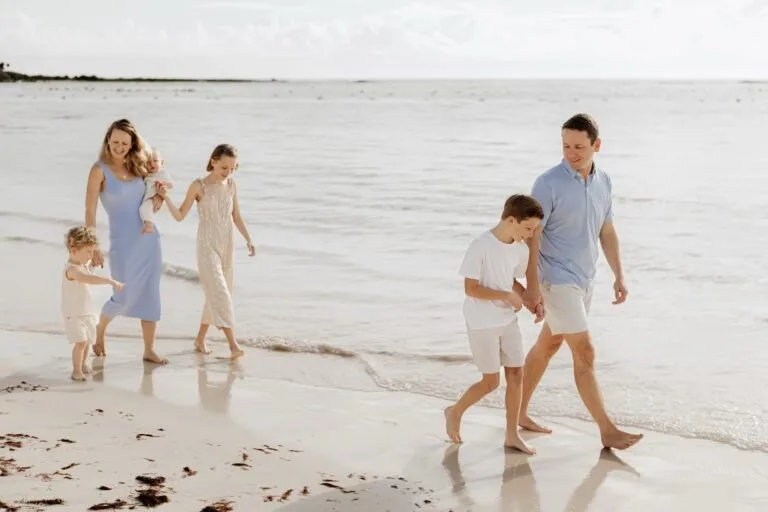
On a Cancun beach, the backdrop is already perfect — white sand, turquoise water, soft tropical light. The single biggest thing you control is what you wear. The right outfit sits gently beside that scenery and lets your face carry the photo; the wrong one fights the colors or has you overheating before the first frame.
This is our evergreen reference for what to wear to any beach photoshoot in Cancun — couples, solo portraits, friends, a graduation, an anniversary, a vacation gallery, whatever brought you to the sand. The principles are universal: a calm palette, fabrics that breathe and move, coordinating without matching, and a short list of things to leave in the suitcase. If your session is a family shoot or a maternity shoot, we have dedicated guides linked below.
Four Rules That Do the Heavy Lifting
If you only remember four things before you pack, make it these. Everything else in this guide is detail layered on top.
-
Choose a Palette, Not an Outfit
Pick two or three soft tones that live near sand and turquoise — cream, oatmeal, dusty blue, sage, terracotta. Build your whole look (and anyone with you) inside that range.
-
Pick Fabrics That Move
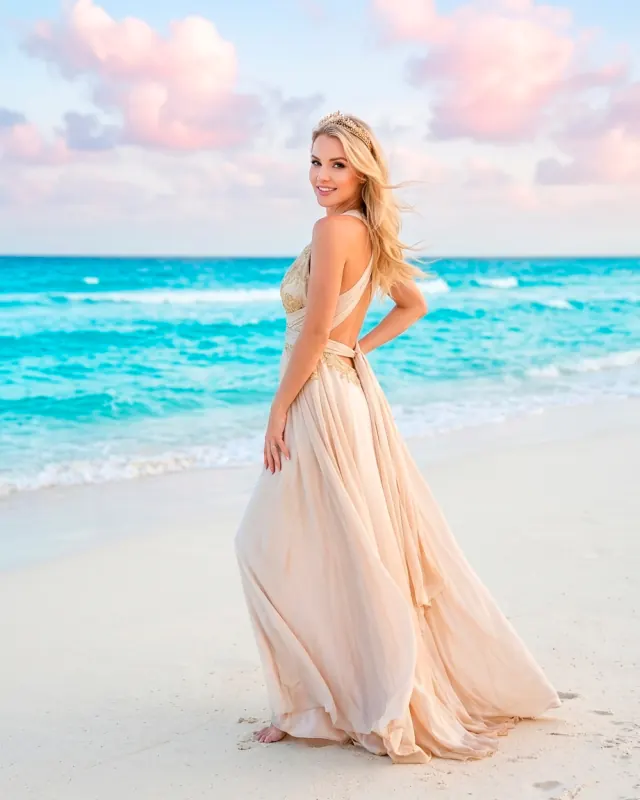
Linen, cotton, gauze and chiffon breathe in the humidity and catch the sea breeze. A long, flowy piece is the most photogenic thing on a beach — the wind styles it for you.
-
Coordinate, Never Match
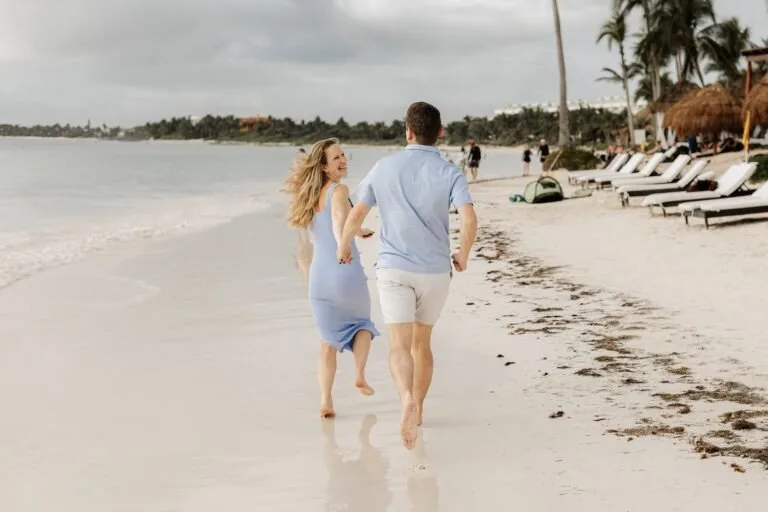
If you are shooting with a partner or friends, share the palette but wear your own pieces. Identical outfits read like a uniform; a shared color story looks effortless.
-
Avoid the Obvious Traps
No big logos, no neon, no head-to-toe bright white, no heels on the sand. Slightly lived-in favorites always photograph more like you than a stiff, brand-new outfit.
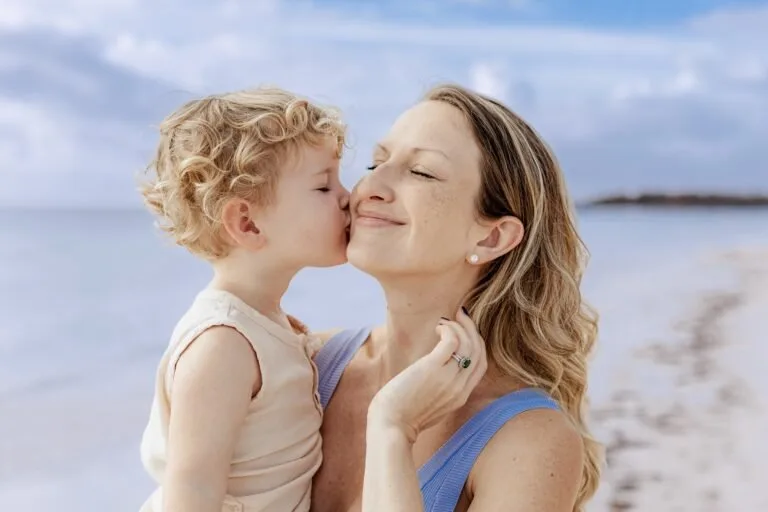
What colors work best for beach photos in Cancun?
Cancun hands you two dominant colors before you get dressed: warm sand and bright turquoise. The outfits that photograph best are the ones that sit calmly against that combination instead of competing with it. Think of yourself as one quiet note in the scene, not a second focal point fighting the water for attention.
The palettes that always work
Three families of color look beautiful on tropical sand. Soft neutrals — cream, ivory, oatmeal, taupe, soft gray — feel timeless and let your face and the ocean do the talking. Muted blues and greens — dusty blue, chambray, sage, soft seafoam — echo the water without trying to match it exactly, which keeps the look natural rather than costume-y. And warm earth tones — terracotta, rust, clay, caramel, mustard — are the quiet secret weapon: they are the complementary opposite of turquoise, so they actually make the water look bluer behind you. Pick one of those directions and pull two or three shades from it.
What about prints and a pop of color?
Patterns are welcome in small doses — a soft stripe, a gentle floral, a subtle texture — as long as they stay inside your palette and do not turn into the loudest thing in the frame. A single accent piece in a muted version of a brighter color can be lovely. The line to avoid is saturation: a dusty coral reads beautifully, while a fluorescent one bounces a colored cast onto your skin in the strong sand light.
Should we match or coordinate?
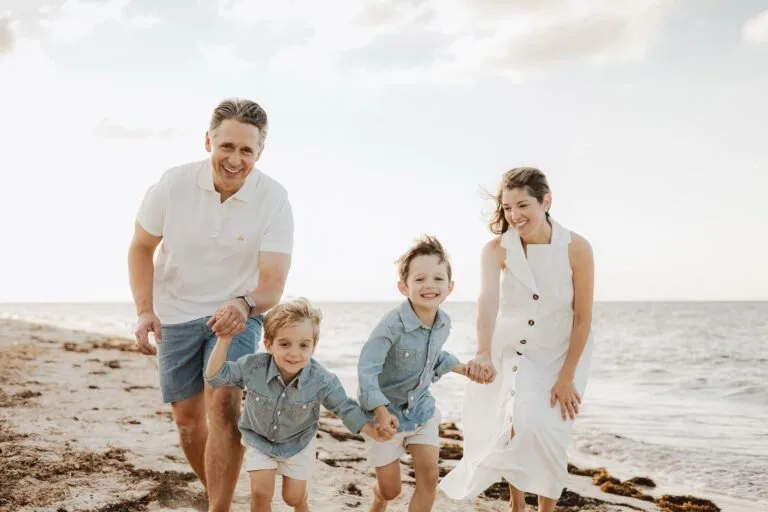
If you are shooting with a partner, a friend, or a small group, coordinate — never match. Matching means everyone in the identical white shirt and khaki shorts, and while that felt like the safe choice a decade ago, it now reads as a uniform and instantly dates the photos. Coordinating means everyone shares the same palette while wearing pieces they actually feel good in, so the group looks connected and each person still looks like themselves.
The practical version: agree on your two or three colors, then let each person choose within that range. Mix lighter and slightly deeper shades so the group has depth instead of looking flat — a cream dress beside an oatmeal linen shirt beside a dusty-blue top. A relaxed, confident face beats a perfectly matched one in every single frame.
What fabrics handle the heat?
This is where a lot of beautifully planned outfits fall apart. Cancun is hot and humid, and the wrong fabric shows on your face within minutes — flushed cheeks, a sheen of sweat, that visible wish to take the whole thing off. The right fabric does two jobs at once: it keeps you cool, and it moves in the wind.
Reach for natural, breathable fabrics: linen first, then cotton, gauze, chiffon and light knits. They let air pass through, dry quickly if you wade into the shallows, and catch the sea breeze in a way that adds gentle motion to every photo. A long, flowy dress or skirt is the single most photogenic thing you can wear on a beach precisely because it moves — the wind does half the styling for you.
Avoid in the heat: heavy synthetics, polyester, thick denim, and anything tight or structured. They trap warmth, cling, and look stiff in photos. Timing helps too — we recommend an early start around 8 a.m. or golden hour, when the temperature is kindest and the light is softest (our guide to the best time of day for beach photos in Cancun goes deep on this) — but breathable fabric is your insurance no matter the hour.
What should I avoid wearing?
A short, firm list of things that quietly ruin otherwise lovely beach photos:
- Big logos and graphics. Brand names and slogans pull the eye straight off your face and date the photos to a specific year. Keep clothing clean and simple.
- Neon and highly saturated brights. Hot pink, electric green and bright orange bounce a colored cast onto skin in strong sand light, so faces pick up an odd tint. Muted versions of those same colors are safe; the fluorescent ones are not.
- Head-to-toe pure white. A little cream or ivory is gorgeous, but an entire outfit in bright white tends to blow out and lose detail under the Cancun sun. Mix in sand, blush or a soft blue so the photo holds its texture.
- Brand-new, stiff clothing. Pieces straight off the hanger look like costumes and move awkwardly. Wash and wear something once before the trip so it softens and feels like you.
- Heels and dressy shoes on the sand. They sink, they read as an afterthought, and you will want them off anyway. More on footwear next.
How many outfits should I bring?
One outfit is plenty for a short session; one or two changes is the sweet spot for a fuller one. The honest math is that getting changed on a beach eats time you would rather spend in front of the camera, so two well-chosen looks almost always beat four rushed ones. A classic pairing is one flowy, romantic piece for the dreamy frames and one relaxed, everyday look for the candid, walking-and-laughing shots.
If you do plan a change, keep both looks inside the same palette so the gallery feels like one cohesive story rather than two unrelated shoots. Pack the second outfit in something easy to slip into — there is usually a quiet spot to change near the beach. And whatever you bring, wear it once before the trip so nothing is stiff or surprising on the day. Not sure how much your session allows? Just message us and we will map out timing and outfit changes with you.
Barefoot or sandals?
Barefoot wins on the sand, almost without exception. Bare feet look natural, photograph cleanly, and free you to walk into the shallows and feel the warm water — which is where the candid, joyful frames come from. Shoes tend to date the look and clutter the bottom of the photo. Mexican beaches are federal public property and easy to access, so you can simply leave your shoes at the edge and meet us on the sand.
If you genuinely prefer a little something on your feet, simple flat sandals in a neutral tone are the safe choice — and they slip off easily for the barefoot frames. Either way, plan to spend most of the session shoeless; it always looks more like a real Cancun morning.
What about accessories?
Keep accessories light and intentional. A delicate necklace, simple earrings, a straw hat, a gauzy wrap or a flowing scarf can all add character — and a hat or scarf doubles as something the breeze can play with. The thing to avoid is clutter: sunglasses hide your eyes, oversized statement jewelry competes with your face, and a phone or hotel wristband sneaks into more frames than you would think. Slip the watch and the wristband off before we start. The best beach photos feel uncluttered, so when in doubt, take one accessory off rather than adding another.
Does this work for couples, solo and group sessions too?
Yes — every principle here applies whether you are shooting solo portraits, a couples session, a group of friends, an engagement, an anniversary or a vacation gallery. The sand-and-turquoise backdrop is the constant, so the palette, the fabrics, the barefoot rule and the short list of things to avoid never change. If you want the location and timing side of the planning, our guide to a vacation photoshoot in Cancun walks through the best beaches, when to shoot, and how a session flows.
Two kinds of session do have their own wardrobe notes, so we wrote dedicated guides: see what to wear for a family beach photoshoot for coordinating across kids and grandparents, and what to wear for a maternity beach photoshoot for pieces that flatter and frame a bump. Pair either of those with this umbrella guide and you are fully prepared.
Quick packing checklist
Screenshot this before you fly:
- Two or three soft tones chosen as your palette (neutral, muted blue/green, or warm earth).
- At least one long, flowy piece for movement in the breeze.
- Linen, cotton, gauze or chiffon fabrics; nothing tight, stiff or synthetic.
- Coordinated pieces with anyone joining you — never identical outfits.
- One or two outfits, not four — and worn once already so nothing is stiff.
- No logos, no neon, no head-to-toe pure white.
- Bare feet, with simple neutral sandals only as a backup.
- Light, intentional accessories; watch and wristband off.
- An early-morning or golden-hour start for the kindest light and heat.
Send Us a Photo of Your Outfits
Not sure if your palette works against the turquoise? Message us a quick photo of what you packed and we’ll tell you exactly what will shine on the beach — and your edited gallery comes back within 72 hours of the session.
Cancun Beach Outfits — FAQ
What colors are best for a beach photoshoot in Cancun?
Soft neutrals (cream, oatmeal, taupe), muted blues and greens (dusty blue, sage), and warm earth tones (terracotta, rust, caramel) all photograph beautifully against Cancun's sand and turquoise water. Pick two or three shades from one of those families and build your whole look inside that palette.
What fabrics are best for a hot, humid beach session?
Natural, breathable fabrics — linen, cotton, gauze and chiffon. They keep you cool and move in the sea breeze, and a long flowy piece adds gentle motion to every frame. Avoid heavy synthetics, thick denim and anything tight or structured, which trap heat and look stiff in photos.
What should I avoid wearing for beach photos?
Skip big logos and graphics, neon or highly saturated brights (they cast color onto your skin), and head-to-toe pure white (it blows out in bright sand light). Also avoid brand-new stiff clothing and heels on the sand — wear pieces once first so they soften and look like you.
How many outfits should I bring to a beach session?
One outfit is plenty for a short session and one or two changes is ideal for a longer one. Two well-chosen looks beat four rushed ones, since changing on the beach eats time. Keep both outfits in the same palette so the gallery feels like one cohesive story.
Barefoot or sandals on the beach?
Barefoot almost always looks best — it is natural, photographs cleanly, and lets you walk into the shallows for candid frames. If you prefer footwear, choose simple neutral flat sandals that slip off easily for the barefoot shots. Mexican beaches are public, so you can leave shoes at the edge.
When will I get my photos?
Your fully edited gallery is delivered within 72 hours of the session, so for most travelers the photos arrive before you fly home. You pay per photo or choose a package after you see the gallery — message us on WhatsApp for current session rates and packages.