

An Unplugged Ceremony Is a Gift to Everyone Present
An unplugged ceremony simply means guests put their phones and cameras away while you walk the aisle and say your vows. No screens raised over the seats, no flashes firing across the dark, no one leaning into the aisle for a shot. For those few sacred minutes, everyone is fully present, and you have a hired professional whose only job is to capture it perfectly.
We have photographed more than a thousand couples across the Riviera Maya, and the ceremony is the one part of the day you cannot redo. This is an honest look at why a photographer asks for an unplugged aisle, why your guests still go home with beautiful images, and how to ask for it so kindly that nobody feels scolded.
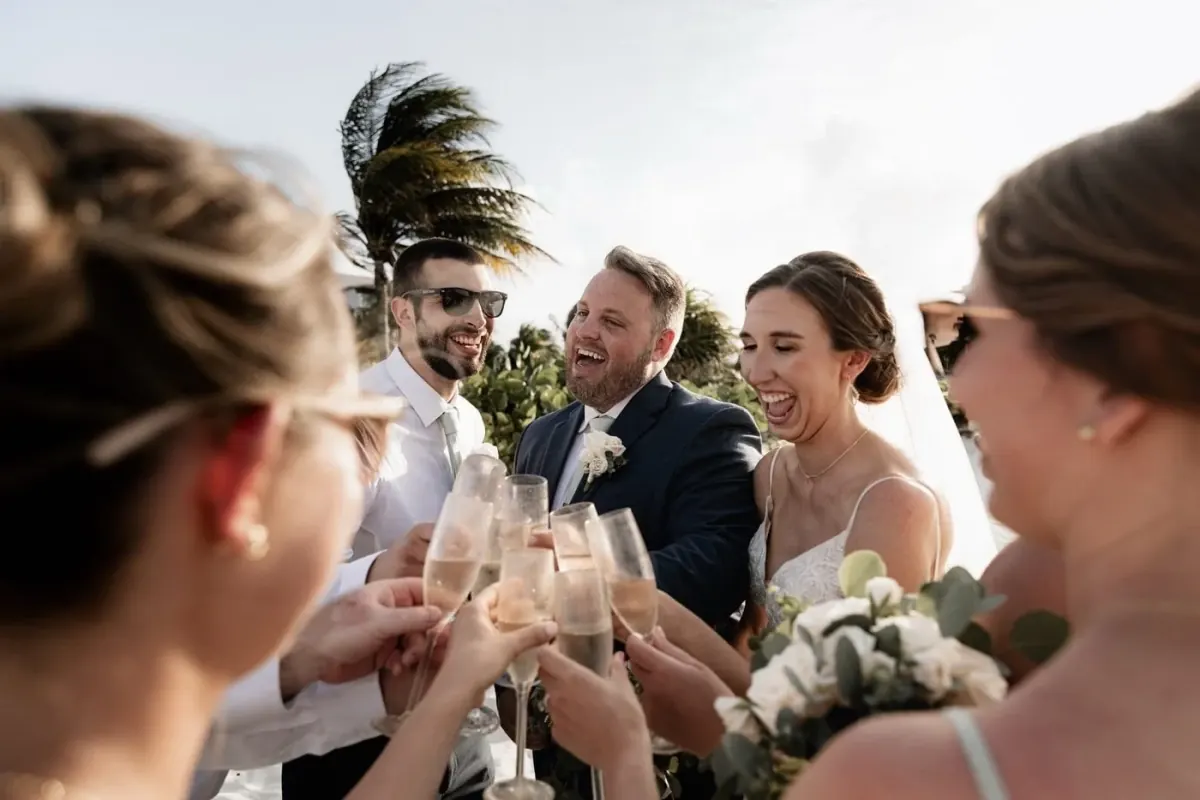
The Shots You Cannot Get Back
These are not hypotheticals. They are the photos that go wrong at unscripted ceremonies, every season, and the reason we gently raise the subject with every couple.
-
A phone in the aisle at the kiss
The classic heartbreak: a guest steps into the aisle with a phone held high, and their arm and glowing screen land squarely between the lens and your first kiss. We are framed and ready, and the one frame you wanted forever has a phone in it.
-
An iPad raised over the seats
A tablet held up above the rows blocks the faces of the guests behind it and photobombs the wide shots of your processional. There is no angle that crops it out cleanly once it is in the frame.
-
Guest flashes ruining the exposure
A pop of phone flash during your vows throws our careful exposure off and washes faces flat. On a golden-hour beach, that competing light can flatten the very glow you booked us for.
-
Guests leaning into every frame
When phones are out, people lean, stand and crowd the aisle to get their own angle. Suddenly your clean, candid documentary shots are full of outstretched arms and the backs of phones.
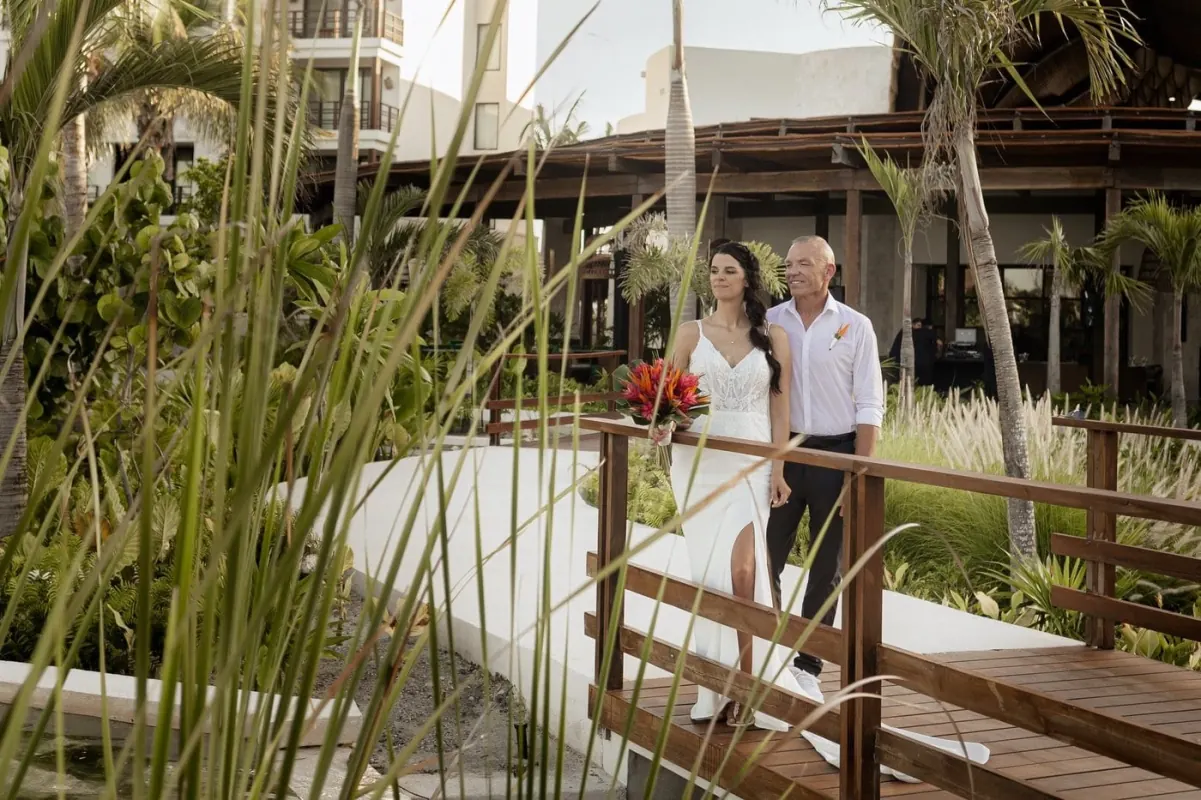

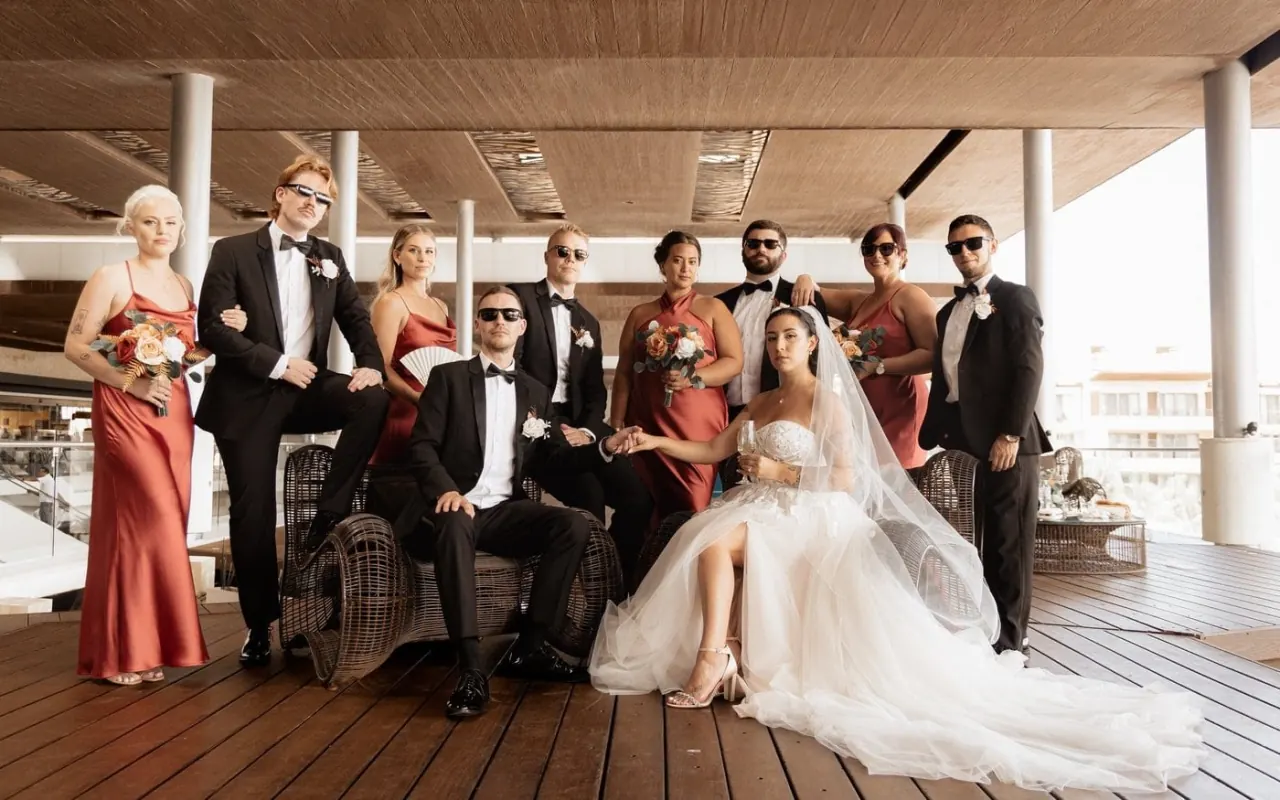
Should we have an unplugged wedding ceremony?
If you are asking the question, you are already the kind of couple who cares about how the day feels, not just how it photographs. Here is the short answer from people who stand at the front of dozens of ceremonies a year: yes, for the ceremony itself, an unplugged aisle is almost always worth it. We are not talking about banning phones from the whole celebration. We are talking about a window of maybe twenty minutes — your processional, your vows, your kiss — when you ask everyone to lower their screens and simply be with you.
Think about what you are actually asking. You hired a photographer precisely so your guests would not have to be cameramen. An unplugged ceremony lets them off the hook. Instead of watching your wedding through a four-inch screen, your mother gets to see your face. Your best friend gets to cry without composing a shot. And you, walking toward the person you are about to marry, get to look out at a row of eyes and smiles rather than a wall of phones.
What does “unplugged” really mean — and where does it apply?
An unplugged ceremony means no guest photos or video during the ceremony portion. The cleanest version is simple: phones away, sound off, from the moment the music starts to the moment you walk back up the aisle as a married couple. After that, the rule lifts. The cocktail hour, the reception, the dance floor — those are wide open. Guests can shoot all the candid, silly, joyful moments they want once the formal part is done.
Some couples go fully unplugged for the whole event; most do not, and they should not have to. The ceremony is where it matters most, because it is the one stretch of the day that is choreographed, irreversible, and impossible to re-stage. A blurry phone shot of the conga line costs you nothing. A phone in front of your first kiss costs you a memory you wanted to keep forever.
What about my guests — do they still get photos?
This is the worry that stops couples from asking, and it is the easiest one to put to rest. Your guests do not need two hundred shaky phone photos of your ceremony. They need one good gallery, and you are already paying for it. When you deliver a beautifully edited set of professional images — the kind we hand over within two to three weeks of a wedding — your guests get far better photos than they could ever have taken from a folding chair.
So fold that reassurance right into your ask. Tell people the pictures are handled, that a professional gallery is coming, and that you will share it. People let go of their phones far more easily when they know they are not the last line of defense for the memories. Our wedding collections include every edited photo with no per-image caps, so there is no shortage of images to share around afterward. If you want to see exactly what lands in your inbox, our guide to wedding photo deliverables and albums walks through it.
How do we ask guests kindly, without sounding like school?
Tone is everything. An unplugged request lands well when it feels like an invitation to be present, and badly when it feels like a rule with a wagging finger. You have a few gentle, layered tools, and using two or three together works best:
- A sign at the entrance. A small, pretty sign as guests arrive sets the expectation before anyone sits down. Keep it warm: “Welcome — please be fully present with us.”
- A line in the program or order of service. One short, friendly sentence printed where guests glance while they wait does a lot of quiet work.
- A word from your officiant. The most effective tool of all. A warm announcement just before the processional — light, smiling, never scolding — gives everyone permission and a gentle reminder at exactly the right moment.
Notice the through-line: light, warm, and brief. Nobody should feel told off. Frame it as a kindness you are offering them, not a restriction you are imposing.
Where should we relax the rule?
Generously, and out loud. The fastest way to make an unplugged ceremony feel fun rather than strict is to tell guests exactly when the phones come back out. Announce a “phones welcome” moment — usually as you finish the recessional or as cocktail hour opens. Many couples set up a fun hashtag for the casual stuff so guests can share their candid reception shots in one place. That way the energy is not “no photos,” it is “not yet — and then go wild.”
This balance also takes pressure off your timeline. With the ceremony fully covered by your photographer and the party fully open to guests, nobody feels like they are missing out. If you are still building your day around the photography, our notes on a first look before a beach wedding pair naturally with an unplugged ceremony — both are about protecting the moments that matter most.
Does an unplugged ceremony actually improve the photos?
Measurably. A clear aisle means we can move and frame without a phone or an arm in the shot. No guest flashes means our exposure stays true to the real light — the soft glow of a Riviera Maya sunset, not a flat pop of someone else’s LED. And when guests are watching with their faces instead of their screens, every wide shot fills with genuine emotion rather than rows of rectangles. The reaction shots — the tears, the laughter, the grandparents — are the ones couples treasure most, and they only exist when phones are down.
For a destination wedding, the math is even kinder to you. Guest counts tend to be small and intimate, so the ask is easy and the whole room is on board. Everyone traveled to be there; everyone wants to be present. We see it every season across Cancun and the Riviera Maya — an unplugged ceremony at an intimate destination wedding is one of the smoothest requests a couple can make. If you want to sidestep the more common pitfalls altogether, our guide to destination wedding mistakes covers the rest of the day.
A sample wording you can copy
Here is a friendly script you are welcome to lift word for word — for a sign, a program line, or your officiant to read aloud:
“Welcome, and thank you for being here. The couple invites you to a fully unplugged ceremony — please silence and put away phones and cameras as the ceremony begins, and simply be present with them. Their photographer will capture every moment, and the gallery will be shared with everyone afterward. Cameras are very welcome again at the reception — so for now, sit back, breathe, and enjoy.”
Soften or shorten it to match your voice, but keep the three ingredients: a warm invitation, the reassurance that photos are handled and will be shared, and the clear promise that phones return for the party.
Planning a phone-free aisle on the Riviera Maya?
Our bilingual, Cancun-based team has photographed more than 1,000 couples and 6+ years of beach ceremonies. Collections start from $1,550 USD with every edited photo included and your full gallery in two to three weeks. Tell us your date and we will help you protect the moments that matter.
Common Questions About Going Unplugged
What is an unplugged wedding ceremony?
An unplugged ceremony is one where guests put their phones and cameras away during the ceremony — at minimum for the aisle and the vows. The goal is a clear, distraction-free space so everyone can be fully present and your professional photographer can capture the moment without screens, arms or flashes in the frame. The rule typically lifts the moment the ceremony ends.
Will guests be offended if we ask them to put phones away?
Almost never — not if you ask kindly. Framed as an invitation to be present rather than a rule, most guests are relieved to set their phones down and simply watch. The key is a warm, light tone and the reassurance that a professional gallery is coming and will be shared, so nobody feels they have to play cameraman.
How do we tell guests it is an unplugged ceremony?
Layer a few gentle cues: a small sign at the entrance, one friendly line in your program or order of service, and a warm announcement from your officiant right before the processional. The officiant’s word at exactly the right moment is the most effective, and using two or three of these together works best.
Can guests take photos at the reception?
Yes — relax the rule there completely. An unplugged request is really only about the ceremony. Announce a “phones welcome” moment as you finish the recessional or as cocktail hour begins, and many couples add a fun hashtag so guests can share their candid reception and dance-floor shots in one place.
Does an unplugged ceremony really improve the photos?
Yes, noticeably. A clear aisle lets the photographer frame your first kiss without a phone in the shot, no guest flashes means the exposure stays true to the real light, and guests watching with their faces instead of their screens fill every wide shot with genuine emotion. The reaction shots couples treasure most only happen when phones are down.
Do you provide a sample wording we can use?
Yes. We share a friendly script couples can copy for a sign, a program line or their officiant to read aloud. It keeps three ingredients: a warm invitation to be present, the reassurance that photos are handled and the gallery will be shared, and the clear promise that phones are welcome again at the reception.